Online shopping continues to grow as consumers buy everyday items, gifts, and bulk products through digital stores. This means businesses must process more orders, keep inventory updated, and respond to customer questions without slowing down deliveries. For many brands, handling all these tasks with an in-house team is becoming harder.
As order volumes increase, more businesses are turning to outsourced ecommerce operations to manage daily workloads. This approach gives internal teams more time to focus on sales, marketing, and business growth while trained professionals handle essential tasks. With the right setup, companies can manage busy periods, maintain service quality, and keep customers informed.
Why E-commerce Demand Keeps Rising
Changes in shopping habits, business expansion, and customer expectations continue to put pressure on online retailers. Several factors explain why businesses need more support to manage their operations.
1. Customers expect faster service
Online shoppers want simple checkout processes, quick order confirmations, and timely deliveries. They also expect businesses to respond quickly when something goes wrong. These demands can become difficult to manage when a small team handles every customer request and order update.
2. Promotions bring sudden increases in orders
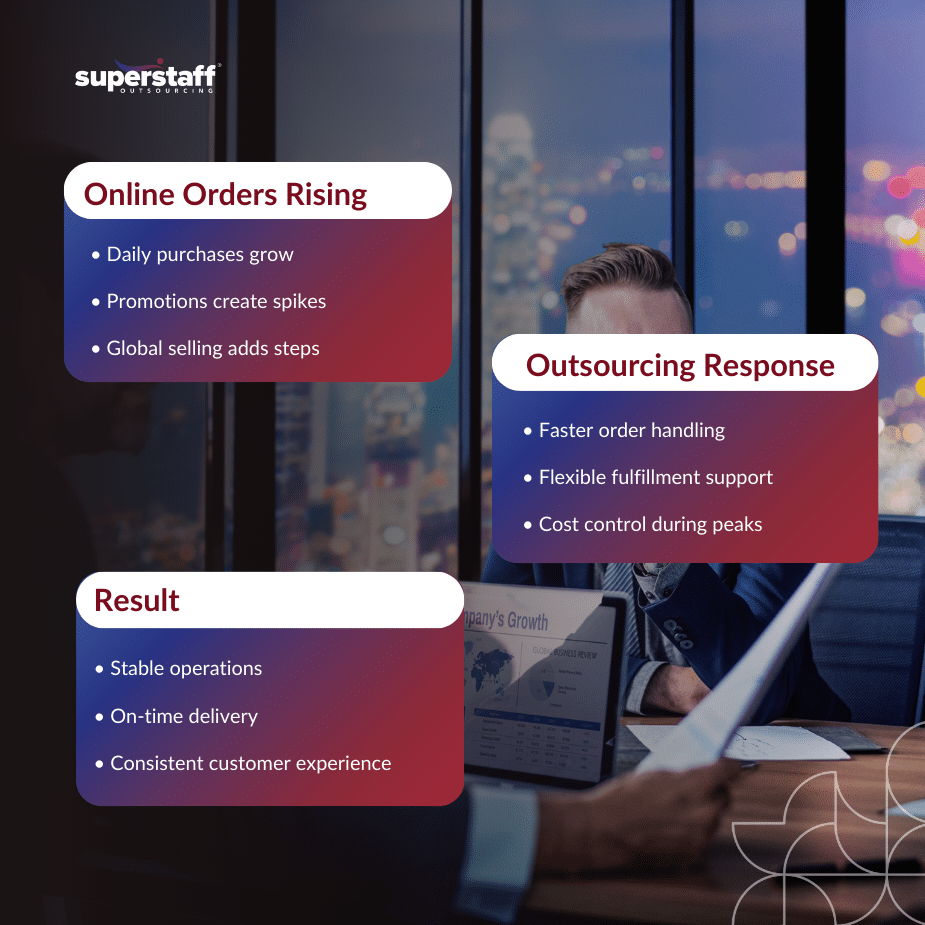
Flash sales, holiday promotions, and limited-time discounts can bring hundreds or thousands of additional orders within a short period. Businesses need enough people to process these orders without creating backlogs. Outsourced ecommerce operations give companies access to additional support when demand increases.
3. Selling across borders adds more work
Expanding into international markets creates new responsibilities. Businesses must manage different shipping requirements, payment methods, customer expectations, and return policies. Having experienced support teams helps keep these processes organized and reduces avoidable delays.
4. Larger product catalogs require better inventory management
As online stores add more products, keeping listings and stock information accurate becomes harder. Outdated product details and incorrect inventory counts can lead to overselling, canceled orders, and customer complaints.
5. Delivery and returns affect customer loyalty
Customers consider delivery options and return policies when deciding where to shop. DHL’s 2026 E-Commerce Trends Report highlights how delivery, returns, and convenience continue to influence online shopping decisions. Businesses must keep these parts of the customer experience reliable to encourage repeat purchases.
What Businesses Outsource First
Companies often begin by outsourcing tasks that take up the most time during busy periods. These responsibilities may involve order management, customer communication, inventory updates, and routine administrative work.
1. Order processing and tracking
Teams confirm orders, update order records, and monitor shipment progress. They also provide customers with updates when orders are delayed or require additional attention.
2. Inventory and product listing updates
Accurate product information helps prevent confusion and overselling. Outsourced teams can update product descriptions, check stock records, and maintain listings across different sales channels.
3. Customer support
As order volumes rise, customers have more questions about payments, shipping, product details, and returns. Dedicated support agents can handle these requests through phone, email, and live chat. This is also why many retailers consider e-commerce call center support when their internal teams struggle to keep up with customer inquiries.
4. Returns and refund coordination
Returns require proper documentation, customer communication, and coordination with the teams responsible for processing refunds or exchanges. Outsourced staff can help manage these requests and keep customers informed about their status.
5. Data entry and reporting
Order records, customer details, and sales information must stay accurate. Outsourced back-office teams can organize these records and prepare reports that help managers identify delays, recurring issues, and changes in order volume.
How Fulfillment Partners Support Growth
Order fulfillment involves several steps, from receiving an order to making sure the product reaches the customer. When order volumes increase, businesses need reliable processes and enough support to manage each stage.
1. Faster order coordination
Organized workflows help teams process incoming orders, confirm details, and coordinate with warehouse and shipping partners. This reduces unnecessary waiting between order placement and dispatch.
2. Flexible staffing support
Demand does not stay the same throughout the year. Additional staff can help businesses manage busy sales periods without maintaining a large permanent team during slower months.
3. Better order accuracy
Clear procedures and regular checks help reduce incorrect order details, missing information, and shipping coordination errors. Fewer mistakes also mean less time spent resolving complaints.
4. Improved shipping coordination
Businesses often work with multiple delivery providers to reach different customer locations. Proper coordination helps teams monitor shipments, address delivery issues, and provide accurate updates.
5. Better preparation for peak seasons
Holiday sales, product launches, and promotional campaigns require careful planning. Businesses that prepare their staffing and order management processes ahead of time are less likely to experience major delays.
These responsibilities can be supported through e-commerce and order management services, which cover inventory coordination, order tracking, returns, and customer support.
Order Fulfillment Outsourcing Benefits
Moving selected fulfillment and support tasks to an outside team can help businesses manage higher workloads without placing too much pressure on their existing employees. The benefits extend beyond processing orders faster.
1. Orders move through the process faster
Dedicated staff can handle routine tasks while internal teams focus on more complex issues. This helps reduce delays and keeps daily operations organized.
2. Operating expenses become easier to manage
Businesses can adjust their outsourcing arrangements based on workload and service requirements. This can reduce the need to hire additional permanent employees whenever order volumes increase.
3. Fewer mistakes affect customer orders
Trained staff follow established procedures when updating records, handling customer requests, and coordinating order details. Regular quality checks also help identify problems before they become larger issues.
4. Internal teams have more time for business growth
When outside teams handle routine responsibilities, in-house employees can focus on product development, marketing campaigns, sales strategies, and other important activities.
5. Customer service becomes easier to maintain
Growing order volumes often lead to more delivery questions, refund requests, and product concerns. A dedicated support team helps businesses respond to customers without allowing unanswered inquiries to pile up.
For a closer look at how these responsibilities fit together, custom ecommerce services explains how businesses can organize customer support and daily online store operations as they grow.
Cost Control During Volume Spikes
Managing higher order volumes does not always mean hiring more full-time employees. Outsourcing gives businesses another way to handle additional work while keeping expenses under control.
1. Lower permanent staffing costs
Companies can avoid expanding their in-house workforce for every temporary increase in demand. This helps reduce ongoing payroll and recruitment expenses.
2. Access to existing tools and systems
Outsourcing providers may already have the platforms, communication tools, and workforce systems needed to manage daily tasks. This can reduce the time and cost involved in setting up additional operations.
3. Fewer errors and repeat tasks
Accurate order records and consistent processes help reduce mistakes that lead to refunds, reshipments, and repeated customer inquiries. These improvements can help protect profit margins.
4. Flexible workforce arrangements
Businesses can adjust team size and coverage based on their needs. This is useful during seasonal sales, new product launches, and other periods when order volumes are less predictable.
5. Better use of internal resources
When employees spend less time on repetitive administrative work, they can focus on activities that support revenue and long-term business goals.
Building a Strong Outsourcing Plan
Outsourcing works best when businesses know which tasks they want to delegate and how they will measure performance. A clear plan also helps internal employees and external teams work toward the same goals.
1. Set clear service targets
Define expectations for order accuracy, response times, customer satisfaction, and task completion. These targets give both teams a clear way to measure results.
2. Choose the right tasks to outsource
Start with responsibilities that take up too much time or require additional staffing. Depending on business needs, this may include customer support, order processing, inventory updates, or reporting.
3. Prepare for future demand
Review sales patterns, upcoming promotions, and product launches to estimate staffing needs. Early planning gives outsourcing partners enough time to prepare their teams.
4. Monitor performance regularly
Review reports and service metrics to identify delays, errors, and recurring customer concerns. Regular discussions also help teams make changes when processes are not working as expected.
5. Maintain open communication
Internal managers and outsourced staff should have clear channels for sharing updates and reporting problems. This helps prevent misunderstandings and keeps daily operations on track.
Scaling E-commerce Operations Without Losing Service Quality
Higher online order volumes create new demands for retailers. Businesses must manage order processing, inventory, customer support, returns, and delivery coordination while keeping costs under control. Without enough staff and clear processes, these responsibilities can quickly become difficult to manage.
Outsourced ecommerce operations give businesses another way to handle these demands. By assigning selected tasks to trained professionals, companies can increase their support capacity, improve daily workflows, and give internal teams more time to focus on growth.
Keep Orders Moving as Your Business Grows
SuperStaff helps businesses build dedicated teams for e-commerce support, order management, customer service, and back-office tasks. Our teams work with your existing processes to help manage daily workloads, respond to customer concerns, and support changing business needs.
If your business is preparing for higher order volumes in 2026, contact SuperStaff to discuss an outsourcing setup that fits your operations and growth plans.