

Healthcare leaders rarely question the importance of revenue cycle performance. What they often question is when internal strain becomes a signal to look outside for support. The decision to adopt outsourced revenue cycle management usually starts when operational pressure begins to affect cash flow, staff morale, and patient experience at the same time.
Providers do not reach this point overnight. Warning signs build gradually through delayed reimbursements, growing denial rates, staff turnover, and administrative overload. In this blog, we’ll discuss the most common signs a healthcare organization needs RCM outsourcing. Recognizing these signals early allows leaders to make strategic decisions before revenue disruption becomes a long term problem.
Is your billing team spending more time correcting errors than processing claims?
Frequent claim corrections indicate deeper process issues. Staff may be rushing documentation, missing payer nuances, or working without standardized workflows. Over time, rework consumes hours that should be spent moving claims forward.
Repetitive corrections create frustration for experienced billers. Newer team members struggle to keep pace and often repeat the same mistakes. Productivity drops even though working hours increase.
An experienced team handling outsourced revenue cycle management brings structured processes, payer familiarity, and quality controls that reduce recurring errors. Instead of fixing mistakes, the focus returns to efficient submissions and faster reimbursements.
Are denial rates increasing despite staff working longer hours?
Growing denial rates often frustrate billing teams because effort increases while results decline. Each denial triggers follow ups, appeals, and additional documentation that stretches capacity further. This cycle drains productivity and slows down collections.
Payer specific rules are difficult to memorize when staff handle multiple insurers daily. Small documentation gaps turn into repeated denials that delay payments for weeks.
A partner providing outsourced revenue cycle management analyzes denial patterns, identifies root causes, and applies preventive strategies. Fewer denials mean less firefighting and more consistent cash flow.
Is staff turnover affecting billing consistency and accuracy?
Revenue cycle work depends on experience and attention to detail. When trained employees leave, knowledge gaps appear immediately. New hires need time to learn payer rules, coding standards, and internal systems.
Training cycles consume resources while performance temporarily declines. Remaining staff often carry extra workload, which increases the risk of burnout and further turnover.
Teams specializing in outsourced revenue cycle management provide continuity even when internal staffing changes. Knowledge retention remains stable, and providers avoid disruptions caused by hiring and training delays.
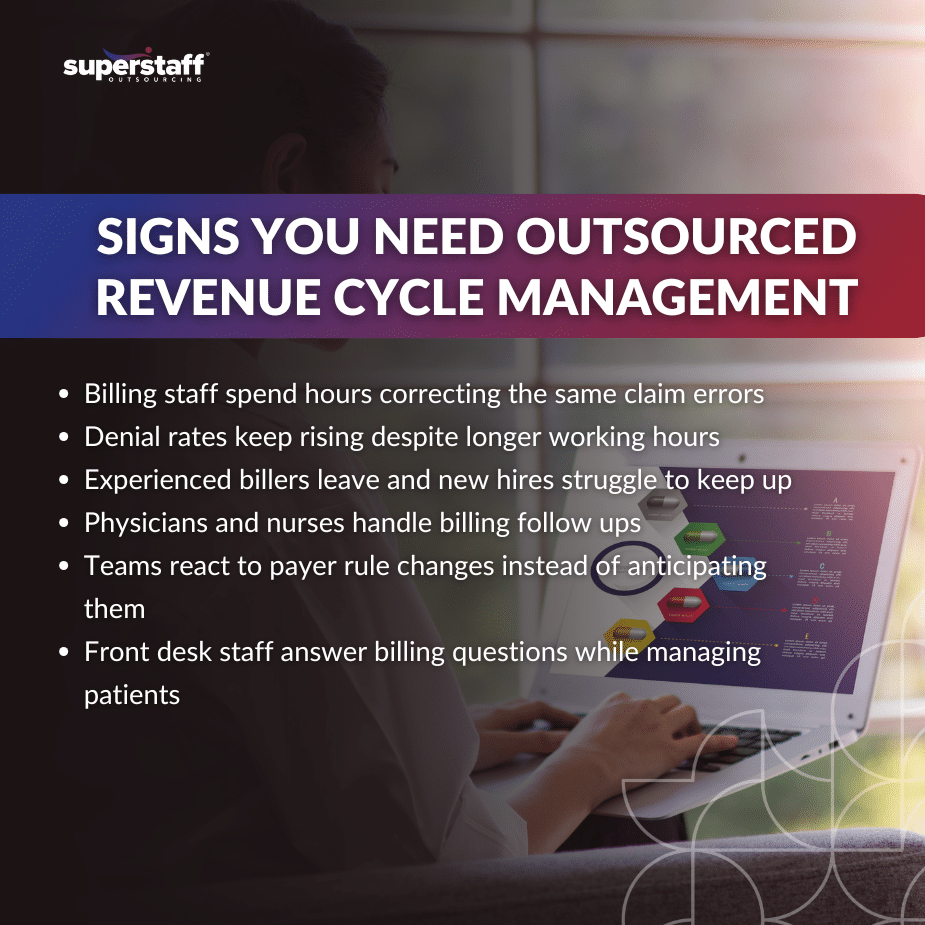
Are physicians and clinical staff handling administrative follow ups?
Clinicians should focus on patient care, not payer calls or documentation follow ups. However, many practices reach a point where providers step in because billing backlogs affect reimbursements. This situation reduces clinical productivity and increases frustration, creating demand for medical billing outsourcing services.
Nurses and care coordinators may also assist with paperwork to help billing teams catch up. Administrative tasks slowly move into clinical roles without leaders realizing the long term cost.
Support through outsourced revenue cycle management removes this burden from medical professionals. Administrative tasks shift to specialists who understand payer communication and documentation requirements.
Is your organization struggling to keep up with payer policy changes?
Insurance requirements change frequently. New coding updates, preauthorization rules, and documentation standards appear throughout the year. Internal teams often learn about changes after denials occur.
Keeping up with updates requires time for research and training that busy billing departments rarely have. As a result, practices operate reactively instead of proactively.
Providers using outsourced revenue cycle management benefit from teams that monitor payer updates as part of their daily work. Staying ahead of changes prevents revenue delays before they happen.
Are patient billing questions overwhelming your front desk staff?
Patients increasingly call with questions about statements, coverage, and balances. Front desk teams often manage these calls while handling appointments and check ins. Service quality declines when staff juggle multiple responsibilities.
Long wait times at reception desks frustrate patients who simply want to check in for appointments. Phone calls go unanswered because staff focus on in person tasks.
A structured outsourced revenue cycle management approach includes patient billing support that answers inquiries promptly. Clear communication improves patient satisfaction while freeing internal staff to focus on their primary roles.
Is your accounts receivable aging beyond acceptable time frames?
When receivables age past 60 or 90 days, cash flow becomes unpredictable. Leadership may notice revenue on paper but not in the bank. This delay affects planning, payroll, and operational investments.
Older claims require more effort to resolve because documentation becomes harder to retrieve. Staff spend significant time tracking historical records instead of managing current claims.
Teams handling RCM outsourcing services actively follow up on unpaid claims, track aging accounts, and escalate issues quickly. Consistent follow through shortens collection cycles and stabilizes cash flow.
Are you expanding services without expanding billing capacity?
Growth creates administrative pressure. New services, providers, or locations increase claim volume. Billing teams that were once efficient become overloaded without additional support.
Leaders often assume existing staff can absorb the additional workload. Over time, accuracy declines and processing speed slows down.
Outsourced revenue cycle management allows providers to scale operations without hiring large internal teams. Capacity expands in alignment with service growth, keeping revenue processes stable during expansion.
Is compliance and documentation accuracy becoming harder to maintain?
Healthcare billing requires strict documentation standards. Minor errors can trigger audits, denials, or compliance concerns. As workload increases, attention to detail often decreases.
Internal audits may reveal inconsistencies that were not visible during daily operations. Correcting these issues later requires significant time and effort.
A provider of outsourced revenue cycle management maintains documentation checks and quality reviews as standard practice. Consistent accuracy protects the organization from avoidable compliance risks.
Are leadership reports showing revenue gaps you cannot easily explain?
Unclear reporting makes it difficult for executives to understand where revenue slows down. Without visibility into denial trends, payer delays, or workflow bottlenecks, decision making becomes reactive instead of strategic.
Managers may see declining performance but struggle to identify the root cause. Meetings focus on symptoms rather than solutions.
Outsourced revenue cycle management introduces structured reporting that highlights issues clearly. Leaders gain insight into where improvements are needed and can act with confidence.
Protect Healthcare Revenue Through Outsourced Revenue Cycle Management
Healthcare providers often wait too long before addressing revenue cycle strain. The signs appear in daily operations long before financial pressure becomes visible in reports. Recognizing these signals early allows leaders to take proactive steps that protect both revenue and staff performance.
Partnering with SuperStaff for outsourced revenue cycle management gives healthcare organizations access to experienced teams that strengthen billing accuracy, improve cash flow, and reduce administrative burdens. If these challenges sound familiar, now is the right time to explore how SuperStaff can support your revenue cycle and help your team focus on patient care.