
Leaders often focus on pricing and headcount when evaluating partners, yet the real safeguard for performance sits inside the fine print. Outsourcing contracts define how expectations turn into measurable outcomes over time. For SMEs and midmarket companies in the United States, clarity in these agreements protects operations, budgets, and customer experience long after onboarding ends.
Understanding what to look for before signing prevents misunderstandings that surface months later. Strong agreements reflect operational realities, not generic templates. Smart companies read contracts as strategic documents that guide daily execution and long-term collaboration.
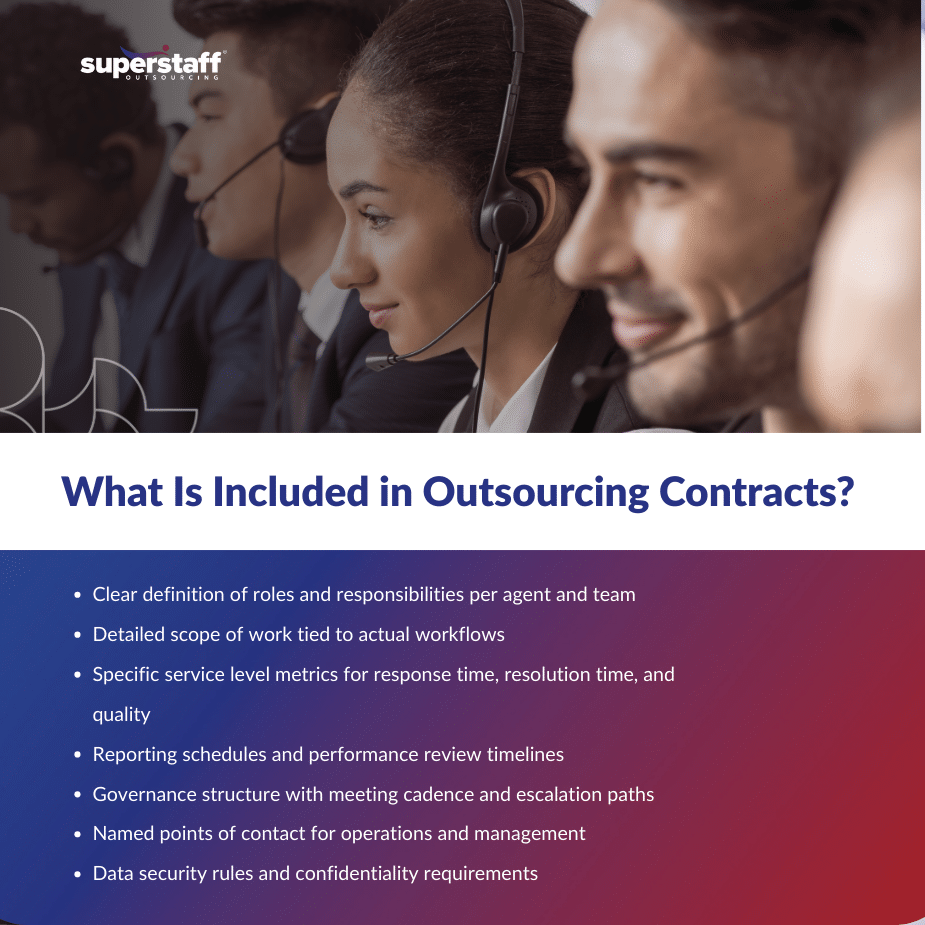
Define Scope With Operational Precision
Clear scope prevents confusion between your internal team and the offshore partner. Vague descriptions create gaps that show up during peak demand or complex cases. Operational teams often discover too late that responsibilities were assumed but never written.
Well-written outsourcing contracts describe tasks, tools, reporting lines, and decision rights. This detail ensures agents know exactly what they own from day one. Managers avoid debates about who is responsible for what when volume increases.
- List specific responsibilities per role
- Identify systems and platforms to be used
- Clarify escalation paths and ownership
- Align scope with actual workflows, not assumptions
Precise scope reduces onboarding friction and limits service overlap. It also allows performance metrics to connect directly to defined responsibilities.
Align Service Levels With Business Reality
Service level agreements should mirror how your customers actually interact with your brand. Unrealistic targets lead to penalties. Weak targets lead to poor performance and customer frustration.
Strong outsourcing contracts translate customer expectations into measurable metrics. Response time, resolution time, and quality standards must reflect real scenarios that agents face daily. Leaders should test these metrics against historical call data before agreeing to them.
- Define response and resolution metrics
- Include quality monitoring standards
- Set clear reporting cadence
- Agree on performance review timelines
Service levels should feel practical for both parties. When metrics match reality, teams can focus on improving service instead of negotiating penalties.
Establish Governance and Communication Structure
Execution depends on how often teams talk and how decisions are made. Governance removes guesswork from day-to-day collaboration and builds trust between managers.
Well-designed outsourcing contracts include meeting schedules, reporting formats, and key contacts. This structure supports accountability without micromanagement. Operational issues get resolved quickly because everyone knows who to call.
- Weekly operational reviews
- Monthly performance discussions
- Defined points of contact
- Clear escalation procedures
Consistent communication prevents small issues from becoming operational risks. Governance also creates a rhythm that keeps performance visible to leadership.
Clarify Data Security and Compliance Responsibilities
Customer data passes through multiple hands in a call center environment. Responsibility for protecting it must be clearly documented, not verbally agreed upon during onboarding.
Reliable outsourcing contracts outline compliance standards, access controls, and audit rights. These clauses protect both the client and the provider from regulatory exposure. Leaders should ensure these provisions align with internal IT policies.
- Define data handling procedures
- Include confidentiality requirements
- Specify compliance frameworks
- Allow for audit and review rights
Security expectations should never be implied. Written clarity avoids misunderstandings when audits or compliance checks occur.
Plan for Scalability Before You Need It
Growth often exposes limitations that were not visible during the pilot phase. Planning ahead prevents delays when demand increases or new services are introduced.
Flexible outsourcing contracts describe how headcount, hours, and skills can scale. These provisions support seasonal spikes and long-term growth without renegotiating terms every quarter. Leaders gain confidence that support capacity can match business expansion.
- Define ramp-up timelines
- Set pricing for additional seats
- Outline training for new roles
- Include provisions for volume changes
Scalability should be written into the agreement, not negotiated later. This preparation avoids operational strain during busy periods.
Address Transition and Knowledge Transfer
The start of the partnership sets the tone for performance. Structured transition plans prevent early mistakes that can affect customer satisfaction.
Detailed outsourcing contracts include onboarding steps, documentation requirements, and training collaboration. This clarity speeds up agent readiness and shortens the learning curve. Teams avoid confusion about which processes to follow.
- Document process transfer steps
- Schedule shadowing and nesting periods
- Share knowledge repositories
- Assign transition leads from both sides
A strong transition reduces early service disruption. It also builds confidence between both teams during the first months of engagement.
Define Quality Assurance and Continuous Improvement
Performance evolves over time as products, services, and customer expectations change. Contracts should encourage improvement, not simply measure compliance with old standards.
Forward-looking outsourcing contracts include quality audits, coaching feedback loops, and process refinement discussions. This approach creates long-term value instead of static reporting. Leaders benefit from seeing how performance improves quarter after quarter.
- Schedule quality audits
- Share evaluation scorecards
- Set review checkpoints for process updates
- Encourage feedback from agents and managers
Continuous improvement should be built into the relationship. This mindset turns the provider into a long-term operational partner.
Understand Pricing Structure Beyond Base Rates
Hourly rates tell only part of the story. Hidden costs often sit in training, reporting, system access, or change requests that appear later.
Transparent outsourcing contracts break down pricing components clearly. Leaders can forecast expenses without surprises and compare providers accurately. Finance teams appreciate this clarity during budgeting cycles.
- Clarify training and onboarding costs
- Define fees for scope changes
- Outline billing cycles
- Identify optional service charges
Cost clarity improves financial planning. It also prevents disagreements over invoices that distract from operational priorities.
Include Exit and Termination Terms That Protect Both Sides
Partnerships sometimes end due to strategy changes, not performance issues. Exit terms should allow smooth transitions without operational damage or customer impact.
Balanced outsourcing contracts explain notice periods, data return procedures, and knowledge handover expectations. This planning reduces risk if changes occur and shows maturity in the agreement. Leaders should review these clauses as carefully as pricing terms.
- Define notice timelines
- Outline data transfer procedures
- Include knowledge transition steps
- Protect intellectual property
Exit clauses provide safety without signaling distrust. They demonstrate that both parties respect business continuity.
Protect Brand Experience Through Cultural Alignment
Customer interactions reflect your brand, even when handled offshore. Cultural alignment matters as much as technical skill and process knowledge.
Thoughtful outsourcing contracts mention training standards, communication style expectations, and customer experience guidelines. This alignment ensures agents represent your company properly in every interaction. Leaders should include brand tone and escalation etiquette in writing.
- Set brand communication standards
- Include customer handling guidelines
- Require accent and language training
- Align scripts with brand tone
Brand protection belongs inside the agreement. Clear expectations reduce the risk of inconsistent customer experiences.
Understanding Outsourcing Contracts Is Only the First Step. Partner With the Right BPO Provider.
Well-structured outsourcing contracts guide how work happens every day, not only how payments are made. Leaders who review these agreements carefully avoid operational surprises and build partnerships that scale with confidence.
SuperStaff works closely with clients to ensure contracts reflect real workflows, realistic performance goals, and long-term collaboration. If you are evaluating a call center partner in the Philippines, explore how SuperStaff designs outsourcing contracts that support growth, compliance, and customer experience from the start.