Hotels, resorts, and other hospitality businesses handle several responsibilities every day. From managing reservations and answering guest inquiries to processing payments and maintaining records, each task requires time and attention. When these responsibilities increase, internal teams may struggle to keep up without affecting service quality.
This is why outsourcing in hospitality industry operations has become a practical option for businesses that need additional support. By assigning selected tasks to trained external teams, hotels can manage workloads, maintain organized processes, and give on-site employees more time to assist guests. Understanding which services can be outsourced helps hospitality providers decide where external support can make the biggest difference.
Why Hospitality Businesses Choose External Support Teams
Hospitality businesses often experience changes in guest volume, staffing needs, and daily workloads. Managing every responsibility internally can become difficult, especially during holidays, special events, and peak travel periods.
According to the American Hotel & Lodging Association’s 2026 industry report, rising operating expenses and staffing challenges remain major concerns for hotel owners. These conditions make it important to review how daily responsibilities are distributed across teams.
1. High Volume of Guest Requests
Guest inquiries, reservation changes, booking confirmations, and follow-up messages can quickly accumulate. Hospitality outsourcing gives businesses additional support for handling these requests, helping prevent unanswered inquiries and communication delays.
2. Need for Consistent Accuracy
Reservation errors, incorrect guest information, and incomplete records can create problems during a guest’s stay. External support teams can follow documented procedures to maintain accurate information and complete routine tasks properly.
3. Pressure on On-Site Employees
Front desk employees often manage several responsibilities at once, including check-ins, guest concerns, phone calls, and administrative work. Assigning selected tasks to remote teams helps reduce their workload and gives them more time for direct guest assistance.
4. Managing Operational Expenses
Recruiting, hiring, and training additional employees require financial and administrative resources. Outsourcing allows hotels to access additional personnel without having to manage every position through traditional in-house recruitment.
5. Maintaining Service During Peak Seasons
Guest volume can increase during holidays, conferences, and major events. External teams can provide additional support during these periods, helping hotels manage higher workloads without placing excessive pressure on existing employees.
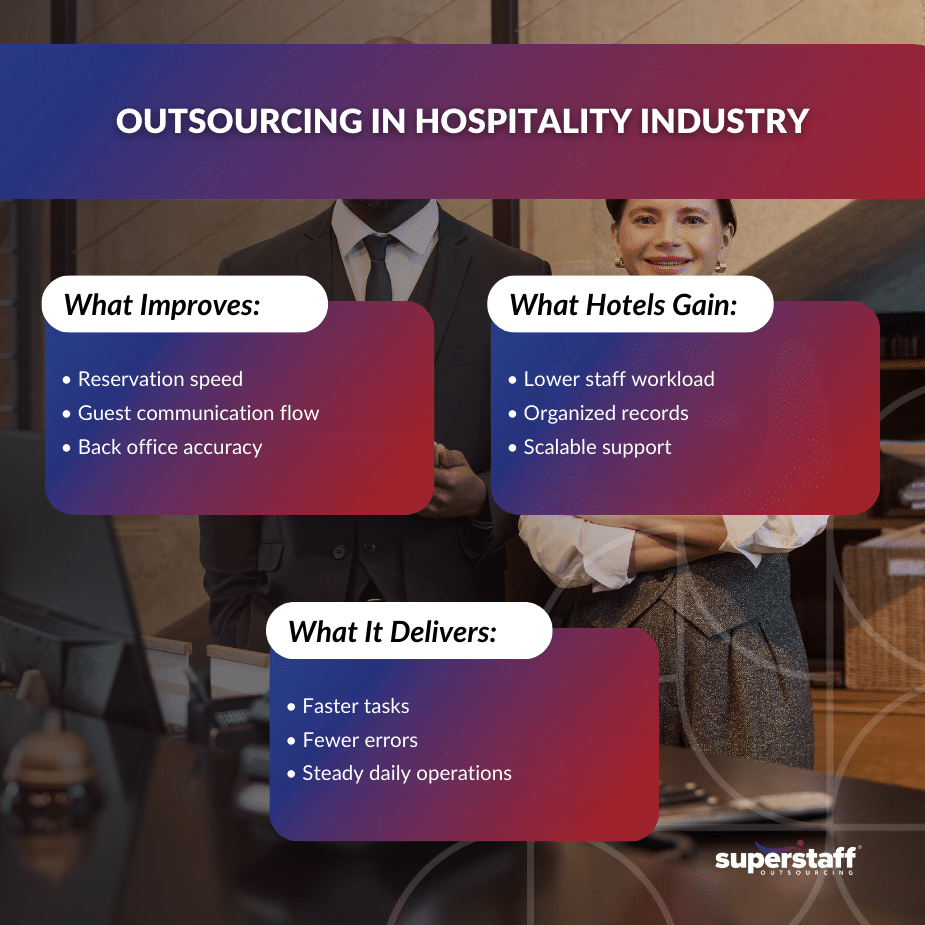
Outsourcing in Hospitality Industry: Key Services to Consider
Key Services Commonly Outsourced in Hospitality
Outsourcing in hospitality industry operations covers several functions that support guest communication, administrative work, and financial processes. Businesses can select services based on their operational needs and the responsibilities their internal teams want to retain.
1. Reservation and Booking Support
External teams can handle reservation inquiries, booking confirmations, cancellation requests, and schedule changes. They can also update booking information and coordinate with hotel employees when requests require on-site attention.
For properties receiving frequent calls, dedicated reservation support can help maintain communication throughout the booking process. Hotels can also use hotel BPO services to identify administrative and guest support functions that can be handled by external teams.
2. Guest Support and Inquiry Handling
Guest support involves responding to questions before, during, and after a stay. This includes inquiries about room availability, hotel policies, amenities, payment concerns, and other service-related requests.
Outsourced representatives can assist through phone, email, and chat. With clear response guidelines, they can provide consistent information and forward concerns to the appropriate hotel department.
3. Administrative and Back Office Tasks
Hotels manage several administrative responsibilities that require accurate documentation and regular updates. These include data entry, file management, report preparation, document processing, and record maintenance.
Assigning these tasks to an external team helps internal employees spend less time on repetitive paperwork. Businesses that need assistance with these functions can consider back-office support services for administrative and data management requirements.
4. Accounting and Billing Assistance
Financial responsibilities can also create additional work for hotel accounting departments. Outsourced personnel can assist with invoice processing, payment tracking, expense documentation, account updates, and financial data entry.
These services help keep records organized and support timely processing. Internal accounting employees can then focus on financial reviews, reporting, and other responsibilities that require direct oversight.
5. HR and Recruitment Support
Hospitality businesses regularly recruit employees for front desk operations, housekeeping, food services, management, and other departments. External teams can assist with candidate sourcing, resume screening, interview scheduling, onboarding documentation, and employee record management.
This arrangement allows internal HR personnel to focus on employee development, workplace concerns, and hiring decisions.
Setting Up a Smooth Outsourcing Process
A successful outsourcing arrangement requires clear expectations and proper coordination. Before transferring responsibilities to an external provider, hospitality businesses should establish how tasks will be handled and monitored.
1. Review Current Workflows
Identify which responsibilities consume the most time, create recurring delays, or cause backlogs. Review daily processes to determine which tasks can be handled externally without affecting on-site operations.
2. Define Workload and Service Requirements
Establish the expected number of tasks, response times, accuracy standards, reporting requirements, and working schedules. These details help external teams understand their responsibilities and meet operational expectations.
3. Choose a Partner With Relevant Experience
Look for a provider with experience in customer support, administrative operations, and other services relevant to hospitality. Consider its recruitment process, training methods, technology, and ability to support changing workloads.
4. Provide Proper Training and Documentation
External employees need access to accurate instructions, approved responses, company policies, and relevant process documentation. Training should also cover reservation procedures, communication standards, data handling, and escalation guidelines.
5. Establish Regular Communication
Set communication schedules between internal managers and external employees. Regular updates, performance reports, and clear escalation procedures help both teams address concerns and keep tasks moving.
How Outsourcing Supports Daily Hotel Operations
When responsibilities are assigned properly, outsourcing in hospitality industry operations can improve how employees manage their daily work.
1. Faster Response Times
Additional personnel can help manage incoming calls, emails, and chat inquiries. This allows hotels to respond to more guest requests without depending entirely on front desk employees.
2. Better Record Accuracy
Documented procedures and regular quality checks help reduce errors in reservations, guest information, and administrative records.
3. Organized Information Management
External teams can maintain updated files, booking records, reports, and other business documents. This makes information easier for authorized employees to retrieve when needed.
4. Consistent Processing of Routine Tasks
Recurring responsibilities such as data entry, invoice processing, and reservation updates can follow established schedules. This helps prevent unfinished tasks from accumulating.
5. More Time for Guest Interaction
When external employees handle selected administrative and communication tasks, on-site staff can focus on check-ins, guest concerns, and other responsibilities that require their physical presence.
Common Use Cases for Hospitality Outsourcing
Different hospitality businesses have different operational requirements. Hotels, resorts, serviced apartments, and accommodation groups can outsource specific responsibilities depending on their size and service model.
1. Reservation Call Handling
Hotels that receive frequent booking inquiries can assign phone support to external agents. These representatives can answer approved questions, check reservation details, and record booking requests.
2. Guest Communication Support
Email, chat, and phone assistance help businesses manage guest conversations across multiple channels. External representatives can also document concerns and forward requests that require attention from hotel personnel.
For businesses considering dedicated phone support, outsourcing hotel call center operations can provide additional insight into how external teams assist with reservations and guest inquiries.
3. Billing and Invoice Processing
External employees can help process financial documents, update payment records, and organize billing information. These tasks support accounting teams while maintaining a consistent documentation process.
4. Social Media and Review Response Support
Hospitality businesses receive comments, questions, and reviews through different online platforms. Trained representatives can monitor these channels, respond to approved inquiries, and forward complaints that require management attention.
5. HR Documentation and Record Management
External teams can assist with employee files, recruitment records, onboarding documents, and other administrative responsibilities. This reduces repetitive work for internal HR departments.
What to Consider When Choosing an Outsourcing Partner
The quality of an outsourcing arrangement depends on the provider’s ability to understand business requirements and follow established procedures. Hospitality businesses should evaluate several factors before making a decision.
1. Quality Control Procedures
Check whether the provider conducts regular performance reviews, accuracy checks, and process monitoring. These practices help identify errors and maintain consistent service standards.
2. Data Security Standards
Hotels handle sensitive information, including guest details, payment records, and employee files. The outsourcing partner should have clear data protection policies, access controls, and procedures for handling confidential information.
3. Relevant Industry Experience
A provider with experience in customer service and administrative operations may find it easier to adapt to hospitality requirements. Familiarity with reservation processes, guest communication, and documentation is also helpful.
4. Employee Training Programs
Ask how the provider recruits, trains, and evaluates its employees. Proper onboarding ensures that external personnel understand their responsibilities before handling actual business tasks.
5. Flexible Staffing Options
Choose a provider that can adjust its workforce based on changing business requirements. This is especially important for hotels that experience seasonal demand or operate multiple properties.
How SuperStaff Supports Hospitality Operations
Hospitality businesses can benefit from external teams that handle selected customer support and administrative responsibilities. SuperStaff provides outsourcing services that cover customer experience, back-office support, and other business functions.
These services can support reservation inquiries, guest communication, data management, billing assistance, and administrative coordination. With defined workflows and proper training, external employees can work alongside internal teams while following established business requirements.
The right arrangement depends on the hotel’s workload, service expectations, and the tasks it needs help managing. Businesses should identify these requirements before deciding which functions to outsource.
Build a More Organized Hospitality Operation
Managing guest expectations while keeping daily operations organized requires the right people and processes. Outsourcing in hospitality industry operations gives hotels another way to manage repetitive responsibilities, support internal employees, and maintain consistent service.
If your hotel needs additional assistance with guest communication, reservations, or administrative work, contact SuperStaff to discuss your operational requirements and possible support arrangements.