Healthcare providers manage calls for appointments, follow-ups, billing questions, test inquiries, and other patient needs every day. When call volumes increase, staff may struggle to respond quickly while also handling their clinical and administrative responsibilities. Patient care phone services give healthcare organizations dedicated support for managing these conversations.
With trained phone support, patients can receive clear information and timely assistance without placing additional pressure on internal teams. Moreover, outsourcing allows healthcare organizations to expand communication support while doctors, nurses, and administrative staff focus on their primary responsibilities.
How Patient Care Phone Services Work
Healthcare communication requires accuracy, professionalism, and empathy. Therefore, healthcare organizations need clear processes for managing calls and directing patients to the appropriate resources.
1. Managing Patient Communication
Dedicated phone support teams handle patient calls based on the healthcare organization’s guidelines and approved procedures. Depending on the service agreement, agents may manage appointments, general inquiries, follow-ups, and administrative requests.
Additionally, agents can route clinical questions to qualified healthcare professionals when necessary. Clear escalation procedures ensure that phone support teams do not make medical decisions outside their assigned responsibilities.
2. Working With Healthcare Organizations
Healthcare providers can manage phone support internally or work with an outsourcing partner. When they outsource, the provider recruits and trains agents according to the client’s workflows, communication standards, and service requirements.
Meanwhile, the healthcare organization defines what agents can handle and when they should escalate a call. This structure keeps responsibilities clear between the medical team and the outsourced support team.
3. Handling Common Patient Requests
Phone support teams can manage appointment scheduling, confirmations, administrative follow-ups, billing questions, and general service inquiries. They may also provide approved pre-visit instructions or reminders based on information supplied by the healthcare organization.
As a result, patients have a clear point of contact for routine concerns. At the same time, clinical teams can spend less time managing administrative calls that do not require medical expertise.
4. Managing Daily Call Operations
Outsourcing providers manage staffing, schedules, agent performance, and daily call workflows according to the agreed service scope. They can also monitor response times, call volume, and other performance measures.
Furthermore, supervisors can review agent performance and provide additional coaching when necessary. Regular oversight supports consistent communication across patient interactions.
5. Setting Standards and Responsibilities
Healthcare organizations still play an active role after outsourcing phone support. They set communication guidelines, escalation procedures, access permissions, and service standards for the outsourced team.
In addition, healthcare leaders should regularly review performance and update agents when policies or procedures change. Close coordination allows both teams to provide patients with consistent information.
In-House vs. Outsourced Patient Communication
Healthcare organizations need enough staff, technology, and processes to manage patient calls effectively. While some providers maintain internal teams, others use healthcare BPO services to add communication and administrative support.
1. Staffing and Resource Requirements
An in-house phone team requires recruitment, training, supervision, technology, and workspace. As call volumes grow, healthcare organizations may also need to hire additional employees and expand their systems.
In contrast, outsourcing gives organizations access to an existing workforce and operational structure. Therefore, providers can add support without requiring the healthcare organization to build every resource internally.
2. Response Capacity
Busy healthcare teams often handle patient calls alongside other administrative responsibilities. Consequently, high call volumes can increase wait times or create backlogs during busy periods.
Dedicated phone agents can focus specifically on incoming and outgoing communication. This approach gives internal teams more time to manage tasks that require direct involvement from healthcare staff.
3. Scalability and Flexibility
Call volumes can change because of seasonal illnesses, vaccination programs, new services, or organizational growth. Healthcare providers may therefore need additional communication support during certain periods.
Outsourcing can provide more staffing flexibility when demand changes. However, organizations should discuss expected call volumes and staffing requirements with the provider before launching the service.
4. Privacy and Data Security
Phone agents may access personal and health information while assisting patients. Therefore, healthcare organizations should evaluate security controls, employee training, access management, and applicable compliance requirements before selecting a provider.
For U.S. healthcare organizations and their business associates, the HIPAA Privacy Rule establishes standards for protecting certain health information. Organizations should determine which requirements apply to their specific operations and outsourcing arrangements.
5. Focus on Healthcare Delivery
Doctors and nurses need time to focus on clinical responsibilities, while administrative teams manage essential operational work. When routine calls consume too much staff time, other responsibilities may receive less attention.
Outsourced support can handle approved administrative communication and route appropriate concerns to internal teams. As a result, healthcare professionals can spend more time on responsibilities that require their direct expertise.
Benefits of Dedicated Patient Phone Support
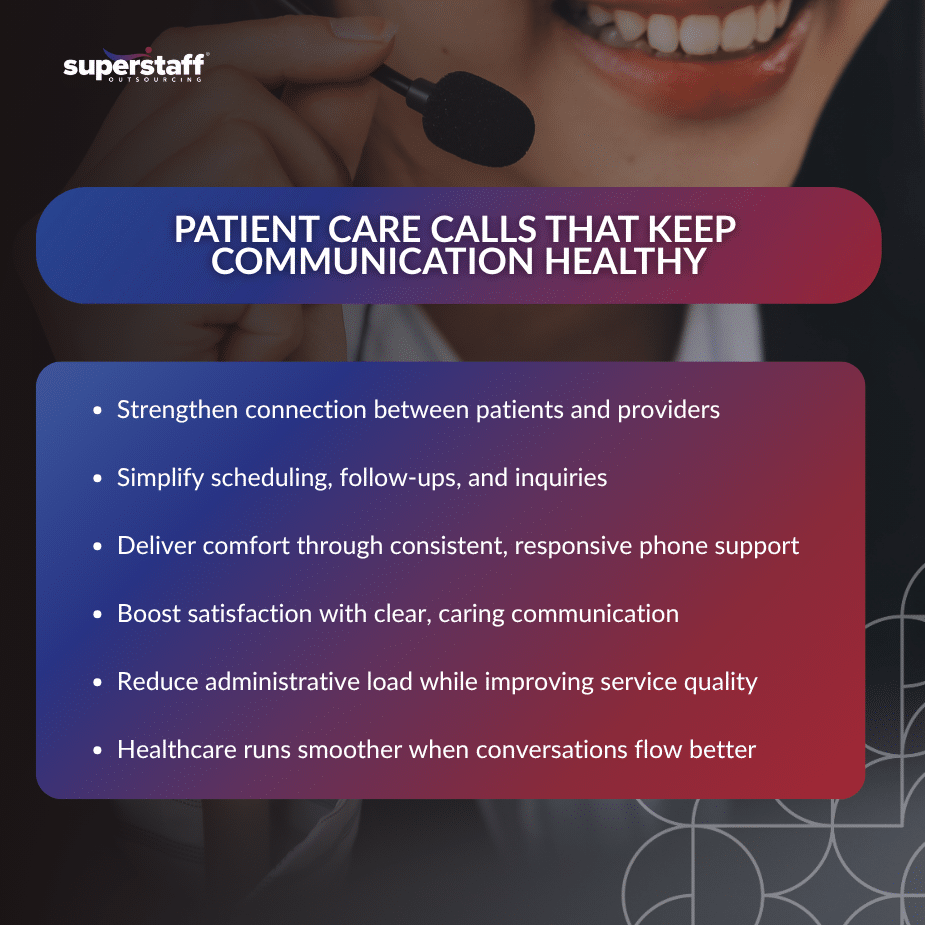
Well-managed patient care phone services can improve communication between healthcare organizations and the people they serve. However, providers should design workflows around actual patient needs rather than simply increasing call capacity.
1. Greater Accessibility
Patients often need assistance with appointments, office information, billing questions, or other administrative concerns. Extended phone coverage can give them more opportunities to contact the provider without waiting for limited office hours.
However, organizations should clearly explain when agents are available and what they can handle. This clarity prevents patients from treating administrative phone support as a replacement for emergency or clinical services.
2. More Efficient Use of Resources
Healthcare organizations spend time and money recruiting, training, and managing internal support staff. Outsourcing selected communication functions can reduce some of this administrative workload.
Moreover, providers can supply trained agents and supporting technology as part of the service. Healthcare organizations can then allocate internal resources according to their operational priorities.
3. Consistent Patient Communication
Agents should follow approved scripts, processes, and escalation guidelines when communicating with patients. These standards can reduce inconsistent information and create a more organized support experience.
At the same time, agents need enough training to communicate naturally and respectfully. Scripts should guide conversations without preventing agents from listening to individual patient concerns.
4. Faster Administrative Support
Long wait times can frustrate patients who need simple information or appointment assistance. Dedicated agents can manage these routine requests while directing more complex concerns to the appropriate department.
Consequently, healthcare teams can organize communication more effectively. Clear routing also reduces the chance that patients repeatedly contact different departments for the same concern.
5. Stronger Patient Relationships
Patients often judge a healthcare organization by more than their clinical experience. Scheduling, billing, follow-ups, and communication can also affect how they view the provider.
Therefore, responsive and respectful phone support can contribute to a better overall experience. Consistent communication can also encourage patients to stay engaged with appointments and administrative next steps.
Healthcare Organizations That Can Use Phone Support
Different healthcare organizations can use outsourced communication teams based on their patient volume and administrative needs. In particular, healthcare call center outsourcing can support organizations that need additional capacity for patient communication.
1. Hospitals and Clinics
Hospitals and clinics may receive large numbers of calls about appointments, departments, services, and administrative concerns. Dedicated phone teams can manage routine requests and route other calls to the appropriate staff.
2. Dental and Vision Practices
Dental and vision practices regularly communicate with patients about appointments, reminders, and billing. Therefore, phone support can handle routine coordination while practice staff focus on patients and office operations.
3. Diagnostic and Laboratory Facilities
Diagnostic centers and laboratories manage scheduling and general inquiries from patients. Trained agents can provide approved information while directing clinical questions to qualified staff.
4. Primary Care Practices
Smaller practices may have limited administrative teams that manage several responsibilities at once. Additional phone support can handle routine communication without requiring every patient call to interrupt front-office tasks.
5. Telehealth Providers
Telehealth providers rely heavily on clear communication before and after virtual appointments. Phone agents can assist with scheduling, administrative instructions, and approved follow-ups while directing medical concerns to clinical professionals.
Best Practices for Outsourcing Patient Calls
Healthcare organizations need clear standards when they outsource patient communication. Strong processes protect patient information while keeping service consistent across internal and external teams.
1. Set Clear Communication Guidelines
Organizations should give agents approved scripts, policies, FAQs, and escalation procedures. Additionally, managers should update these resources whenever services or policies change.
2. Protect Patient Information
Healthcare providers should limit agents’ access to the information they need for their assigned tasks. They should also review security controls, privacy training, authentication procedures, and data-handling practices.
3. Establish Escalation Procedures
Phone agents need clear instructions for situations that require clinical, billing, or management support. Therefore, healthcare organizations should define who receives each type of escalated concern and how quickly teams should respond.
4. Choose Healthcare Experience
Providers with healthcare experience may already understand common patient communication needs and administrative workflows. Still, healthcare organizations should evaluate each provider’s training, security practices, technology, and service capabilities before making a decision.
5. Monitor Service Quality
Managers should regularly review response times, call quality, patient feedback, and other relevant measures. They can then use this information to improve training, scripts, staffing, and workflows.
Improve Patient Communication With the Right Support
Well-managed patient care phone services can make routine healthcare communication easier for both patients and providers. Dedicated teams can handle administrative calls, coordinate appointments, manage approved follow-ups, and route concerns while internal staff focus on their primary responsibilities.
SuperStaff provides healthcare outsourcing solutions for organizations that need scalable support for patient communication and administrative processes. Our teams can work within defined workflows and service standards based on each healthcare organization’s requirements.
Need additional support for your patient communication operations? Contact SuperStaff to discuss a healthcare outsourcing solution that fits your staffing and communication needs.