

Airports can be a source of stress for professionals who need to travel often. Long security checks, customs delays, and unpredictable waiting times can reduce productivity and make business trips less efficient. The Global Entry program offers a way to shorten these processes by giving pre-approved travelers faster clearance at U.S. borders. For remote teams and businesses with international travel needs, this can seem appealing. At the same time, it comes with both benefits and limitations. To decide if it is the right choice, it is important to understand the pros and cons of Global Entry.
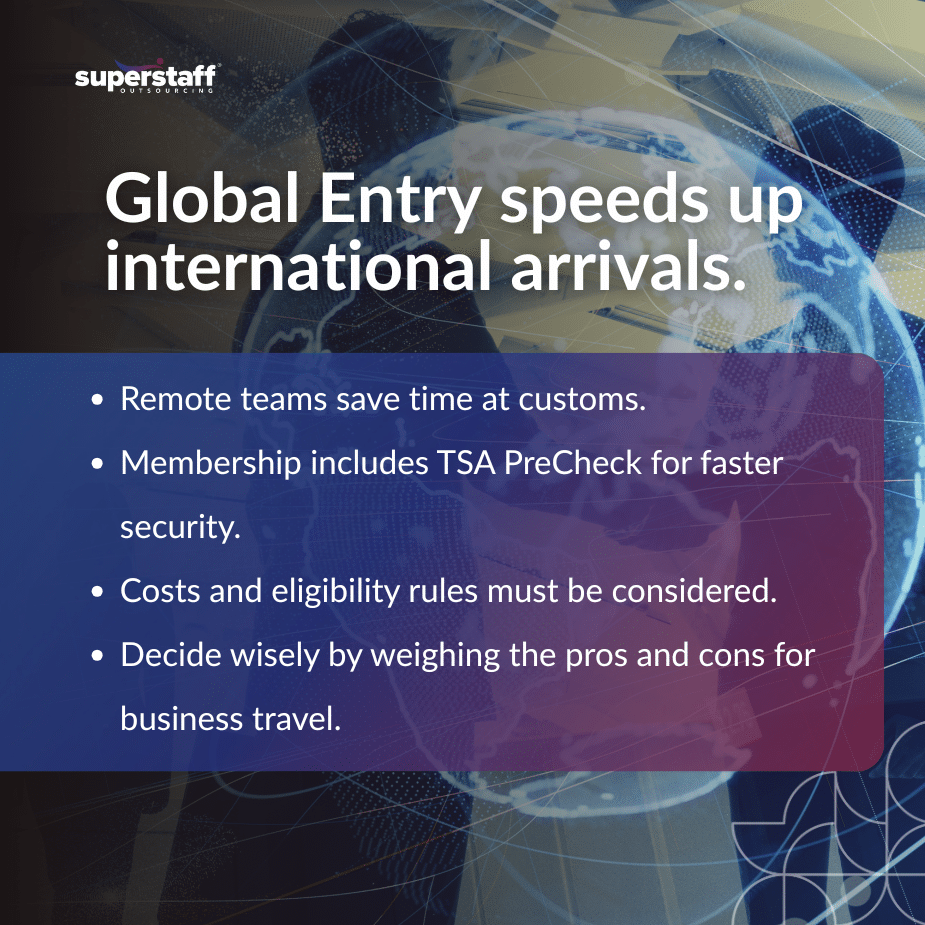
Understanding the Pros and Cons of Global Entry
The Global Entry program helps reduce time spent in customs lines and provides access to TSA PreCheck for faster airport security screening. For business travelers, this means less time wasted during trips. But like any program, it has both strengths and weaknesses. The following sections explore the main pros and cons of Global Entry.
1. Faster Border Processing
One of the biggest advantages of Global Entry is the ability to use automated kiosks instead of waiting in long customs lines. This saves time, especially for travelers who fly internationally on a regular basis. For business professionals with tight schedules, this convenience allows them to move quickly from arrival to meetings or other work activities.
2. TSA PreCheck Inclusion
Global Entry membership includes TSA PreCheck, which allows faster domestic security clearance. This feature gives travelers access to shorter lines, fewer requirements during screening, and reduced wait times. For companies with employees who travel often within the United States, this addition increases the value of the program.
3. Global Entry Benefits for Business Travel
Time is valuable for business travelers, and Global Entry helps reduce hours spent in airport lines. The time saved can be redirected toward more productive work, helping both the employee and the company. When staff members spend less time dealing with travel delays, they can focus better on their roles, making Global Entry a supportive tool for business operations.
4. Security and Screening Requirements
Applicants must go through background checks and interviews before being approved. This ensures that only low-risk travelers are allowed into the program. While this adds an extra layer of security, it also means that not everyone will qualify, and some may find the process restrictive or inconvenient.
5. Cost of Enrollment
Global Entry costs $100 for a five-year membership. For an individual, this cost is manageable. However, for a company covering several employees, the total expense may be significant. Businesses need to weigh this cost against the potential time savings and decide if it is a worthwhile investment.
Limitations That Teams Should Consider
Although the program has many advantages, there are clear limits that businesses must consider. Looking closely at the pros and cons of Global Entry will help determine if it aligns with company’s travel needs.
1. Limited Airport Coverage
Not all airports are equipped with Global Entry kiosks. For teams traveling to smaller or less connected destinations, the benefits of the program may not be available. This means that while it can be useful for major hubs, it may have a limited impact on other routes.
2. Strict Eligibility Rules
The program has specific eligibility requirements based on nationality, travel history, and background checks. Some employees may be excluded if they do not meet these standards. For companies with diverse teams, this limitation could prevent equal access to the program.
3. Renewal and Maintenance
Membership lasts for five years, after which renewal is required. Renewal often involves additional paperwork and sometimes another interview. Companies that depend on the program for travel efficiency must plan ahead to avoid disruptions during the renewal process.
4. Technology and System Issues
The kiosks used for Global Entry may occasionally malfunction. In these cases, travelers can be redirected to regular customs lines, which removes the benefit of having the membership. While rare, these technical issues are worth considering when evaluating the program.
5. Privacy Concerns
Applicants must share personal and biometric data to participate in Global Entry. Some individuals or businesses may hesitate to provide this information due to privacy concerns. Reviewing the program’s data policies is important before committing to membership.
Is Global Entry Worth It for Remote Teams?
Remote teams are often spread across different countries and may need to travel for meetings, training, or client visits. The question becomes, Is Global Entry worth it for remote teams and frequent business travelers? The answer depends on the frequency of travel, the destinations involved, and the company’s budget.
1. Frequent Travel Schedules
Remote teams that fly internationally on a regular basis can benefit greatly from Global Entry. The reduced wait times at customs and security checkpoints can save hours across multiple trips. For employees who only travel occasionally, however, the return on investment may be less clear.
2. Company Budgets
The cost of enrollment can add up for larger teams. Businesses must compare the expense of membership with the productivity gains achieved by faster travel processing. In many cases, it may be more practical to cover only those employees who travel most often.
3. Travel Risk Management
Global Entry reduces the amount of time spent in crowded areas of the airport, which can improve both comfort and safety for employees. Some companies view this as an additional benefit when considering the health and well-being of their staff during business trips.
4. Remote Team Productivity
Employees who face fewer travel delays often arrive at their destinations more energized and ready to work. This can lead to smoother transitions from flights to meetings, helping teams perform better in time-sensitive industries. Productivity gains are one of the main reasons businesses choose the program.
5. Company Policy Alignment
To maximize the benefits of Global Entry, companies should include it in their official travel policies. Clear guidelines on who qualifies for enrollment and how costs are handled will help ensure consistency across teams.
Balancing the Pros and Cons of Global Entry
Deciding on Global Entry requires a balanced approach. The program can be valuable, but it is not without costs and requirements. Companies need to carefully evaluate how the pros and cons of Global Entry align with their travel needs.
1. Weighing Cost Against Productivity
The membership fee may seem small compared to the time saved for frequent travelers. A single year of regular international trips can make the cost worthwhile. However, for those who fly rarely, the program may not provide enough benefit.
2. Adapting to Travel Needs
The program is most effective for businesses that rely on international routes. Companies that mainly operate within the United States may find TSA PreCheck alone to be sufficient. Understanding travel patterns helps ensure the right fit.
3. Employee Satisfaction
A smoother airport experience can reduce stress and fatigue for employees. Companies that invest in Global Entry may see improved satisfaction among staff who travel often, leading to better performance in their work.
4. Operational Planning
Applications and renewals require time and preparation. Human resources and management teams should plan for these processes to avoid interruptions. Spreading out applications can also help manage costs more effectively.
5. Long-Term Perspective
Since Global Entry is valid for five years, companies need to think about how renewals will be handled over time. Taking a long-term view ensures that employees continue to benefit from the program without disruptions.
Smooth Travel Starts with the Right Strategy
Efficient travel is about more than shorter lines at the airport. It also involves clear company policies and support for employees who spend time on the road. Understanding the pros and cons of Global Entry is part of creating that strategy. SuperStaff can help businesses strengthen their operations by providing outsourcing solutions that support both travel and back-office efficiency. With the right approach, companies can reduce stress for employees, save costs, and focus more on growth.