Efficiency and organization are important to business success. As companies handle growing volumes of information, maintaining accurate records and organized databases becomes more demanding. Many organizations turn to outsourcing data entry to manage information, reduce errors, and control operating costs.
When combined with customer support and administrative functions, outsourcing data entry helps businesses maintain efficient workflows. It allows employees to spend less time on repetitive tasks and more time on planning, customer relationships, and other business priorities.
Why Businesses Choose Outsourcing Data Entry
Outsourcing data entry gives companies access to trained professionals without requiring them to build a large in-house team. Businesses can assign routine information-processing tasks to external specialists while maintaining clear quality standards and data security procedures.
1. Reduced Operational Costs
Hiring and training employees requires time, money, and resources. Outsourcing data entry can reduce recruitment, training, and infrastructure expenses. Companies can use these savings to support other business activities and manage their budgets more effectively.
2. Improved Data Accuracy
Accurate information helps businesses avoid delays, duplicate records, and reporting errors. Professional data entry teams follow established procedures to check information, maintain consistent formats, and identify missing details. Strong data quality practices also help organizations make decisions based on reliable records. IBM explains the role of accuracy, consistency, and completeness in its resource on data integrity and data quality.
3. Faster Turnaround Time
Large volumes of information can create backlogs when internal employees have other responsibilities. Outsourced teams can help process records, update databases, and organize documents within agreed deadlines. This allows businesses to keep information current and maintain their regular workflows.
4. Access to Skilled Professionals
Outsourcing gives businesses access to professionals experienced in handling different types of information. Their responsibilities may include updating customer records, processing forms, organizing digital files, and maintaining inventory databases.
5. Flexible and Scalable Services
Business workloads can change because of seasonal demand, new projects, or company growth. Outsourcing data entry allows organizations to adjust their support based on current requirements without going through a lengthy recruitment process for every increase in workload.
How Outsourcing Data Entry Supports Administrative Operations
Administrative tasks often involve handling documents, maintaining records, updating schedules, and organizing information across departments. Outsourcing data entry alongside these responsibilities helps businesses maintain organized systems while reducing the workload on internal employees.
1. Centralized Record Management
Organized records make it easier for employees to find and verify information. Outsourced specialists can help categorize documents, update databases, and maintain consistent record formats. These practices reduce the time spent searching for information and correcting incomplete entries.
2. Integration with Administrative Tasks
Many companies combine outsourcing data entry with administrative support, including scheduling, document preparation, and file management. Assigning related tasks to a coordinated team can reduce duplicated work and improve the flow of information between departments.
3. Reduced Workload for In-House Teams
When external specialists handle repetitive data processing, internal employees can focus on planning, customer engagement, and process improvement. This division of responsibilities helps teams manage their workloads more effectively.
4. Better Compliance and Documentation
Complete and well-maintained records support audits, internal reviews, and regulatory reporting. Businesses should establish clear procedures for handling confidential information, controlling access, and reviewing records to help meet applicable requirements.
5. Enhanced Productivity
Combining administrative support with data entry can reduce delays and improve coordination. Employees spend less time correcting records or searching for missing information, allowing daily tasks to move forward with fewer interruptions.
Strengthening Customer Support Through Outsourcing
Customer service teams rely on accurate records to answer questions, check orders, and resolve complaints. When customer information is incomplete or outdated, agents may need extra time to verify details, which can delay responses.
1. Reliable Customer Data
Data entry specialists can maintain current customer profiles, contact details, purchase histories, and account information. Accurate records help customer service representatives provide relevant answers and reduce unnecessary follow-up questions.
2. Efficient Communication Channels
Updated databases help teams track customer inquiries, order changes, and service requests. When employees have access to the correct information, they can respond more quickly and reduce misunderstandings.
3. Improved Service Consistency
Consistent records help customer-facing teams follow the same procedures when handling inquiries. This is especially useful when several departments work with the same customer or transaction.
4. Enhanced After-Sales Support
After-sales service often requires coordination between customer support, billing, and technical teams. Accurate records help employees review previous interactions, verify transactions, and follow up on unresolved issues.
5. Increased Customer Retention
Reliable information supports faster responses and more consistent service. By reducing avoidable errors and delays, businesses can improve the customer experience and build stronger relationships over time.
The Role of Back Office Outsourcing Services
Back-office functions support the daily work of departments across an organization. These responsibilities include data processing, record management, reporting, and other administrative tasks that require accuracy and consistent follow-through.
Businesses that need additional support can review back-office support solutions and data entry outsourcing in the Philippines to understand how external teams can help manage routine administrative workloads.
1. Data Entry and Record Management
Outsourcing data entry helps businesses maintain customer databases, product listings, financial records, and other important information. Well-organized records support reporting, planning, and daily operations.
2. Payroll and Accounting Assistance
Outsourced teams can assist with entering payroll information, organizing invoices, updating financial records, and preparing documents for review. Appropriate access controls and approval procedures remain important when handling sensitive financial information.
3. HR and Recruitment Support
Recruitment and human resources teams manage applications, employee records, and onboarding documents. Data entry support can help keep these records organized, allowing HR professionals to focus on hiring and employee management.
4. Inventory and Supply Chain Support
Accurate inventory records help businesses monitor stock levels, track product movement, and review order information. Regular updates can reduce discrepancies and support better purchasing decisions.
5. Reporting and Analytics Support
Organized data makes it easier to prepare reports and identify patterns in business performance. Outsourced specialists can help consolidate information, update spreadsheets, and prepare records for analysis.
How Data Entry Outsourcing Streamlines Business Operations
Understanding how data entry outsourcing streamlines business operations helps companies identify where external support can improve their processes. The benefits depend on the quality of the procedures, tools, and performance standards used.
1. Centralized Data for Better Decision-Making
Consistent records give managers a clearer view of business activities. When information is organized and up to date, decision-makers can review performance, identify gaps, and plan resources with greater confidence.
2. Reduced Human Error
Standardized entry procedures, validation checks, and regular quality reviews help identify mistakes before they affect other processes. Businesses should also define acceptable error rates and review recurring issues to improve accuracy over time.
3. Seamless Collaboration Across Teams
Shared data standards help departments work with consistent information. Clear responsibilities and established update procedures also reduce duplicate entries and confusion over which records are current.
4. Faster Access to Information
Digitized and properly categorized records are easier to retrieve than scattered paper files or poorly organized spreadsheets. Employees can spend less time searching for documents and more time completing their responsibilities.
5. Long-Term Cost Savings
Outsourcing data entry can help reduce costs associated with manual processing, repeated corrections, and administrative delays. Regular performance reviews help businesses confirm whether the service is delivering the expected value.
Industries Benefiting from Outsourcing Data Entry
Businesses across different industries depend on accurate information to manage transactions, serve customers, and coordinate daily activities.
- E-commerce: Product listings, order records, inventory updates, and customer information.
- Finance: Invoice processing, client records, transaction details, and document organization.
- Healthcare: Patient records, appointment details, and billing information, subject to applicable privacy and security requirements.
- Logistics: Shipment records, delivery details, inventory updates, and tracking information.
- Technology: Product databases, service records, reporting, and data maintenance.
Each industry has different data requirements, so businesses should choose processes and quality controls that match their operations and regulatory obligations.
Effective Ways to Manage Outsourced Teams
Successful outsourcing requires clear communication, defined responsibilities, and regular performance checks. Businesses can use the following practices to maintain quality and keep outsourced work aligned with their needs.
- Set Clear Expectations: Define task requirements, deadlines, accuracy targets, and reporting procedures before work begins.
- Use Secure Tools: Apply access controls, approved software, and secure communication channels to protect business information.
- Maintain Regular Updates: Review progress, workload changes, and issues through scheduled reports or meetings.
- Offer Feedback: Use quality checks and performance reviews to identify recurring errors and improve procedures.
- Build Collaboration: Assign clear points of contact so internal employees and outsourced specialists can resolve questions without unnecessary delays.
Businesses planning to outsource several administrative functions can also review how companies outsource back-office operations to the Philippines to assess which tasks may be suitable for external support.
Empower Your Operations Through Smart Outsourcing
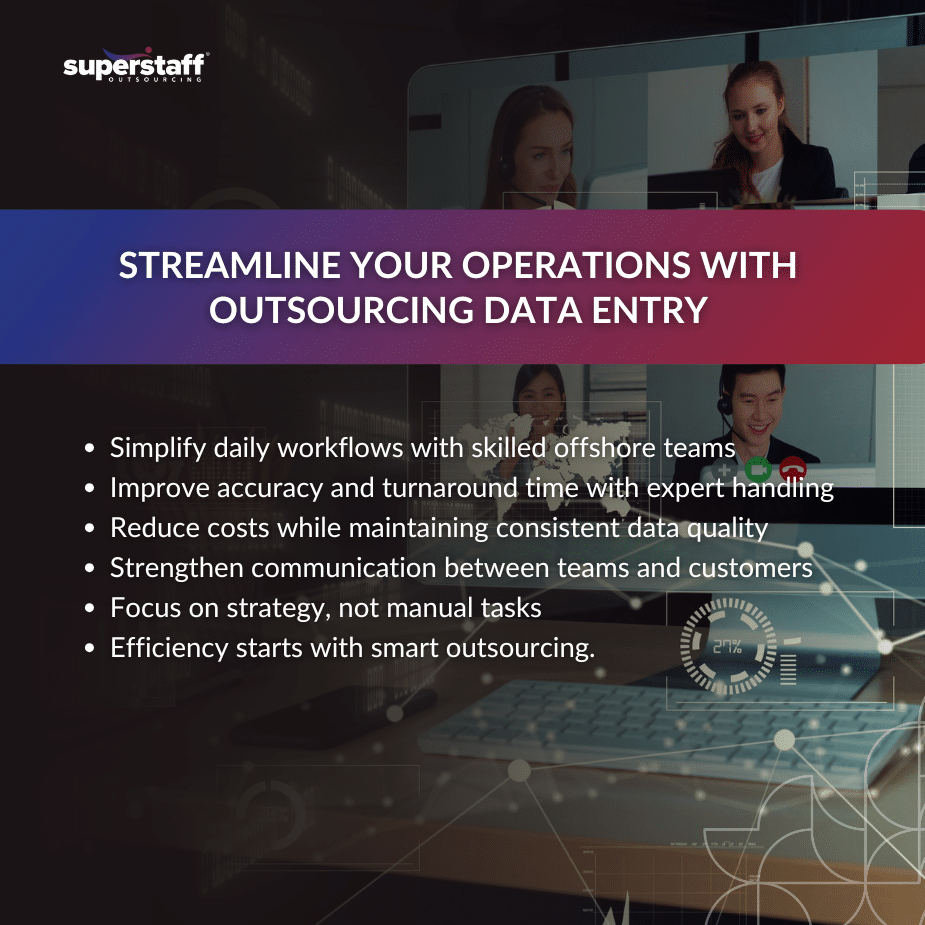
Outsourcing data entry can help businesses manage growing information needs, maintain accurate records, and reduce the time employees spend on repetitive tasks. When supported by clear procedures and regular quality checks, it can also improve coordination across administrative and customer service functions.
SuperStaff provides back-office support that includes data entry and administrative assistance. Businesses can choose services based on their workload, operational requirements, and internal capabilities.
If your team spends too much time updating records or processing documents, contact SuperStaff to discuss your requirements and determine which support options may fit your business.