
A growing business often faces the same problem. Customers expect fast answers, smooth onboarding, and reliable support, yet internal teams already handle too many tasks every day. As client demands increase, communication gaps start to appear. Small technical issues can also turn into larger business problems when nobody manages them closely.
This is where a technical account manager becomes valuable. A technical account manager helps businesses maintain strong client relationships while also solving technical concerns before they affect operations. Instead of waiting for problems to grow, companies can stay organized, responsive, and prepared for expansion.
Businesses that want steady growth need more than good products or services. They also need a clear process for customer support, account management, and technical coordination. With the right support system in place, companies can improve customer trust and protect long-term business relationships.
Stronger Customer Relationships Through Better Support
As businesses grow, customer expectations also increase. Clients want fast updates, clear communication, and reliable technical support. Without proper account management, businesses may struggle to keep up.
1. Faster Response to Client Concerns
A technical account manager acts as the main point of contact for clients. Because of this, customers know exactly who to reach when they need help. This process reduces confusion and shortens response times.
Additionally, faster communication helps businesses avoid delays that may frustrate customers. Clients appreciate quick action, especially when technical issues affect daily operations.
2. Better Communication Between Teams
Many businesses experience communication gaps between sales, operations, and technical teams. As a result, projects may slow down or important updates may get missed.
A technical account manager helps different departments stay aligned. They coordinate updates, track concerns, and make sure every team understands the client’s needs. Therefore, businesses can deliver smoother customer experiences.
3. Improved Customer Retention
Customers stay loyal when businesses provide reliable support. However, inconsistent service often pushes clients to look for other providers.
Strong account management creates trust and consistency. Clients feel supported because someone actively monitors their concerns and follows through on solutions. Over time, this relationship can improve customer retention and increase repeat business.
4. Proactive Problem Solving
Some businesses only react after problems appear. Unfortunately, delayed action often leads to customer complaints and operational setbacks.
A technical account manager monitors accounts regularly and identifies risks early. Instead of waiting for issues to escalate, they help businesses address concerns immediately. This approach protects both customer relationships and business performance.
5. Smoother Onboarding for New Clients
New clients need guidance during the onboarding process. Without proper support, customers may struggle to understand systems, tools, or workflows.
Account managers simplify onboarding by explaining processes clearly and answering technical questions quickly. Consequently, clients become more confident and comfortable working with the business.
Better Internal Operations for Growing Companies
Growth creates opportunities, but it also increases operational pressure. Teams handle more requests, larger workloads, and tighter deadlines. Without structure, operations may become disorganized.
1. Reduced Workload for Internal Teams
Sales teams already focus on finding new clients. Meanwhile, technical teams work on system maintenance and troubleshooting. When both groups also manage customer accounts, productivity may decrease.
A technical account manager handles account coordination and client communication. Because of this, internal teams can focus on their core responsibilities without constant interruptions.
2. Clearer Tracking of Client Needs
As client lists grow, businesses may lose track of customer requests, updates, or recurring issues. Poor tracking often leads to delays and missed opportunities.
Account managers maintain organized records of customer interactions and technical concerns. Therefore, businesses can respond faster and make informed decisions based on accurate information.
3. Improved Project Coordination
Many growing businesses manage multiple projects at the same time. Without proper coordination, deadlines may slip and teams may become overwhelmed.
Technical account managers help organize timelines, client expectations, and technical requirements. They also provide updates that keep projects moving efficiently.
4. Better Use of Technical Resources
Technical teams should focus on solving complex problems. However, they often spend time handling repetitive communication tasks.
When a technical account manager manages customer coordination, technical specialists can focus on higher-value work. Businesses can also consider IT outsourcing when workloads grow beyond the capacity of their internal technical teams.
5. Stronger Service Consistency
Consistency matters when businesses scale operations. Customers expect the same quality of support regardless of company size.
Account managers help standardize communication and support processes. This structure creates a more reliable experience for every customer.
Long-Term Business Growth Becomes Easier
Growth requires planning, stability, and customer trust. Businesses that ignore customer support challenges often face avoidable setbacks later.
1. Higher Customer Satisfaction
Satisfied customers are more likely to continue partnerships and recommend services to others. However, poor communication can damage even strong business relationships.
Technical account managers improve customer satisfaction by staying responsive and organized. They also provide consistent updates that keep clients informed throughout projects.
2. Better Client Retention Rates
Finding new customers costs time and money. Therefore, businesses should also focus on keeping existing clients satisfied.
Strong account management strengthens long-term customer relationships. Clients feel valued because businesses remain responsive to their technical and operational needs.
3. Easier Business Scalability
Growth becomes difficult when teams constantly react to problems. Businesses need systems that support expansion without creating operational problems.
A technical account manager helps create structure during periods of growth. Companies can also use outsourcing services to add specialized resources when customer demand and workloads increase.
4. Increased Business Reputation
Clients share their experiences with other businesses. Positive customer experiences can strengthen a company’s reputation and attract new opportunities.
Reliable communication, organized support, and proactive problem-solving help businesses build stronger professional relationships. Over time, this consistency improves brand credibility.
5. Stronger Focus on Business Goals
Business leaders should focus on strategy, expansion, and operational improvement. However, constant customer concerns may distract leadership teams from larger goals.
With proper account management support, leaders gain more time to focus on growth strategies. Meanwhile, customers continue receiving reliable technical support and communication.
Build Stronger Client Relationships With SuperStaff
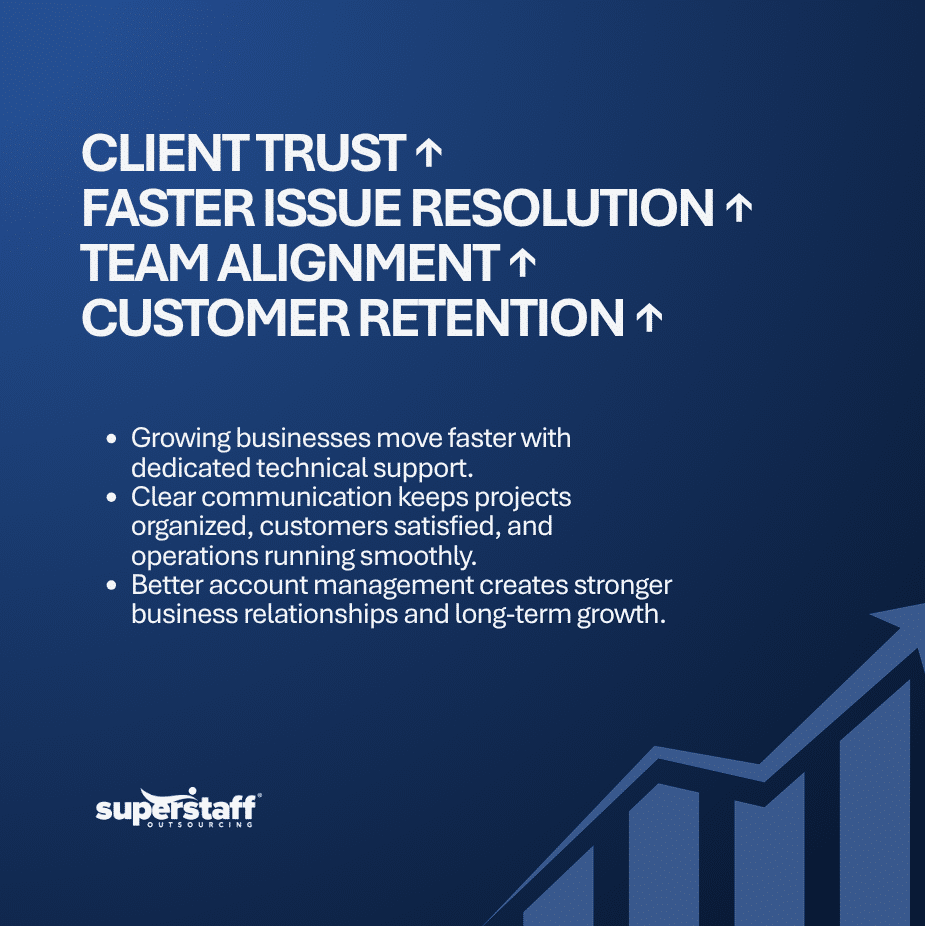
Growing businesses need reliable support systems to maintain customer satisfaction and operational efficiency. A technical account manager helps companies improve communication, solve problems faster, and support long-term business growth.
SuperStaff helps businesses build dedicated support teams that strengthen customer relationships and improve daily operations. Whether you need technical support, customer service, or back-office assistance, our team can help you scale based on changing business needs.
Reach out to us today and discover how SuperStaff can support your growing business with dependable outsourcing solutions.