Virtual assistants play a key role in helping businesses stay organized, productive, and responsive. From managing schedules to handling customer inquiries, they take on tasks that allow business owners and teams to focus on growth. However, not every virtual assistant delivers the same level of support. The difference often comes down to having the right virtual assistant skills.
Companies continue to rely on virtual assistant services because remote support provides flexibility and access to talent from different locations. As a result, the demand for professionals with strong virtual assistant skills continues to grow. Understanding what separates an average VA from an outstanding one can help businesses make better hiring decisions and help aspiring VAs build successful careers.
Core Skills Every Virtual Assistant Needs
A great virtual assistant brings a mix of technical abilities, communication strengths, and professional habits. While specific tasks may vary by industry, several skills remain essential across many roles.
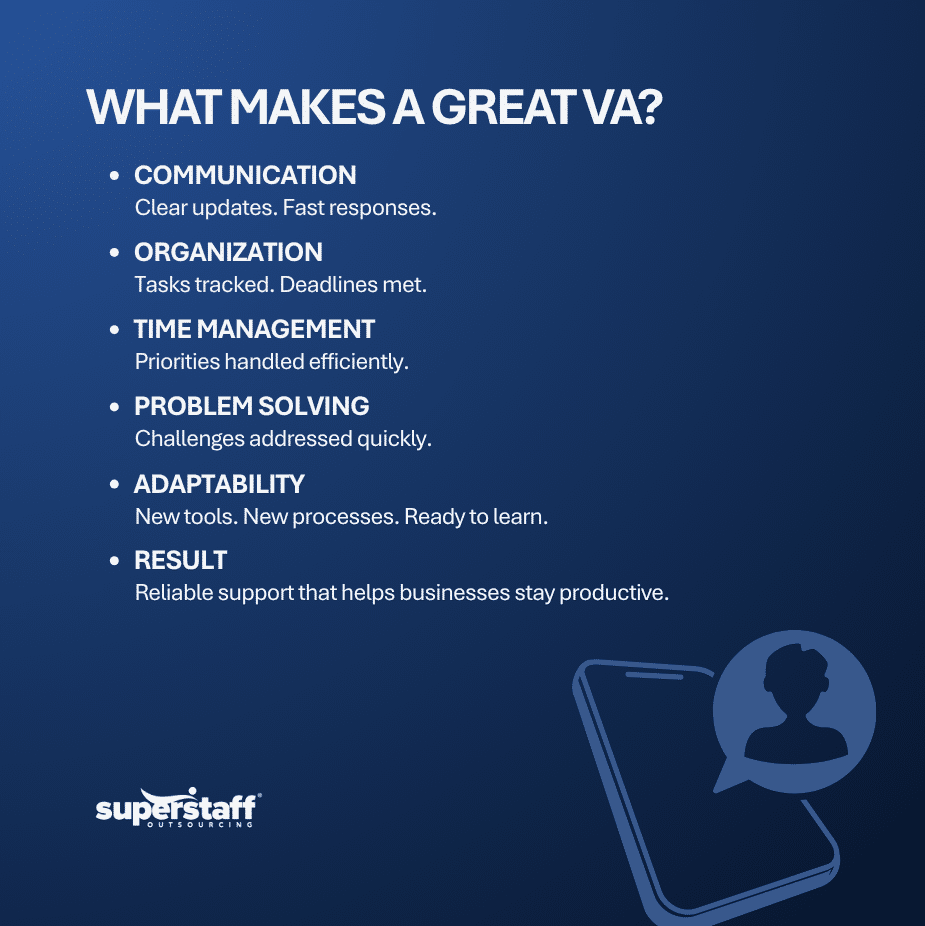
1. Strong Communication Skills
Communication sits at the center of every virtual assistant role. VAs often serve as a point of contact between businesses, clients, customers, and team members.
A skilled VA writes clear emails, responds professionally to messages, and communicates updates without confusion. Furthermore, they listen carefully and ask questions when needed. This helps prevent mistakes and keeps projects moving forward.
2. Excellent Time Management
Virtual assistants often handle multiple responsibilities throughout the day. Therefore, they must know how to prioritize tasks and manage deadlines effectively.
A great VA creates schedules, organizes workloads, and ensures that important tasks receive attention first. As a result, clients can trust that work will be completed on time without constant follow-up.
3. Organization and Attention to Detail
Businesses depend on VAs to keep information organized and accessible. Whether managing files, updating databases, or scheduling appointments, accuracy matters.
Even small errors can lead to missed meetings, incorrect records, or customer dissatisfaction. Consequently, successful virtual assistants pay close attention to details while maintaining organized systems for daily operations.
4. Problem-Solving Ability
Unexpected challenges appear in every business environment. A great VA does not wait for instructions at every step.
Instead, they look for solutions, evaluate available options, and take appropriate action within their responsibilities. This proactive approach can reduce delays and keep routine operations on track.
5. Adaptability and Willingness to Learn
Technology, tools, and business needs continue to change. Therefore, virtual assistants must stay flexible and open to learning new skills.
A VA who quickly adapts to new software, processes, or responsibilities can provide more value to an organization. Moreover, adaptability allows them to support different departments as business requirements evolve.
Technical Skills That Add More Value
While soft skills build a strong foundation, technical knowledge helps virtual assistants perform tasks efficiently. Many businesses actively seek candidates with these capabilities.
1. Calendar and Schedule Management
Managing appointments may seem simple, but it requires careful planning and coordination.
A skilled VA handles scheduling conflicts, sends reminders, and keeps calendars organized. As a result, executives and business owners can spend less time managing routine administrative tasks.
2. Email Management
Inbox management remains a common administrative responsibility for remote assistants.
Effective VAs organize emails, prioritize urgent messages, and respond when authorized. Additionally, they can maintain clear communication standards and make sure important messages receive attention.
3. Data Entry and Record Management
Accurate information supports better decision-making. Therefore, many businesses rely on back-office outsourcing services for tasks such as data entry, database maintenance, document organization, and other routine administrative processes.
Strong attention to detail helps ensure data remains accurate and easy to access. Consequently, teams can spend less time correcting errors and searching for information.
4. Customer Support Skills
Many virtual assistants assist with customer service through email, chat, or phone support.
Professional communication, patience, and problem-solving skills contribute to better customer interactions. Furthermore, prompt responses can reduce customer wait times and keep concerns from remaining unresolved.
5. Familiarity With Digital Tools
Modern businesses use various platforms to manage projects, communication, and workflows. According to Microsoft, collaboration tools can support communication and teamwork among employees working from different locations.
Some commonly used tools include:
- Project management software
- Customer relationship management platforms
- Cloud storage systems
- Video conferencing tools
- Collaboration applications
The stronger a VA’s knowledge of these platforms, the less time they may need to become familiar with a company’s existing workflow.
Professional Traits That Set Great VAs Apart
Technical abilities matter, but professional habits can also determine how well a virtual assistant works with a business over time. These traits support trust, communication, and consistent performance.
1. Reliability
Businesses need support they can depend on consistently.
Reliable virtual assistants complete assigned tasks, communicate progress, and meet agreed deadlines. Consequently, managers can delegate routine responsibilities with greater confidence.
2. Initiative
Great VAs do not simply wait for instructions. Instead, they identify routine issues, flag possible problems, and suggest practical improvements when appropriate.
This proactive approach can make administrative processes more efficient and reduce unnecessary follow-ups.
3. Professionalism
Professional behavior is especially important when virtual assistants interact with customers, business partners, or confidential company information.
A successful VA communicates respectfully, follows company policies, and handles responsibilities carefully. Businesses using outsourced customer service also need remote professionals who can represent their brand consistently during customer interactions.
4. Accountability
Mistakes can happen in any role. However, strong virtual assistants take responsibility when issues arise.
Rather than ignoring problems, they communicate what happened, correct the issue when possible, and apply feedback to prevent similar mistakes. This supports a more dependable working relationship.
5. Positive Attitude
A professional and constructive attitude supports better collaboration, especially when workloads increase or priorities change.
Virtual assistants who communicate respectfully and remain focused on solutions can work more effectively with managers, employees, and customers.
Why Businesses Prioritize These Skills
When hiring remote professionals, businesses often look beyond basic qualifications. They need team members who can work independently, communicate clearly, manage priorities, and follow established processes.
Strong virtual assistant skills allow professionals to manage responsibilities with less day-to-day supervision. Businesses can delegate administrative, customer support, scheduling, data management, and other routine tasks while keeping internal employees focused on their main responsibilities.
Businesses can also benefit from VAs who continue developing their abilities. Learning new software, improving communication skills, and gaining experience with different business processes can prepare virtual assistants to handle a wider range of responsibilities.
Build Strong Teams With Skilled Virtual Assistants
The best virtual assistants combine communication, organization, adaptability, and technical knowledge. These virtual assistant skills can support better productivity, organized operations, and consistent customer service. Professionals who continue strengthening their virtual assistant skills can also take on more responsibilities as business needs change.
SuperStaff provides outsourcing solutions that connect businesses with skilled professionals for administrative, customer support, back-office, and other business functions. The right remote team can give internal employees additional support while keeping routine work organized.
Need experienced professionals to support your growing business? Contact SuperStaff to discuss your staffing needs and find an outsourcing solution that fits your operations.