Global competition and rising customer expectations are pushing companies to find better ways to deliver reliable support while managing operating costs. Outsourced customer service Philippines solutions give businesses access to trained professionals who handle customer inquiries, resolve concerns, and maintain communication across different channels. This allows internal teams to focus on business priorities without leaving customers waiting for assistance.
The Philippines has an established business process outsourcing industry, supported by professionals with experience in customer communication, technical support, and service operations. Companies can use these services to manage changing call volumes, extend support hours, and maintain consistent service standards. With the right provider, outsourcing can support customer satisfaction while giving businesses greater flexibility as they grow.
Why the Philippines Leads in Outsourced Support
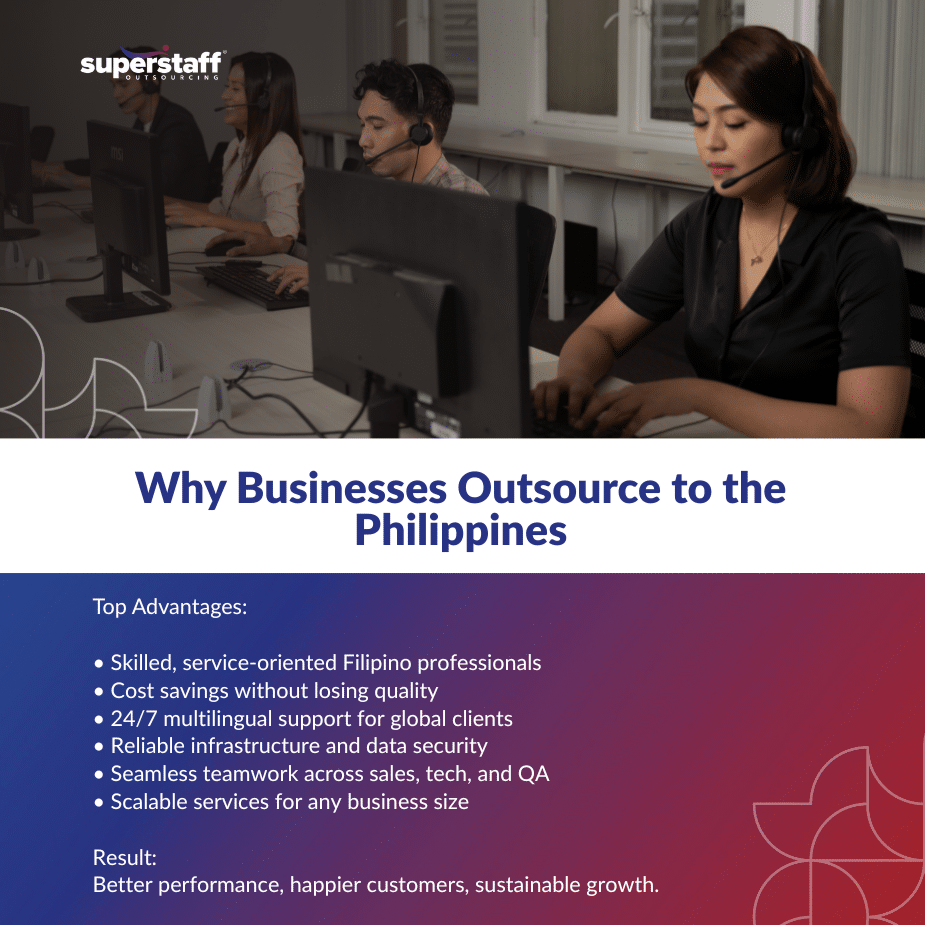
The Philippines attracts companies looking for customer service teams that can communicate clearly, follow established procedures, and adapt to different customer needs. Businesses should evaluate providers based on their training, security practices, technology, and ability to meet agreed service targets.
1. Skilled and Service-Oriented Workforce
Customer service requires active listening, clear communication, and patience. Filipino professionals work across customer support, sales, technical assistance, and other business services. With appropriate training and product knowledge, agents can address customer concerns professionally and represent a company’s brand consistently.
2. Cost Efficiency and Value
Building an in-house customer service department involves recruitment, salaries, training, technology, and management. Outsourcing allows businesses to use an established support operation instead of managing every resource internally. The potential savings depend on the provider’s fees, staffing requirements, service hours, and the complexity of customer inquiries.
3. English Communication Skills
Clear communication helps agents understand customer concerns and explain solutions. English is widely used in the Philippine business process outsourcing industry, making the country a practical option for companies serving English-speaking markets. Businesses should still assess agents’ language skills and provide training on industry terms and brand-specific communication standards.
4. Reliable Technology and Infrastructure
Customer service teams depend on stable communication systems, customer relationship management (CRM) platforms, and tools for tracking inquiries. These systems allow agents to access relevant information, document interactions, and transfer cases to the right department. Companies should review a provider’s system reliability and data protection measures before entering an agreement.
5. Established Industry Support
The Philippine IT and business process management sector serves international clients across customer support, healthcare services, technology, and other fields. The IT and Business Process Association of the Philippines provides information about the country’s outsourcing industry, including its service sectors and business environment.
How Outsourced Customer Service Strengthens Business Operations
Outsourced customer service Philippines solutions can support daily operations by giving businesses additional staff, structured workflows, and defined performance targets. The right setup depends on customer demand, the channels customers use, and the level of support the company needs.
1. Faster Response and Resolution
Long wait times can frustrate customers and increase the number of unresolved inquiries. An appropriately staffed outsourced team can manage incoming calls, emails, and chats more efficiently. Clear escalation procedures also ensure that complex concerns reach the right specialists.
2. Consistent Quality Assurance
Quality assurance outsourcing allows businesses to review customer interactions and check whether agents follow company policies. Supervisors can assess call recordings, chat transcripts, and case records to identify recurring problems and provide targeted coaching.
Regular quality checks can also reveal gaps in product knowledge, communication, or issue resolution. Businesses should establish clear evaluation criteria so that outsourced agents understand how their performance will be measured.
3. Flexible Staffing
Customer contact volumes can increase during holidays, promotional campaigns, product launches, or unexpected service disruptions. Outsourced teams can adjust staffing according to agreed requirements, allowing businesses to manage changing demand without handling every recruitment and scheduling task internally.
4. Technical Support for Customers
Some customer inquiries require more than general assistance. Customers may need help with software errors, account access, product setup, or troubleshooting. Businesses that outsource technical support to Philippines-based teams can assign these tasks to trained specialists while internal technical staff focus on more complex issues.
5. Access to Customer Service Tools
Customer service providers may use CRM systems, call-routing software, knowledge bases, and performance dashboards to manage interactions. These tools give agents access to relevant information and allow managers to monitor response times, case outcomes, and customer feedback.
Companies can also use SuperStaff’s customer service outsourcing solutions to assess support options across phone, email, chat, and other customer communication channels.
How Philippine Outsourcing Improves Customer Satisfaction
Customer satisfaction depends on how well a business understands and responds to customer needs. Outsourced customer service Philippines teams can contribute to better experiences when agents have accurate information, clear procedures, and the authority to resolve common issues.
1. Personalized Customer Interactions
Customers want answers that address their specific concerns. Agents who review customer history, listen carefully, and ask relevant questions can provide more useful responses. Personalization should also follow company policies and appropriate data access rules.
2. Extended Support Availability
Customers may need help outside standard business hours, especially when a company serves several countries. Outsourcing can provide evening, weekend, or 24/7 coverage when included in the service agreement. This gives customers more opportunities to reach a representative when they need assistance.
3. Data-Driven Service Improvements
Customer interactions provide useful information about common questions, recurring complaints, and product issues. Outsourced teams can record these patterns and share reports with the business. Managers can then use the findings to update support procedures, improve product information, or address problems that affect multiple customers.
4. Stronger Customer Retention
Customers are more likely to continue doing business with a company when they receive dependable support. Prompt responses, clear explanations, and appropriate follow-up can improve customer confidence. Retention also depends on factors such as product quality, pricing, and the overall value customers receive.
5. Communication Across Different Markets
Businesses serving international customers need agents who can adapt their communication to different audiences. Training in cultural awareness, local terminology, and customer expectations can reduce misunderstandings and improve the quality of support.
Customer relationships also extend beyond individual service calls. Customer success outsourcing in the Philippines can support ongoing customer engagement, follow-ups, and relationship management as businesses expand.
Industries That Benefit From Philippine Customer Service Outsourcing
Different industries have different support needs. An outsourcing arrangement should reflect the types of questions customers ask, the information agents must access, and the rules that apply to each industry.
1. E-Commerce and Retail
Online retailers receive questions about orders, shipping, returns, refunds, and product availability. Outsourced agents can provide updates, explain policies, and coordinate with fulfillment teams when an issue requires further action.
2. Technology and Software
Technology companies often receive requests about account access, software features, installation, and troubleshooting. Trained agents can resolve common problems and escalate technical issues that require specialized knowledge.
3. Healthcare and Insurance
Healthcare organizations and insurers may outsource appointment scheduling, billing inquiries, claims status questions, and general administrative support. Teams handling sensitive information must follow applicable privacy requirements, security controls, and approved procedures.
4. Financial Services
Banks and financial service providers manage inquiries about accounts, transactions, payments, and digital access. Outsourced agents must follow identity verification procedures and security rules before discussing account details or processing requests.
5. Travel and Hospitality
Travel companies need support for reservations, cancellations, itinerary changes, and customer complaints. Outsourced teams can provide assistance across time zones and help travelers understand their options when plans change.
Best Practices for Effective Outsourcing Partnerships
Outsourcing works best when businesses treat the provider as an extension of their operations while maintaining clear oversight. The following practices can improve coordination and service quality.
1. Set Measurable Goals
Define key performance indicators (KPIs) for response time, resolution rates, customer satisfaction, and quality scores. Targets should reflect customer needs and business priorities rather than focusing on speed alone.
2. Maintain Open Communication
Schedule regular meetings between internal managers and outsourced team leaders. Share updates about products, policies, customer concerns, and operational changes so agents can provide accurate information.
3. Provide Product and Policy Training
Agents need current knowledge of company products, services, and procedures. Update training materials whenever a policy changes or a new product becomes available. Provide clear instructions for handling unfamiliar or sensitive requests.
4. Conduct Regular Quality Reviews
Review calls, chats, and customer feedback to identify areas for improvement. Use consistent evaluation criteria and provide coaching based on specific examples. Quality reviews should focus on both compliance with procedures and the customer’s experience.
5. Encourage Team Collaboration
Give outsourced agents a clear process for working with internal departments. Sales, technical, billing, and fulfillment teams should know how to receive escalations and share updates. This coordination reduces delays and prevents customers from receiving conflicting information.
Build Reliable Customer Support With Philippine Outsourcing
Choosing an outsourced customer service Philippines provider involves more than comparing service rates. Businesses should assess the provider’s training program, staffing model, communication tools, data security practices, and reporting process. These factors influence how well the team can represent the brand and respond to customer needs.
Companies should also decide which channels they need, what support hours they require, and which issues agents can resolve independently. Clear expectations make it easier to monitor performance and adjust the arrangement as customer demand changes.
Strengthen Customer Experiences With SuperStaff
Reliable customer support gives businesses a consistent way to address questions, resolve problems, and maintain customer relationships. SuperStaff provides outsourcing solutions for companies that need customer service, technical support, and other operational assistance.
Businesses looking for a suitable support arrangement can review their requirements, expected call volumes, service hours, and performance targets before selecting a team. This approach helps ensure that the outsourcing model matches actual business needs.
To discuss your company’s customer service requirements and available support options, contact SuperStaff.