Moving goods from one place to another requires much more than trucks, warehouses, and delivery drivers. Every successful shipment also depends on accurate records, timely communication, organized scheduling, and efficient administrative work.
As logistics operations become more complex, companies are paying closer attention to the work happening behind the scenes. Shipment tracking, invoice processing, document preparation, and customer communication all affect how smoothly goods move through the supply chain. When these tasks fall behind, deliveries can be delayed, billing errors may increase, and customers may receive incomplete information.
That is why more logistics companies are investing in back-office support operations. They want organized processes and skilled support teams that can handle daily administrative demands while allowing logistics managers to focus on transportation, warehouse activities, and business growth.
Why Back-Office Functions Matter in Logistics
Customers usually see the delivery, but they do not always see the administrative work required to complete it. Behind every shipment are employees responsible for updating records, checking documents, processing invoices, and coordinating with carriers.
A 2025 freight forwarding industry report by Magaya and Adelante SCM found that logistics companies are prioritizing improvements in shipment scheduling, freight billing, documentation management, and data entry. These findings reflect the need for more efficient administrative processes. The 2025 State of the Industry Report provides further insight into these operational priorities.
1. Keeping Shipment Information Accurate
Every shipment generates information that needs to be recorded and updated. This includes invoices, shipping documents, inventory details, delivery confirmations, and tracking records.
Back-office employees help maintain these records so that warehouse teams, drivers, finance departments, and customer service representatives can work with accurate information. When records are complete, businesses can reduce errors and avoid unnecessary follow-ups.
2. Supporting Faster Business Decisions
Logistics managers need reliable information to monitor daily performance and address problems. They may need to check delivery schedules, review freight costs, investigate delays, or confirm shipment status.
Back-office teams help organize this information and prepare reports that managers can use when making decisions. This gives leadership a clearer view of what is happening across operations.
3. Improving Customer Communication
Customers regularly ask about shipment status, delivery schedules, invoices, and service concerns. When logistics teams are busy managing transportation and warehouse activities, responding to every inquiry can become difficult.
Administrative and customer support teams can help answer routine questions, provide updates, and coordinate with the appropriate department. This improves response times and gives customers more consistent information.
4. Reducing Administrative Delays
Manual paperwork and repetitive tasks can take up a large part of an employee’s day. When documents are processed late or information is entered incorrectly, other departments may need to wait before moving forward.
Organized back-office processes help reduce these delays. Employees can follow clear procedures for preparing documents, updating records, and forwarding information to the right people.
5. Strengthening Coordination Across Departments
Logistics operations depend on communication between finance, warehouse, procurement, transportation, and customer service teams. Each department needs accurate information to complete its responsibilities.
Back-office support helps keep records updated and information accessible. This reduces confusion and makes it easier for employees to coordinate their work.
Key Areas Where Back-Office Support Creates Value
Back-office support covers several tasks that help logistics companies manage daily operations. These functions may seem routine, but mistakes or delays can affect shipments, payments, and customer relationships.
1. Invoice Processing
Logistics companies handle invoices from carriers, suppliers, warehouses, and other service providers. Employees need to review charges, verify amounts, check supporting documents, and prepare records for payment.
A consistent invoice processing system helps businesses identify billing discrepancies before payments are approved. It also improves financial recordkeeping and reduces the time spent correcting errors.
2. Shipment Documentation
Shipping documents need to be complete and accessible throughout the transportation process. Depending on the shipment, these may include bills of lading, commercial invoices, packing lists, delivery receipts, and proof-of-delivery records.
Back-office employees can prepare, review, organize, and update these documents based on established procedures. Accurate records make it easier to coordinate with carriers, customers, and other logistics partners.
3. Data Entry and Record Management
Logistics companies maintain large amounts of information about shipments, inventory, customers, suppliers, and deliveries. Missing or outdated records can make it difficult to monitor operations.
Administrative teams help enter shipment details, update customer information, maintain digital records, and organize documents. This gives managers more dependable information when reviewing business performance.
4. Customer Service Support
Many customer inquiries involve shipment tracking, delivery schedules, billing questions, and documentation requests. A dedicated support team can respond to routine concerns and forward more complex issues to the appropriate department.
This reduces the workload on logistics managers while helping customers receive timely updates.
5. Performance Reporting
Business leaders need accurate reports to review delivery performance, operating costs, shipment volumes, and employee productivity.
Back-office teams can gather information from different records and prepare regular reports. These reports help managers identify delays, recurring errors, and areas where processes need improvement.
Why Outsourcing Back-Office Support Makes Sense
Maintaining a full internal administrative team can become expensive as shipment volumes increase. Recruitment, training, salaries, and employee management all require time and resources.
Outsourcing gives logistics companies another way to manage these responsibilities. External professionals can handle selected administrative tasks while internal teams continue managing core operations.
Companies exploring this option can review supply chain outsourcing strategies in the Philippines to understand how external teams can support shipment tracking, dispatch coordination, freight documentation, and other logistics functions.
1. Access to Skilled Administrative Professionals
Finding employees with the right administrative and logistics experience can take time. Outsourcing providers can help businesses access professionals who are trained to follow structured workflows and manage recurring tasks.
This gives companies additional support without having to build every role internally.
2. Greater Workforce Flexibility
Logistics workloads often change throughout the year. Seasonal demand, new customers, and business expansion can increase the number of shipments and administrative requests that need attention.
Outsourcing allows companies to adjust support based on their workload and service requirements. This can help businesses manage busy periods without making permanent staffing decisions for every increase in demand.
3. Better Control of Administrative Costs
Recruiting and managing internal employees involves expenses beyond salaries. Businesses also need to account for recruitment, training, equipment, workspace, and employee management.
Outsourcing provides an alternative way to access administrative support. Companies can agree on the scope of work and staffing requirements based on their operational needs.
4. More Consistent Workflows
Dedicated support teams can follow documented procedures for invoice processing, shipment updates, data entry, and record management.
Clear instructions and regular quality checks help maintain consistent results. Businesses should also establish reporting procedures so internal managers can monitor completed work and address issues when needed.
5. More Time for Core Logistics Activities
When external teams handle selected administrative responsibilities, internal employees can focus on transportation planning, warehouse management, supplier relationships, and customer service improvements.
This allows companies to divide responsibilities more effectively and use internal resources where they are most needed.
What to Consider Before Outsourcing
Outsourcing can improve administrative capacity, but logistics companies should first identify which tasks are suitable for external support. Routine, repeatable activities such as data entry, shipment record updates, invoice preparation, and document organization are often good starting points.
Businesses should also review the provider’s experience, training process, data security practices, communication standards, and ability to work with existing systems. Clear service expectations help both teams understand their responsibilities.
It is equally important to establish how exceptions will be handled. For example, missing shipment details, billing discrepancies, and urgent customer concerns should have clear escalation procedures.
Logistics Back-Office Support for Growing Companies
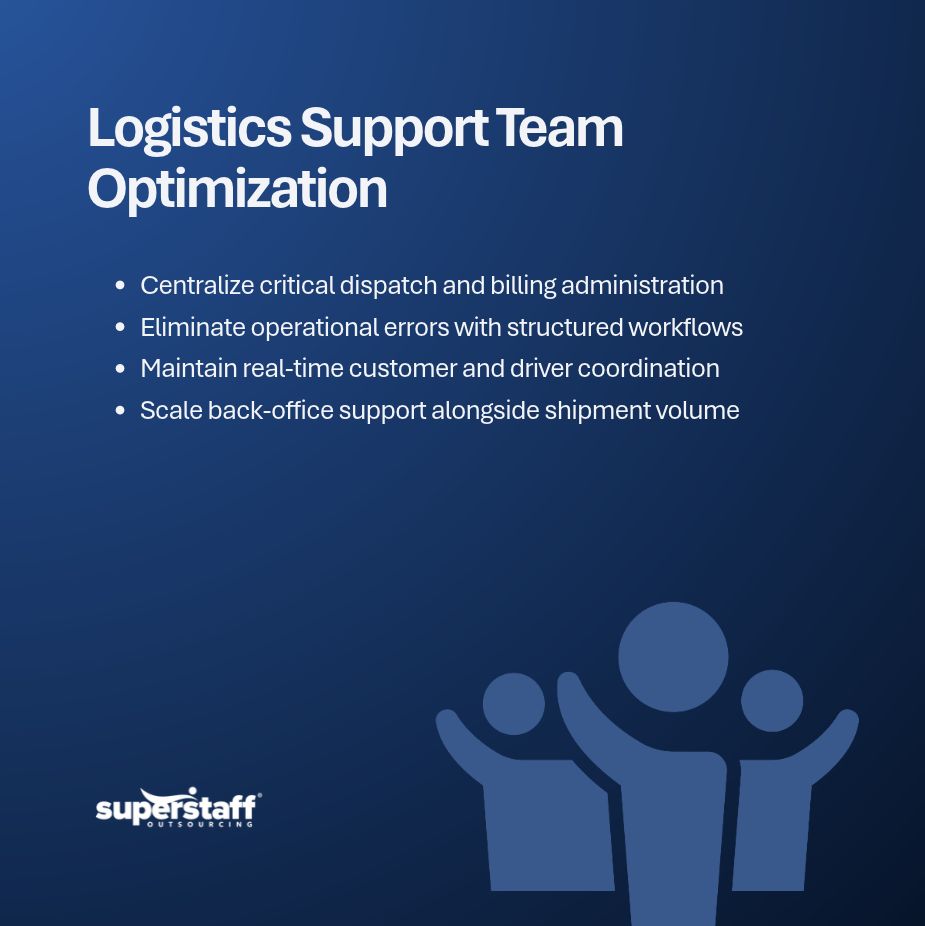
As shipment volumes increase, companies may need more help with administrative tasks without adding pressure to their existing teams. Dedicated logistics support can help manage shipment tracking, freight billing, proof-of-delivery processing, document preparation, and carrier coordination.
Businesses that want to understand how these services work can review logistics back-office support in the Philippines. The right support arrangement can help companies maintain organized records, improve coordination, and manage daily workloads more consistently.
Build Strong Operations Behind Every Delivery
Strong logistics operations depend on more than transportation and warehousing. Accurate records, organized documentation, timely communication, and reliable administrative support all help keep shipments moving.
By investing in better back-office processes, logistics companies can reduce errors, manage workloads, and improve service quality. Outsourcing can also provide access to skilled professionals who handle selected tasks while internal teams focus on the work that directly supports business goals.
SuperStaff helps logistics companies strengthen their operations through shipment tracking, dispatch coordination, freight billing, documentation processing, customer support, and other back-office services. Whether you need help with routine administrative tasks or additional support for growing shipment volumes, our team can help you build a workforce that fits your needs. Contact SuperStaff to discuss your logistics support requirements and find a solution for your business.