Outsourcing warehouse functions has become a common strategy for businesses that want to save money, improve efficiency, and keep up with customer expectations. From small e-commerce stores to growing enterprises, companies rely on external providers to handle storage, order fulfillment, and inventory management.
But not every outsourcing decision delivers the results businesses expect. Mistakes in choosing providers, unclear agreements, and poor communication often lead to higher costs, shipping delays, or compliance problems. Learning about the common pitfalls to avoid when outsourcing warehouse functions can help leaders make better decisions and protect their supply chain.
This article explores why businesses outsource warehouse operations, the most common mistakes that occur, the risks these mistakes create, and how to avoid them. It also explains how the right partner supports efficiency, compliance, and long-term growth.
Why Businesses Outsource Warehouse Functions
Companies choose outsourcing warehouse functions for several reasons. It allows them to reduce expenses, increase flexibility, and focus on growth instead of managing complex logistics tasks.
1. Lower Costs
Businesses reduce expenses on storage, labor, and warehouse equipment by partnering with third-party providers.
2. Access to Expertise
Providers bring logistics experience that helps improve efficiency in inventory and order management.
3. Seasonal Flexibility
Outsourcing makes it easier to adjust operations during peak seasons or business expansion.
4. Faster Order Fulfillment
Specialized providers use streamlined processes to handle shipments more efficiently.
5. Technology Without Big Investments
Companies benefit from advanced systems for tracking and reporting without purchasing costly software.
Common Pitfalls to Avoid When Outsourcing Warehouse Functions
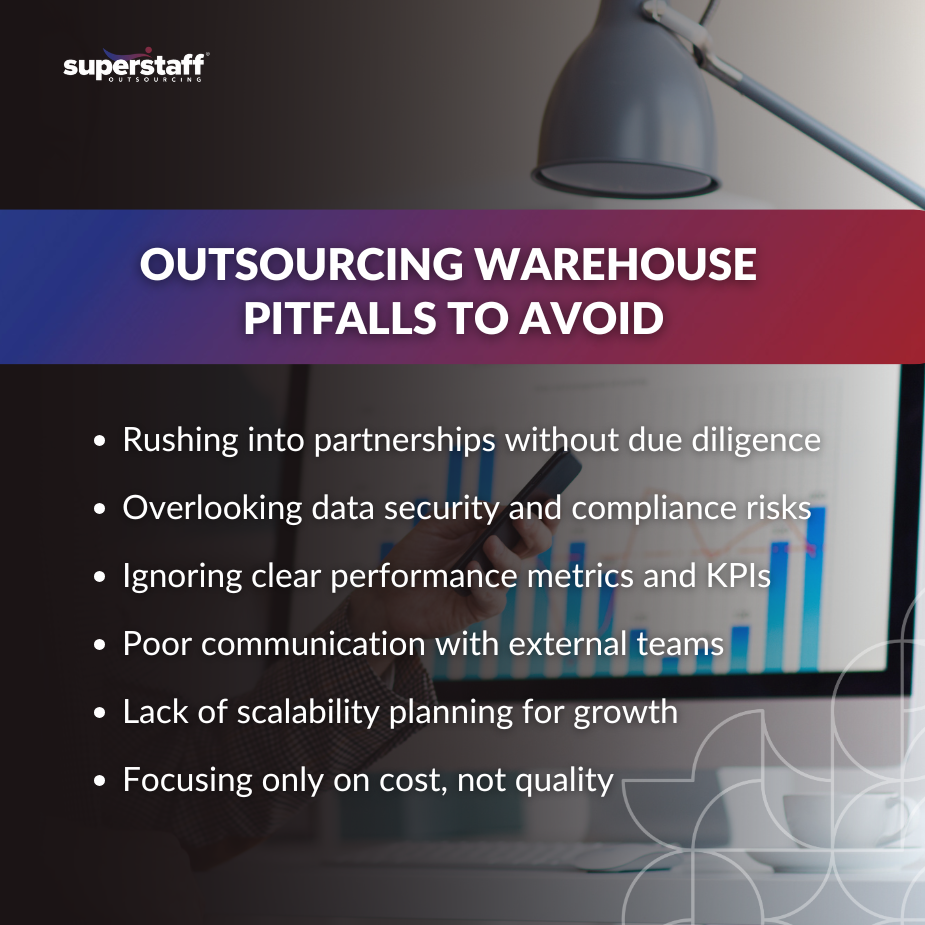
While outsourcing warehouse functions offers many benefits, businesses often make mistakes that reduce the value of these partnerships. Understanding these pitfalls makes it easier to avoid costly errors.
1. Choosing Based Only on Price
Many businesses focus only on the lowest rates. This often leads to hidden charges or poor service quality that costs more in the long run.
2. Weak Contracts and SLAs
Without clear service level agreements (SLAs), it becomes difficult to measure performance or hold providers accountable.
3. Poor Communication
Lack of regular updates can lead to delays, inaccurate inventory data, or missed deadlines.
4. Ignoring Technology Capabilities
Working with providers that lack modern tracking and reporting tools creates inefficiencies and weak visibility.
5. Overlooking Scalability
Some providers cannot adjust to sudden demand changes, creating bottlenecks during business growth or seasonal spikes.
Financial and Operational Risks of Poor Outsourcing
The pitfalls of warehouse management outsourcing can have serious effects on both cost and operations.
1. Rising Costs
Hidden fees, errors, and inefficiencies often erase the savings companies expected.
2. Inventory Problems
Poor systems can result in overstock, stockouts, or misplaced goods.
3. Customer Complaints
Late or incorrect deliveries harm the company’s reputation and customer loyalty.
4. Compliance Issues
Weak reporting or poor handling of goods can lead to fines or regulatory problems.
5. Long-Term Dependency
Being locked into a poorly performing contract can damage growth and flexibility.
Best Practices to Avoid Mistakes
Businesses can avoid problems in outsourcing warehouse functions by following proven practices.
1. Research Provider Expertise
Choose partners with a strong track record in warehouse management outsourcing, not just the cheapest rates.
2. Establish Clear SLAs
Contracts should include measurable KPIs such as delivery accuracy, order speed, and inventory reporting.
3. Maintain Open Communication
Regular meetings and reports keep both sides aligned and reduce the chance of errors.
4. Evaluate Technology Systems
Check if the provider’s systems integrate with your platforms and offer real-time visibility.
5. Plan for Growth
Select providers that can expand services as your business grows or demand changes.
How the Right Provider Improves Performance
Working with reliable providers avoids common pitfalls to avoid when outsourcing warehouse functions and creates a stronger supply chain.
1. Better Accuracy
Advanced systems reduce errors in inventory counts and order fulfillment.
2. Faster Delivery
Structured workflows ensure timely shipping that improves customer satisfaction.
3. Cost Transparency
Providers with clear pricing prevent unexpected costs and make budgeting easier.
4. Stronger Compliance
Professional oversight ensures that reporting and handling meet regulatory standards.
5. Scalable Solutions
Flexible services allow businesses to adapt to seasonal peaks or growth opportunities.
Long-Term Benefits of Smart Outsourcing
When outsourcing warehouse functions is done correctly, companies gain more than short-term cost savings. The right partner strengthens long-term performance.
- Leadership teams spend less time worrying about logistics.
- Customers enjoy reliable, on-time deliveries.
- Financial planning improves with accurate inventory and cost data.
- Businesses gain confidence in compliance and reporting.
Services grow with the company instead of holding it back.
Avoid Outsourcing Risks With Smarter Warehouse Solutions
Outsourcing warehouse functions should not create new problems. Businesses can protect themselves by avoiding common pitfalls, building strong contracts, and choosing providers with the right expertise and systems.
SuperStaff helps companies manage warehouse management outsourcing with confidence. By offering scalable solutions, transparent pricing, and technology-driven support, SuperStaff ensures accuracy, compliance, and efficiency in every step of warehouse operations.
Partnering with the right provider reduces risks, improves customer satisfaction, and creates long-term value. For businesses aiming to grow without losing control of their logistics, outsourcing warehouse functions with a trusted partner like SuperStaff is the smart choice.