
Ethical considerations now influence outsourcing decisions as much as cost and scalability. Many U.S. leaders look for partners that meet fair trade outsourcing expectations while maintaining operational efficiency.
Colombia’s workforce culture offers this balance. Professional discipline, labor protections, and transparent workforce practices create an environment that aligns naturally with ethical outsourcing standards.
Decision makers no longer view outsourcing only through a financial lens. They evaluate how workforce treatment, compliance visibility, and sustainable labor practices reflect on their own brand and governance standards.
Fair Trade Expectations Are Influencing Outsourcing Decisions
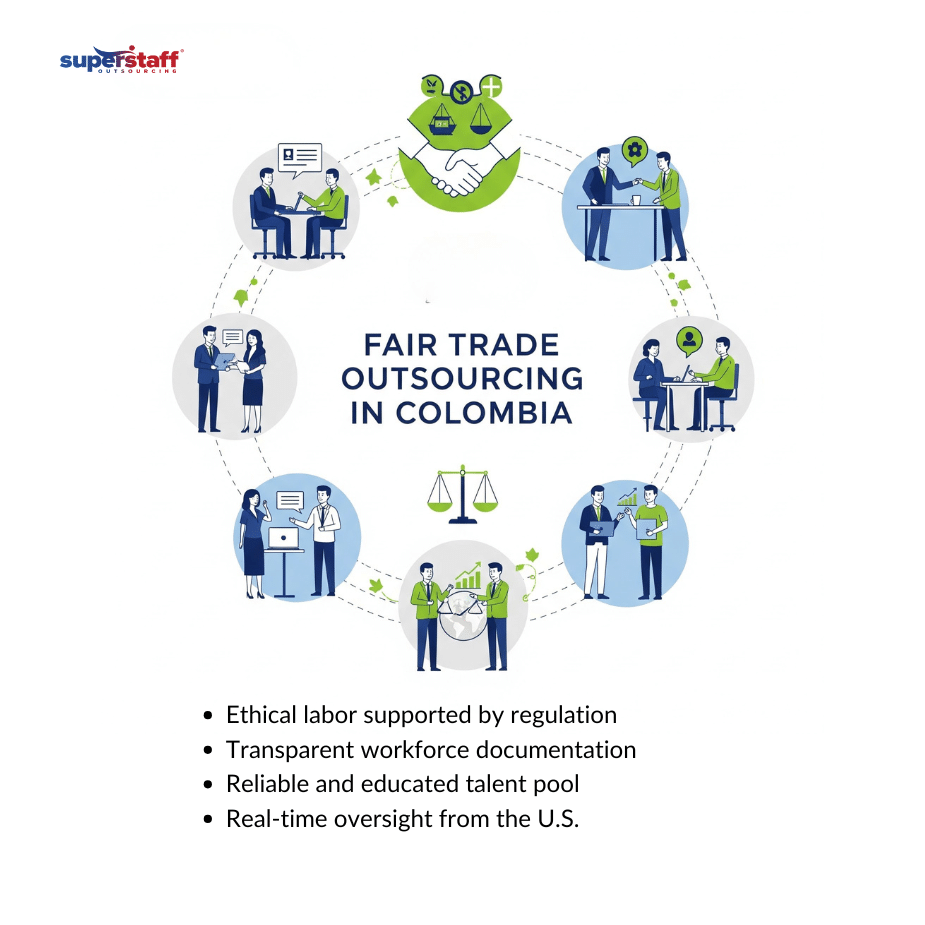
U.S. companies face increasing scrutiny around labor practices in their supply chains. Leadership teams want assurance that outsourced operations respect worker welfare and transparency. Fair trade outsourcing addresses these concerns by prioritizing ethical employment practices alongside service delivery.
Colombia’s labor environment supports this approach through regulated employment structures and professional accountability. Leaders gain comfort knowing that ethical treatment of workers is supported by national labor frameworks rather than informal practices.
Respect for Structured Work Is Embedded in Colombian Workforce Culture
Colombian professionals are accustomed to working within documented processes. Punctuality, accountability, and adherence to guidelines are part of workplace norms. This structure supports fair trade outsourcing because tasks are completed within clear operational frameworks.
Teams understand the importance of following procedures that can be reviewed and audited. Managers find it easier to align Colombian teams with compliance expectations because process discipline is already familiar to the workforce.
Labor Regulations in Colombia Reinforce Ethical Employment
National labor laws in Colombia provide clear protections for employees. Contracts, benefits, and regulated work hours are standard practice. These safeguards align with the expectations of U.S. firms seeking fair trade outsourcing partners.
Leaders gain confidence knowing workforce welfare is supported by regulation and oversight. Ethical treatment is not dependent on company preference but reinforced by legal standards that apply across industries.
Colombian Workforce Management Supports Transparency
Colombian workforce management practices emphasize documentation and reporting. Attendance tracking, performance logs, and workflow records are maintained consistently. Transparency is essential in fair trade outsourcing because it provides visibility into how work is performed.
This documentation allows U.S. partners to verify compliance without difficulty. Operational reports provide a clear trail of how services are delivered each day.
Cultural Emphasis on Education and Skills Strengthens Service Quality
Education is highly valued in Colombia. Many professionals pursue ongoing training to improve their skills. This focus supports companies with sustainable practices that depend on knowledgeable and capable teams.
Skilled workers deliver reliable service while maintaining ethical work standards. Continuous learning contributes to both performance and workforce stability.
Companies With Sustainable Practices Value Predictable Workforce Behavior
Reliability matters when outsourcing operations. Colombian teams demonstrate consistent attendance and low turnover compared to many outsourcing markets. This predictability supports fair trade outsourcing by ensuring stable employment conditions.
Sustainable workforce behavior reduces operational disruption. Leaders avoid the instability that often raises ethical and service quality concerns.
Workforce Stability Contributes to Ethical Delivery
Stable employment conditions allow workers to focus on performance rather than job insecurity. Fair trade outsourcing benefits when employees feel protected, valued, and supported. Colombian workplaces often emphasize long term employment relationships rather than short term staffing approaches.
This stability improves both service quality and workforce morale. Ethical outsourcing is easier to achieve when teams are confident in their roles.
Time Zone Alignment Improves Operational Oversight
Nearshore proximity allows U.S. managers to monitor operations during regular business hours. Real-time communication makes it easier to oversee compliance and workforce practices. Fair trade outsourcing benefits from this visibility because oversight is immediate.
Managers remain connected to daily operations without delay. This accessibility reduces the distance between leadership and frontline teams.
Outsourcing to Colombia With Compliance to Fair Trade Standards Reduces Risk
Ethical outsourcing reduces reputational and legal risks. Clear documentation, regulated employment, and transparent reporting create an environment where compliance is easy to verify. Outsourcing to Colombia with compliance to fair trade standards helps companies protect their brand.
Risk reduction becomes a practical benefit of nearshore outsourcing. Leaders spend less time worrying about hidden workforce issues.
Colombian Teams Integrate Well With U.S. Compliance Expectations
Cultural familiarity with North American business practices improves collaboration. Communication is clear, and reporting expectations are understood. Fair trade outsourcing succeeds when teams operate with mutual understanding.
This alignment minimizes misunderstandings around compliance and performance. Teams quickly adapt to documentation and audit requirements.
Ethical Work Habits Are Visible in Daily Operations
In Colombia, professional behavior is reflected in punctuality, accountability, and respect for guidelines. Fair trade outsourcing becomes visible through everyday actions rather than policy statements. Managers observe ethical standards through consistent operational discipline.
Daily routines reinforce trust between U.S. partners and Colombian teams.
Leadership Visibility Strengthens Workforce Accountability
Colombian organizations often emphasize visible management involvement. Supervisors remain engaged with teams and monitor performance closely. Fair trade outsourcing benefits when leaders maintain active oversight of workforce conditions.
This presence ensures issues are addressed early and transparency remains intact.
A Workforce Culture That Supports Ethical Outsourcing
Colombia’s workforce culture aligns closely with fair trade outsourcing principles through structured work habits, labor protections, transparency, and professional discipline.
Companies with sustainable practices benefit from this environment because ethical standards are supported by daily operations. Outsourcing to Colombia with compliance to fair trade standards allows leaders to balance service quality with responsible workforce management.
SuperStaff enables U.S. businesses to experience these advantages through its nearshore teams in Colombia.
Learn how SuperStaff can help you build ethical, compliant, and efficient outsourcing operations today.