
Customer experience leaders often invest in tools, scripts, and dashboards to improve performance. Still, the quality of customer interactions depends on the people managing those conversations every day. Work life balance companies recognize that agent well-being is closely tied to service results. This connection shapes how customers feel after every call, chat, or email exchange.
Healthy teams respond with patience. Supported employees listen carefully. Balanced schedules reduce fatigue and prevent avoidable errors. For U.S. SMEs and midmarket firms, this relationship between employee wellness and customer outcomes is becoming a serious factor when choosing an outsourcing partner.
The Link Between Agent Well-Being and Service Quality
Customer service requires emotional control and sustained attention for long periods. Agents handle complaints, urgent concerns, and repetitive inquiries throughout each shift. Without proper rest and support, performance declines naturally.
Organizations that prioritize work-life balance see practical service advantages:
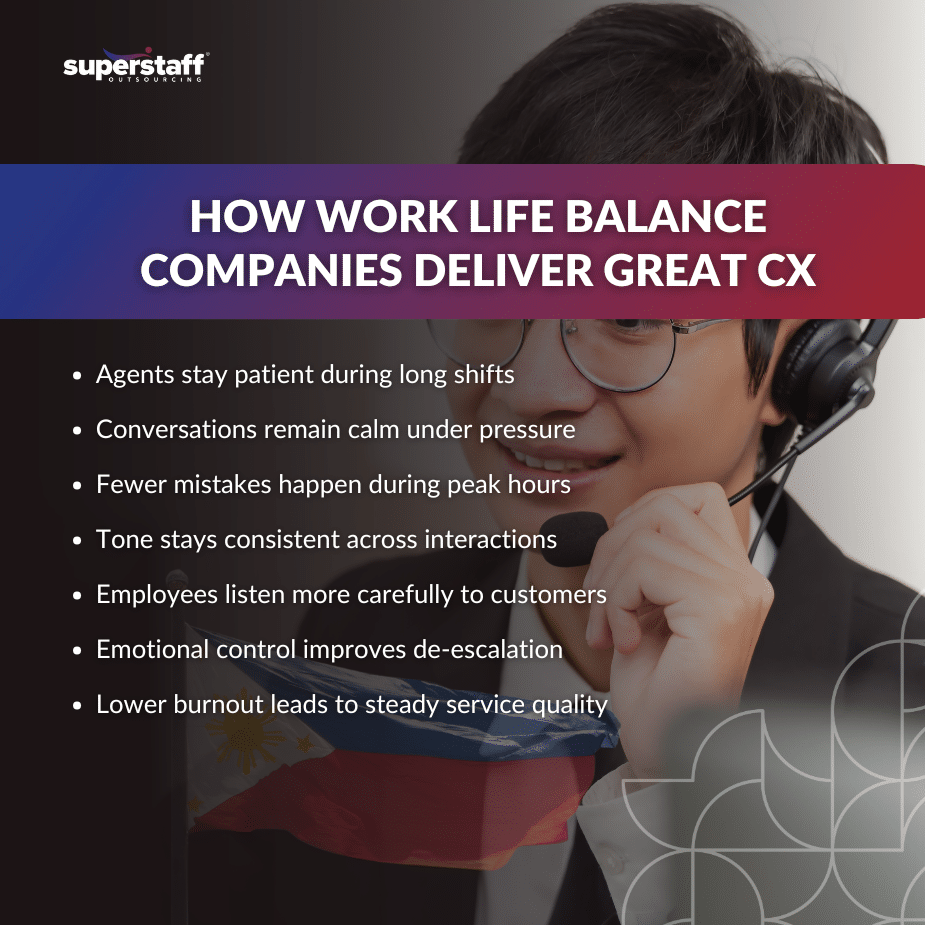
- Agents maintain a consistent tone across long shifts
- Fewer processing mistakes occur during peak volumes
- Conversations remain calm during difficult calls
- Employees show greater patience and empathy
These qualities are not produced by training alone. They come from teams that are mentally and physically ready to work.
Reduced Burnout Leads to Consistent Customer Experiences
Burnout creates unpredictable service quality. Some days feel productive while others show visible strain. Customers quickly recognize this inconsistency.
Balanced workplaces reduce this risk through:
- Carefully managed schedules
- Rotating workloads across teams
- Encouraging proper breaks during shifts
- Preventing excessive overtime
As a result, energy levels stay steady. Customers receive the same level of service regardless of queue volume or time of day.
Why Work Environment Matters in Call Center Operations
The physical and cultural environment shapes how agents perform daily. Supportive supervisors, fair scheduling, and respectful policies influence morale. Teams that feel valued rarely transfer stress into customer conversations.
Operationally, this leads to:
- Lower absenteeism
- Higher focus during interactions
- Better collaboration among team members
- Faster problem resolution
These improvements appear in service metrics without adding pressure on employees.
Emotional Stability Improves Customer Conversations
Customer support often involves emotional exchanges. Frustrated callers seek reassurance. Confused customers want clarity. Agents must remain composed throughout the interaction.
Teams in work life balance companies manage these exchanges more effectively because they are not operating from exhaustion. Emotional control becomes easier when employees are rested. This stability improves de-escalation, active listening, and solution delivery.
Lower Attrition Protects Customer Knowledge
High turnover disrupts service continuity. New hires require training. Customers repeat concerns to different agents. Institutional knowledge disappears with every resignation.
Balanced workplaces experience lower attrition because employees choose to stay. This stability protects:
- Product and process familiarity
- Understanding of recurring customer issues
- Internal best practices for handling complex cases
Customers benefit from speaking with experienced agents who can resolve concerns efficiently.
Balanced Teams Learn Faster and Perform Better
Training works best when employees are not overwhelmed. Agents with manageable schedules focus more during onboarding and coaching sessions. Knowledge retention improves naturally.
This leads to:
- Faster mastery of scripts and workflows
- Greater accuracy in following procedures
- Stronger adoption of quality standards
Continuous improvement becomes part of daily work rather than a forced initiative.
Schedule Discipline Improves Responsiveness
Customer service depends heavily on timing. Long wait times damage trust quickly. Balanced scheduling ensures adequate coverage without exhausting the workforce.
This operational discipline allows:
- Reliable queue management
- Proper staffing during peak hours
- Sustainable 24/7 coverage when required
Work life balance companies design shifts for long-term sustainability, not short-term spikes. Customers experience shorter waits and more attentive support.
Positive Culture Reflects in Customer Tone
Customers sense attitude through voice and language. Agents who feel respected speak differently from those under constant stress. Tone becomes more patient. Solutions sound more sincere.
This cultural effect creates:
- Friendlier conversations
- Clearer explanations
- Greater willingness to help
These soft factors strongly influence how customers evaluate service quality.
Work Life Balance Companies Create Accountability Without Pressure
Performance standards still matter. Balanced organizations enforce accountability through structure rather than stress. Clear KPIs, regular coaching, and support systems guide performance.
This method produces:
- Measurable improvements without fear-driven management
- Agents who ask for help early instead of hiding mistakes
- Higher adherence to quality guidelines
Customers receive accurate information from confident agents.
The Role of Leadership in Maintaining Service Balance
Leadership plays a critical role in sustaining balanced operations. Managers who monitor workload, morale, and performance together create a healthier service environment.
Strong leaders in balanced organizations:
- Observe signs of fatigue early
- Encourage open communication
- Adjust schedules when necessary
- Recognize good performance consistently
These leadership behaviors create stability that directly supports customer interactions.
Philippine BPO Culture Aligns With Balanced Service Delivery
The Philippines has a long-standing reputation for people-oriented service. Many BPO providers design operations around team support, community culture, and structured schedules. These practices align naturally with how balanced workplaces operate.
For U.S. companies, this environment offers:
- English-proficient agents with strong empathy
- Cultural compatibility with Western customers
- Teams accustomed to supportive workplace practices
This alignment explains why work life balance companies thrive in Philippine outsourcing environments.
Long-Term Customer Satisfaction Comes From Stable Teams
Customer loyalty builds through repeated positive experiences. Stability in the workforce ensures customers interact with knowledgeable, calm, and capable agents over time.
Sustained balance contributes to:
- Consistent service tone
- Reliable issue resolution
- Stronger brand trust
These outcomes support long-term retention rather than short-term improvements.
Balanced Operations Support Quality Monitoring
Quality assurance improves when teams are not overwhelmed. Agents are more receptive to feedback. Supervisors can coach effectively without rushing through evaluations.
This leads to:
- Meaningful performance reviews
- Practical coaching conversations
- Continuous refinement of service standards
Customers ultimately benefit from teams that keep improving steadily.
Seeking Work Life Balance Companies? Connect With the BPO Team at SuperStaff!
Customer service results depend on the people delivering those interactions every day. Work life balance companies understand that employee well-being directly influences how customers feel after each contact. Balanced teams remain patient, focused, and consistent under pressure.
SuperStaff builds its Philippine operations around this principle. If you want customer support teams that deliver steady, high-quality service without burnout, contact us to see how our team can help you build a balanced and reliable outsourcing partnership.