
Enterprise resource planning systems sit at the center of modern business operations. Finance, supply chain, procurement, HR, and analytics often rely on ERP platforms to function efficiently. Yet many companies struggle to maintain the talent required to support these systems.
Hiring experienced ERP specialists is increasingly difficult and expensive. This challenge has pushed many organizations to explore staff augmentation for ERP support teams as a practical way to maintain system performance while controlling operational costs.
The ERP Talent Shortage Is a Growing Operational Risk
Companies across industries rely on ERP systems to manage mission critical processes. Maintaining those systems requires specialists with technical expertise and operational knowledge.
The demand for ERP talent has increased as organizations expand digital operations and modernize infrastructure. Skilled administrators, developers, analysts, and support specialists are in short supply.
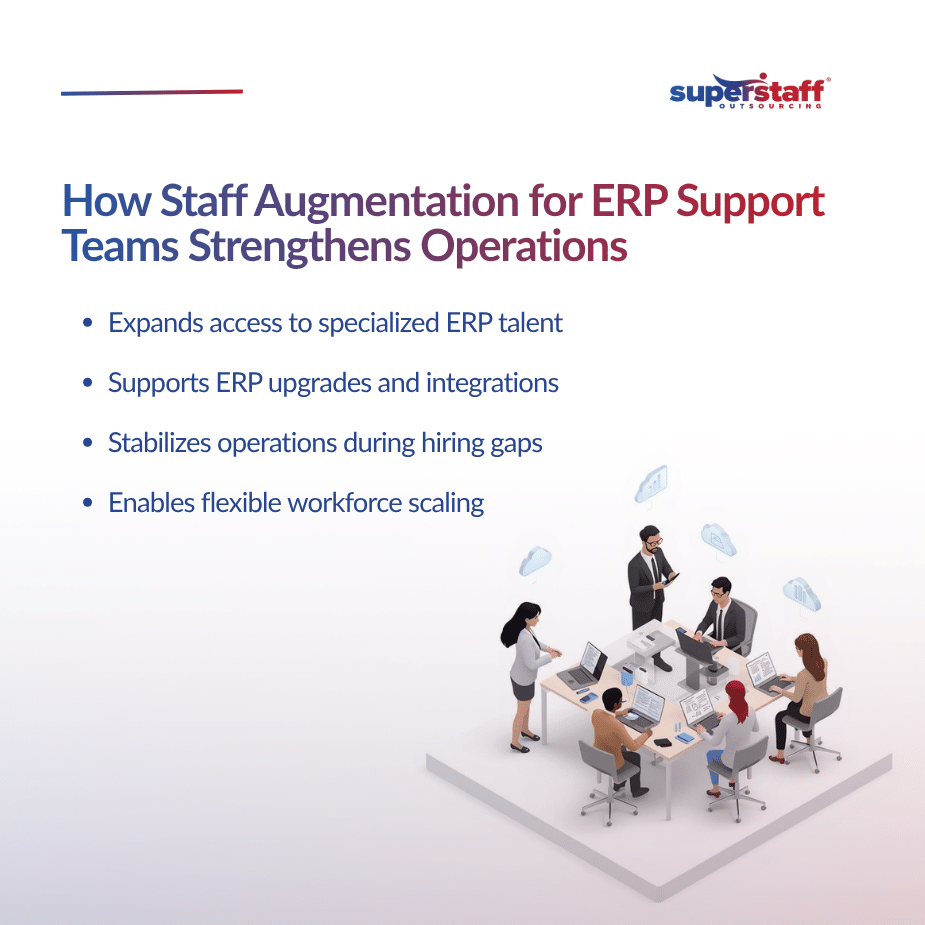
Organizations are turning to staff augmentation for ERP support teams to stabilize operations without delaying projects or overwhelming internal staff.
ERP Systems Require Constant Technical Support
ERP environments are not static platforms. They require continuous monitoring, optimization, and troubleshooting.
Even stable systems demand routine updates, integration support, reporting improvements, and user assistance. Internal teams often struggle to keep up when resources are limited.
Many companies rely on staff augmentation for ERP support teams to provide the specialized assistance required to maintain system reliability and performance.
Hiring ERP Specialists Internally Can Slow Business Growth
Recruiting experienced ERP professionals is time consuming. The hiring process often takes months, especially for specialized roles such as ERP developers or functional consultants.
During these delays, projects stall and internal teams absorb additional responsibilities. This situation increases operational risk and employee burnout.
Organizations frequently adopt staff augmentation for ERP support teams to gain immediate access to skilled professionals without long recruitment cycles.
ERP Projects Often Require Flexible Workforce Models
ERP workloads fluctuate depending on business needs. Implementation phases, system upgrades, and integration projects require more technical resources than routine operations.
Maintaining a large permanent team to handle occasional workload spikes is rarely efficient.
Companies often use staff augmentation for ERP support teams to scale support capacity when projects demand additional expertise.
Offshore Talent Expands Access to Skilled ERP Professionals
Many organizations struggle to find qualified ERP specialists locally. Offshore talent pools offer access to a broader range of experienced professionals.
Countries with strong outsourcing industries have developed deep technical talent in ERP administration, development, and support services.
Through staff augmentation for ERP support teams, companies can quickly connect with professionals who already understand enterprise platforms and global business environments.
Offshore Staff Augmentation Improves Cost Predictability
ERP specialists command high salaries in many markets, particularly in the United States. Compensation packages often include significant benefits and overhead costs.
Offshore staffing models allow companies to manage costs more predictably while maintaining access to skilled professionals.
Many organizations adopt staff augmentation for ERP support teams to balance operational quality with responsible budget management.
Offshore Teams Support ERP Modernization Efforts
Many companies are transitioning to cloud-based ERP platforms or expanding integrations with other digital tools. These projects require specialized technical knowledge.
Internal IT departments often lack the capacity to manage modernization initiatives while maintaining daily operations.
Staff augmentation for ERP support teams allows companies to bring in specialists who support migrations, integrations, testing, and system improvements.
ERP Support Requires Both Technical and Functional Expertise
ERP environments depend on professionals who understand both system architecture and business workflows.
Functional specialists help translate operational requirements into system configurations. Technical specialists manage integrations, automation, and performance optimization.
Organizations rely on staff augmentation for ERP support teams to bring together diverse expertise that may not exist within a single internal department.
Offshore Teams Strengthen Operational Continuity
ERP disruptions can interrupt business operations across departments. Delays in system support can affect procurement, payroll, logistics, and financial reporting.
A distributed support model improves coverage and response times. Offshore teams can provide assistance outside traditional working hours.
Many companies implement staff augmentation for ERP support teams to maintain continuous operational support across time zones.
Staff Augmentation Supports Long Term ERP Strategy
ERP systems evolve alongside the business. Companies regularly expand modules, integrate third party tools, and improve reporting capabilities.
These initiatives require specialized skills that internal teams may not permanently maintain.
Staff augmentation for ERP support teams allows organizations to build flexible support structures that adapt as ERP systems evolve.
Building a Stronger ERP Workforce Strategy
Organizations that depend on ERP systems must rethink how they structure technical support teams. The traditional model of relying entirely on in-house specialists is becoming difficult to sustain.
Global talent strategies offer a more practical approach. Companies can maintain strong internal leadership while supplementing technical capacity with external expertise.
Staff augmentation for ERP support teams gives organizations the flexibility to maintain operational stability, accelerate projects, and access skilled professionals when needed.
SuperStaff supports businesses that need reliable offshore talent to strengthen technical operations.
Companies seeking experienced professionals for ERP environments can explore how SuperStaff helps build scalable support teams aligned with long term business goals.