A customer may contact a business with a simple question. However, the next conversation may involve a complaint, a billing concern, or a problem that does not follow the usual process. When that happens, customers need more than a standard response. They need someone who can understand the situation, ask useful questions, and decide what to do next.
That is why human-in-the-loop customer support remains important. This approach combines structured support processes with trained professionals who can review conversations, handle exceptions, and make decisions when a situation needs human judgment.
Businesses can use automated tools and standard workflows for routine requests. At the same time, human support professionals can step in when customers need clear explanations, careful communication, or a solution that requires context.
Where Customer Support Needs Human Expertise
Customer support involves many routine questions, but not every interaction follows the same pattern. Therefore, businesses need to identify situations where human involvement can improve the customer experience.
1. Understanding Complex Customer Problems
Customers may provide incomplete details or explain a problem in an unclear way. A trained support representative can ask follow-up questions and understand what the customer actually needs.
Moreover, human representatives can consider previous conversations and account information when responding. This helps them provide a response that fits the customer’s situation instead of giving a generic answer.
2. Handling Complaints With Care
A complaint often requires more than following a standard response. Customers want to know that someone understands the problem and can explain what happens next.
A trained representative can listen, acknowledge the concern, and review the available options. If the issue requires another team, the representative can also explain the next step clearly.
3. Resolving Unusual Requests
Some customer requests do not fit standard procedures. For example, a customer may have an unusual billing issue or request an exception based on a previous interaction.
Human representatives can review the details and determine whether the case needs escalation. Consequently, businesses can handle unusual situations without forcing every customer through the same process.
4. Making Context-Based Decisions
A support process may provide clear rules, but rules do not always cover every situation. Human representatives can consider customer history, company policies, previous actions, and other relevant information.
This ability becomes especially useful when a decision affects the customer’s account or relationship with the company. A trained employee can review the full situation before recommending or taking action.
5. Communicating With Empathy
Customers may feel frustrated when they cannot resolve an issue quickly. A human representative can adjust the conversation based on the customer’s responses and communication style.
Therefore, human support can make difficult conversations easier to manage. Clear explanations and respectful communication can also reduce confusion and repeated contacts.
How Human-in-the-Loop Customer Support Works
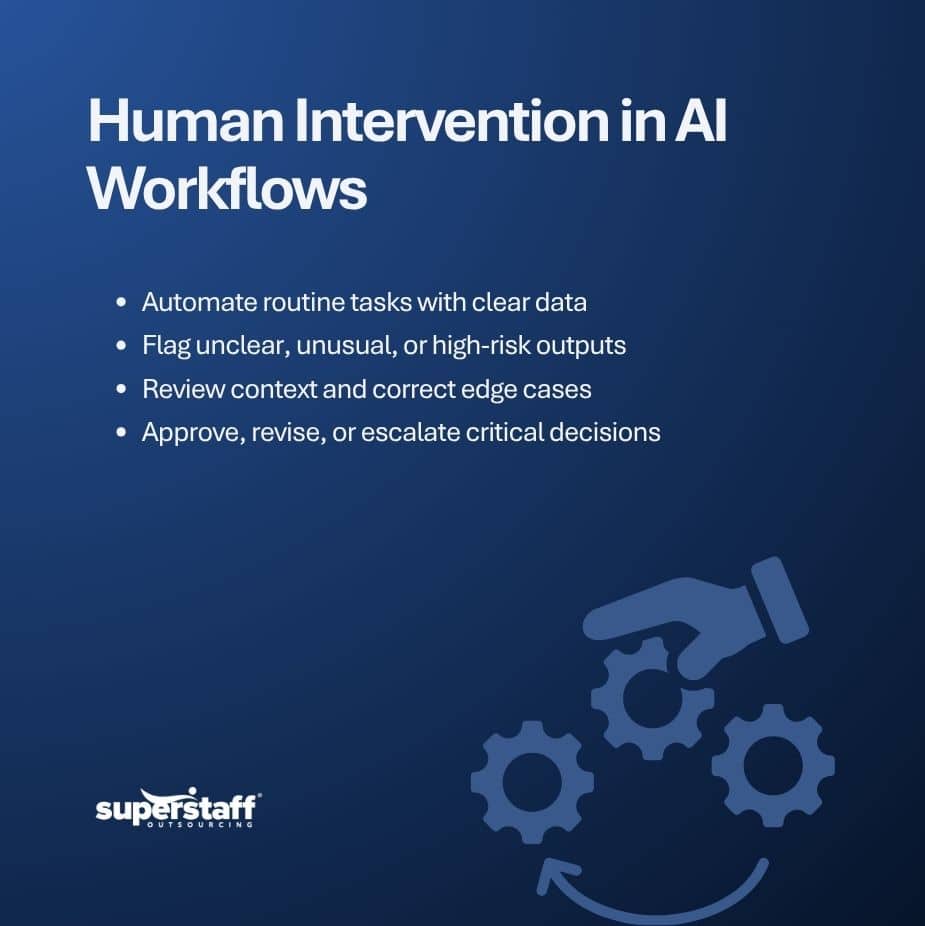
A strong support process does not require people to handle every interaction manually. Instead, human-in-the-loop customer support gives representatives clear points where they can review, decide, correct, or escalate a case.
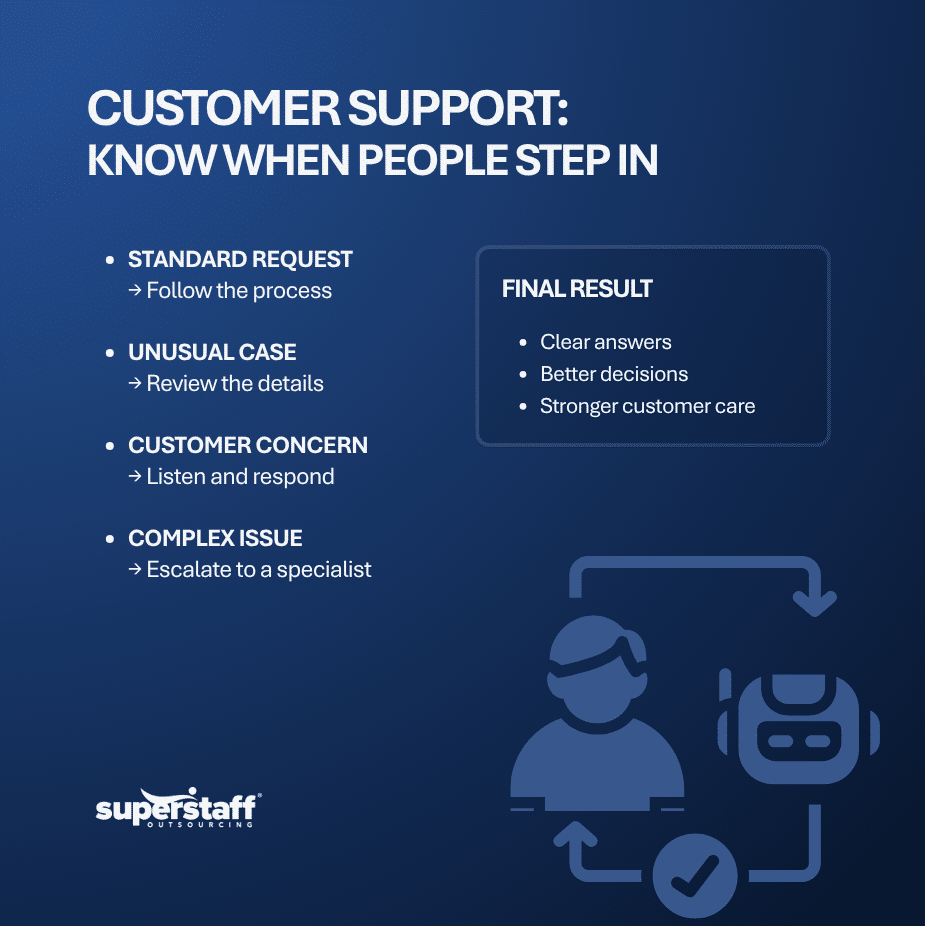
1. Routine Questions Follow Standard Processes
Common questions can follow established procedures. Support teams can use approved information to answer questions about orders, account details, schedules, services, or basic troubleshooting.
This approach helps representatives handle common requests consistently. At the same time, businesses can reserve more experienced staff for cases that need additional review.
2. Complex Cases Move to Human Review
When a request falls outside the normal process, the workflow can direct it to a trained support representative. The employee can then review the customer’s information and determine the next step.
For example, a standard billing question may follow a normal process, while a disputed charge may require additional review. This separation helps teams manage different levels of complexity.
3. Representatives Can Override Standard Responses
A standard process should support employees, not prevent them from using their judgment. If the standard response does not address the customer’s actual concern, representatives should have a clear way to provide a better response.
However, employees should follow company policies when making changes or exceptions. Clear guidelines help representatives make decisions while maintaining consistency.
4. Escalation Keeps Difficult Cases Moving
Some issues require supervisors, technical specialists, billing teams, or other departments. A clear escalation process tells representatives when to transfer a case and what information they should include.
As a result, customers do not need to repeat the same information multiple times. The receiving team can review the case with the necessary details and continue the conversation.
5. Managers Review Support Quality
Customer support managers should regularly review conversations, resolution rates, response times, customer feedback, and escalation patterns. These measures show where the process works and where employees need additional support.
Furthermore, managers can use repeated customer issues to improve training and procedures. This creates a support process that responds to actual customer needs.
Customer Support Areas That Benefit From People
Human expertise can improve several parts of the customer support process. The key is to match the level of human involvement with the complexity of each customer interaction.
1. Technical Support
Technical issues often start with standard troubleshooting steps. However, some problems involve unique settings, multiple systems, or unclear causes.
Human support specialists can ask targeted questions and review the customer’s situation. If necessary, they can also escalate the issue to a more experienced technician.
2. Billing and Account Support
Billing questions can involve payments, invoices, account changes, refunds, or disputes. While standard questions can follow established procedures, unusual cases may require a closer review.
A trained representative can examine account information, explain the situation, and coordinate with the appropriate team. This can reduce confusion and unnecessary back-and-forth communication.
3. Order and Service Issues
Customers may contact support because an order arrived late, a service did not meet expectations, or a request changed after purchase. These cases often require representatives to review several details before deciding what to do.
Human support professionals can check the relevant information and communicate the available options. Consequently, customers receive a response that addresses their specific situation.
4. Customer Retention
A customer who wants to cancel may have a concern that the business can address. However, a standard cancellation response may not uncover the reason behind the decision.
A trained representative can ask appropriate questions and understand the customer’s concern. If the business has a suitable solution, the representative can explain it without pressuring the customer.
5. Escalated Complaints
Some complaints need additional attention because they involve repeated issues, service failures, or significant customer concerns. Human representatives can review the history and coordinate with internal teams.
Moreover, they can keep the customer informed while the company works toward a resolution. Clear communication helps reduce frustration during longer cases.
Build Better Support With Human Oversight
Businesses can strengthen customer support by deciding where human expertise creates the most value. A simple structure can help teams create a consistent process without removing human judgment.
- Identify routine customer requests.
- Define cases that require human review.
- Create clear escalation rules.
- Give representatives access to relevant customer information.
- Set approval limits for exceptions.
- Review difficult customer conversations.
- Track recurring issues and corrections.
- Update training based on support trends.
This structure gives representatives clear responsibilities. At the same time, it helps managers understand where the support process needs improvement.
Train Representatives Beyond Basic Scripts
Customer support training should cover more than product information and standard responses. Representatives also need to learn how to ask questions, identify exceptions, document cases, and communicate difficult information.
Regular coaching can help employees improve these skills. Additionally, managers can use real customer cases during training to prepare teams for situations that standard procedures may not cover.
Measure More Than Response Time
Fast responses matter, but businesses should also measure whether customers actually receive useful solutions. Resolution rates, repeat contacts, customer feedback, escalation rates, and case accuracy can provide a broader view of support quality.
Therefore, companies should avoid judging support teams only by speed. A quick response that fails to resolve the issue can create another customer contact later.
Keep People Involved Where Customers Need Them
Human-in-the-loop customer support gives businesses a structured way to combine consistent processes with human judgment. Routine requests can follow clear procedures, while complex cases can receive attention from trained professionals who understand context and customer needs.
The approach also gives support teams a clearer role. Representatives do not need to handle every task manually, but they should have the authority and information needed to manage cases that require human decisions.
SuperStaff can help businesses build customer support teams that handle routine requests while giving skilled professionals a clear role in complex cases, escalations, and customer communication. Reach out to SuperStaff to explore how human-in-the-loop customer support can help your business provide consistent service while keeping human expertise at the center of important customer interactions.