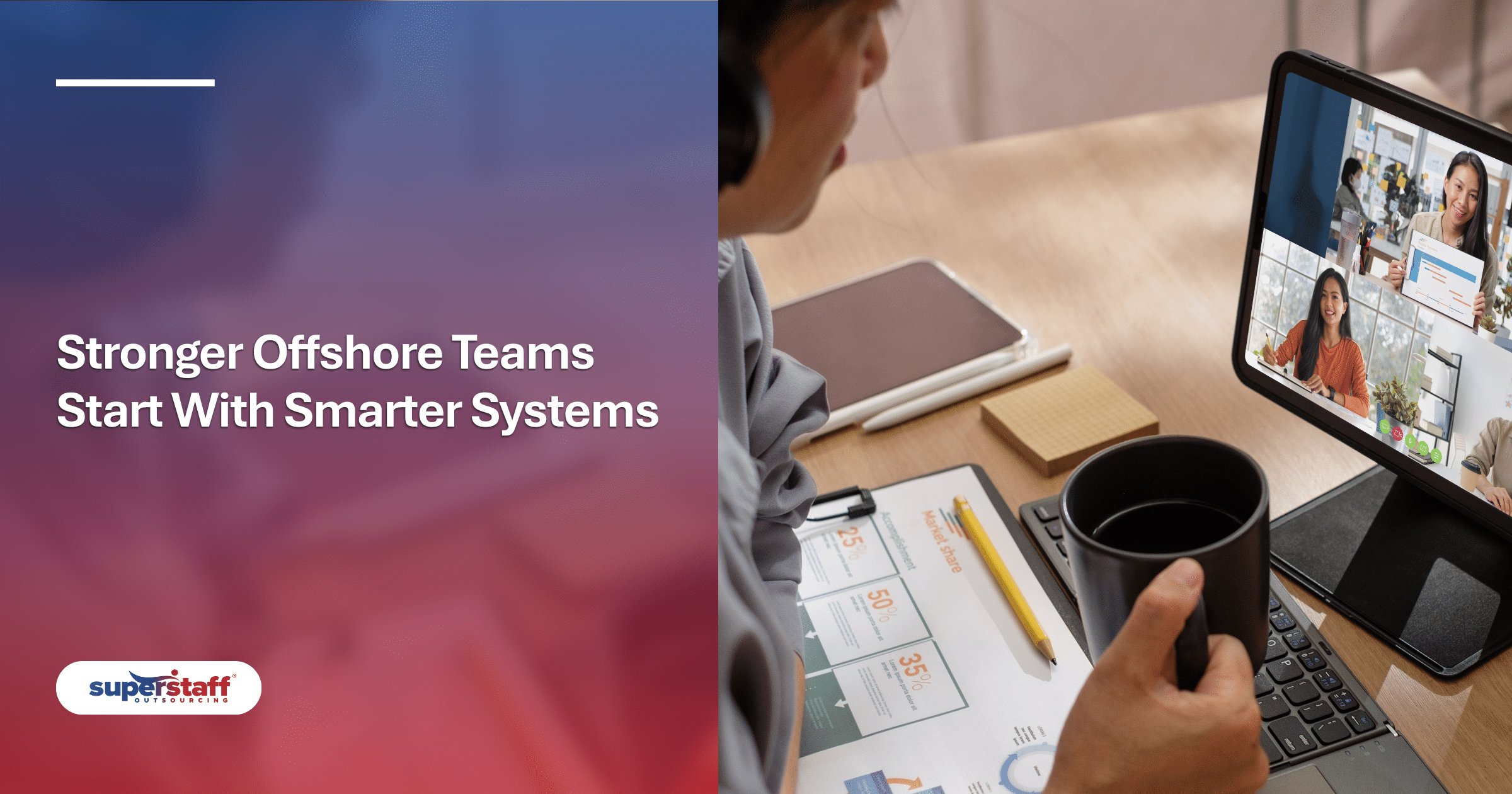
Offshore teams thrive when systems support speed, clarity, and focus. Distance alone does not reduce productivity. Weak tools do. That is why companies now invest in remote working productivity tools that keep distributed teams aligned and efficient. The right stack removes friction and helps offshore staff stay connected with onshore leaders.
Clear workflows matter even more when people work across time zones. Simple platforms replace long email chains and scattered updates. Strong remote working productivity tools give teams visibility into tasks, timelines, and priorities. With the right setup, offshore collaboration feels structured and predictable.
Global companies that scale fast often rely on remote working productivity tools to build consistency. Tools create repeatable processes. Processes create trust. That trust allows offshore teams to operate independently while staying aligned with business goals.
Why Offshore Teams Depend on the Right Remote Working Productivity Tools
Remote work functions best when systems remove confusion. Offshore teams handle tasks without constant supervision. That setup requires tools that offer clarity and accountability.
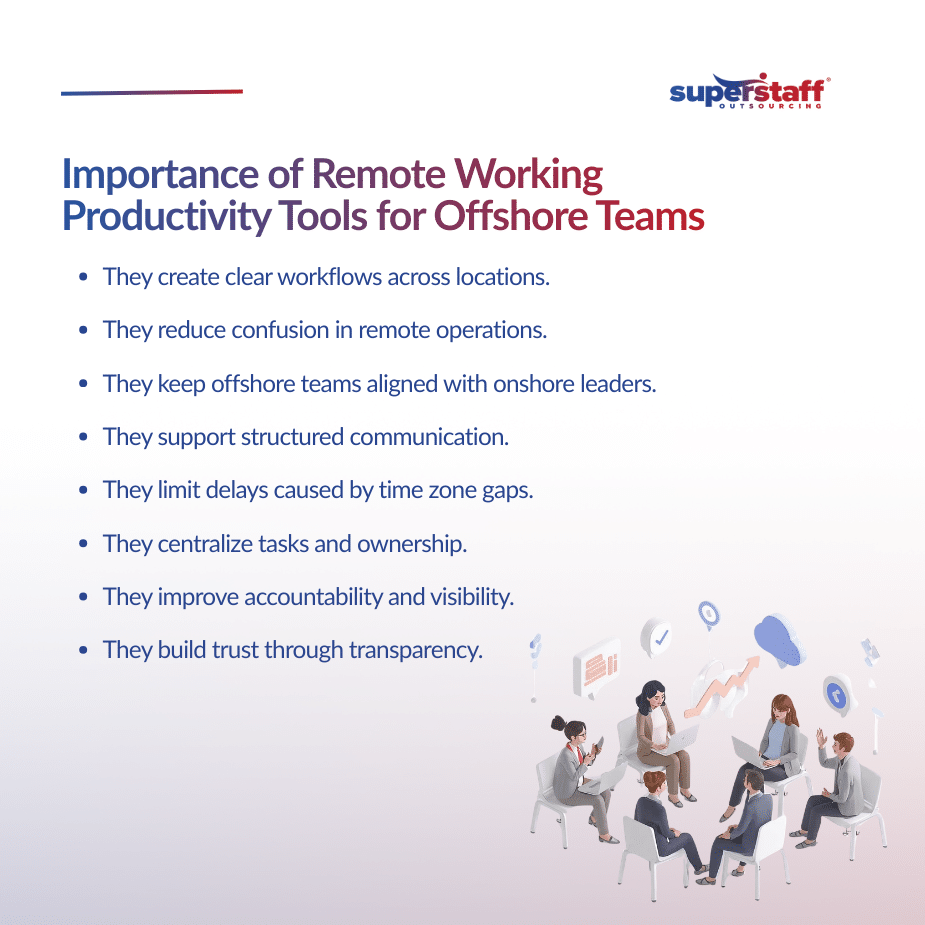
Remote working productivity tools support offshore teams in several ways:
- They standardize workflows across locations
- They reduce delays caused by time zone gaps
- They improve transparency across departments
- They simplify collaboration without extra meetings
Strong tools create structure. Structure builds confidence. That confidence allows offshore teams to deliver reliable results.
1. Communication Tools That Reduce Friction
Communication gaps often slow down offshore operations. Simple and reliable platforms keep conversations flowing. Most companies use a mix of synchronous and asynchronous channels.
Key communication remote working productivity tools include:
- Messaging platforms like Slack or Microsoft Teams
- Video tools such as Zoom or Google Meet
- Voice tools integrated into helpdesk systems
Clarity matters more than volume. Short messages work best. Teams that use structured channels avoid confusion. That is why communication remains the first layer of remote working productivity tools.
2. Project Management Platforms That Drive Accountability
Work becomes easier when tasks live in one place. Offshore teams benefit from tools that assign ownership and track progress. Clear dashboards replace scattered updates.
Popular project-based remote working productivity tools include:
- Asana for structured workflows
- ClickUp for customizable task views
- Trello for simple visual boards
- Monday.com for cross-team coordination. Securing the Monday.com discount or platform subscription is a smart investment for scaling businesses
Each platform creates transparency. Leaders can monitor output without micromanaging. Offshore agents gain clarity on expectations. That balance keeps teams productive across regions.
3. Time Tracking Tools That Build Trust
Some companies hesitate to hire offshore teams due to visibility concerns. Time tracking tools solve that issue. These platforms provide clear logs without creating pressure.
Effective remote working productivity tools in this category include:
- Hubstaff for activity monitoring
- Time Doctor for productivity insights
- Bueggio HR for simple tracking
Transparency builds trust. Teams understand how time is spent. Leaders see real output. As a result, remote working productivity tools help both sides stay confident in the arrangement.
4. Knowledge Sharing Systems That Preserve Context
Offshore teams work best when information is easy to find. Poor documentation leads to repeated questions. Strong knowledge bases prevent that problem.
Useful knowledge-driven remote working productivity tools include:
- Notion for flexible documentation
- Confluence for structured knowledge hubs
- Google Workspace for collaborative files
These tools store context in one place. New hires ramp faster. Teams avoid duplicated effort. Over time, knowledge systems become one of the most valuable remote working productivity tools.
5. Collaboration Tools That Replace Office Interaction
Office environments allow spontaneous collaboration. Remote setups need digital alternatives. Collaboration tools recreate shared spaces online.
Common options include:
- Miro for visual brainstorming
- Figma for design collaboration
- Google Docs for real-time editing
Real-time editing reduces delays. Visual tools support ideation. Strong collaboration platforms expand the impact of remote working productivity tools beyond task management.
6. Automation Tools That Save Time
Manual tasks slow down offshore workflows. Automation reduces repetitive work. That shift frees teams to focus on higher-value output.
Automation-focused remote working productivity tools include:
- Zapier for connecting apps
- Make for advanced workflows
- HubSpot automation for marketing and sales
Automation improves consistency. Teams reduce human error. Leaders gain scalable processes. These benefits make automation a powerful layer in remote working productivity tools.
7. Security Tools That Protect Distributed Work
Data protection becomes more complex in remote environments. Offshore teams must follow strict compliance standards. Security tools protect both clients and operations.
Important security-focused remote working productivity tools include:
- VPN platforms for safe connections
- Password managers like LastPass
- Endpoint protection systems
Secure systems protect sensitive data. They also reassure clients. Companies that invest in secure remote working productivity tools build stronger long-term partnerships.
8. Analytics Tools That Measure Productivity
Data helps leaders refine workflows. Offshore teams benefit from tools that track output and trends. Insights reveal bottlenecks and growth areas.
Examples of analytics-driven remote working productivity tools include:
- Tableau dashboards
- Google Data Studio reports
- Workforce analytics platforms
Metrics create clarity. Teams understand what works. Leaders make informed decisions. Over time, analytics elevate the value of remote working productivity tools.
Building a Tool Stack That Works
Not every company needs dozens of platforms. The best approach focuses on simplicity. A smaller stack often performs better than a cluttered one. For example, offshore teams that support marketing or social media can use all-in-one AI design tools to create visuals in-house instead of juggling separate apps for editing, templates, and image generation.
When selecting remote working productivity tools, consider these factors:
- Ease of use for offshore staff
- Integration with existing systems
- Scalability as teams grow
- Security and compliance needs
Simple stacks drive adoption. Adoption drives results. That cycle helps offshore teams stay efficient and engaged.
The Human Side of Productivity Tools
Technology alone does not create performance. People still drive outcomes. Remote working productivity tools support humans, not replace them.
Strong teams combine tools with:
- Clear onboarding processes
- Consistent communication habits
- Performance coaching
- Transparent expectations
When systems and people align, offshore productivity rises. Remote working productivity tools provide structure. Culture provides momentum.
How the Right Tools Strengthen Offshore Partnerships
Companies that scale offshore teams successfully follow one pattern. They treat tools as strategic investments. Platforms are not just utilities. They shape how teams collaborate and grow.
Reliable remote working productivity tools reduce operational friction. They allow offshore teams to work independently. They also help leaders focus on strategy instead of daily coordination. That shift improves efficiency across departments.
Build Smarter Offshore Teams With SuperStaff
Offshore success depends on more than hiring talent. Systems must support performance from day one. That is where strong partnerships matter. At SuperStaff, we combine skilled offshore professionals with proven remote working productivity tools that keep teams aligned and efficient.
Our approach focuses on clarity, structure, and scalability. We help businesses design tool stacks that match their workflows. We also ensure offshore teams integrate smoothly with in-house operations. If you want offshore teams that perform with confidence, SuperStaff can help you build the right foundation.
Reach out to SuperStaff today to explore how remote working productivity tools and expert offshore talent can support your growth. Let’s build a smarter, more connected global team together.