
Warehouse operations demand precision, speed, and constant coordination. Many SMEs and midmarket companies struggle to keep up as order volumes grow and fulfillment expectations rise. That pressure often shifts attention away from core growth priorities. This is where warehouse outsourcing becomes a practical strategy that strengthens daily operations without adding internal headcount.
Philippine-based support teams can manage a wide range of warehouse-adjacent functions remotely. These roles focus on coordination, monitoring, documentation, and communication that keep physical operations running smoothly. The result is better visibility, fewer errors, and faster response times across the supply chain.
What functions can be outsourced in warehousing?
When companies are not outsourcing warehouse operations, administrative tasks can consume significant time. Documentation, data entry, and system updates often compete with operational priorities.
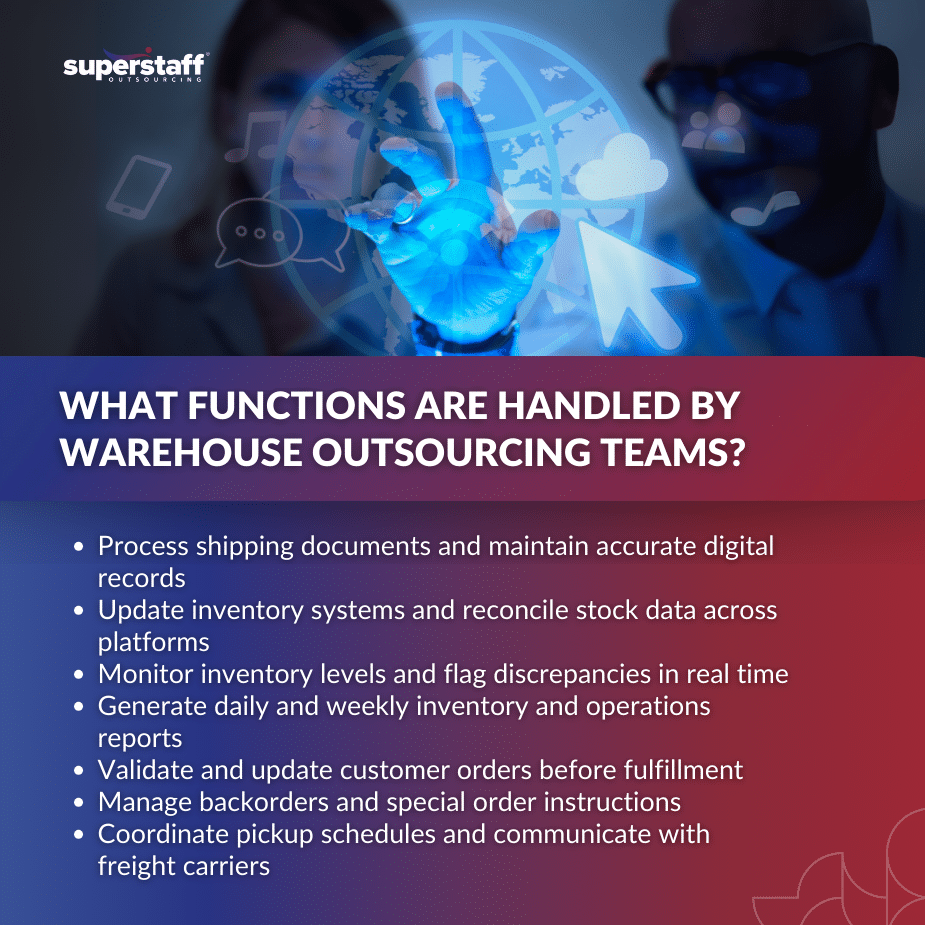
Remote teams can process shipping documents, update inventory systems, manage order records, and maintain databases in real time. They ensure information is accurate across platforms used by warehouse staff, carriers, and customer service teams. Many companies turn to warehouse outsourcing to remove this workload from on-site personnel and improve data reliability.
These teams can also manage digital filing systems, label documentation correctly, and ensure paperwork matches physical shipments. As a result, supervisors spend less time verifying records and more time overseeing operations.
Can inventory monitoring and reporting be managed from the Philippines?
Inventory visibility is critical for preventing stockouts and overstock situations. However, constant monitoring requires dedicated attention that warehouse supervisors often cannot spare.
Philippine support staff can track inventory levels across systems, generate daily and weekly reports, and flag discrepancies for immediate action. They reconcile records between warehouse management systems and order platforms. This form of warehouse outsourcing helps businesses maintain accurate stock data without diverting operational staff from floor management.
They can also monitor slow-moving inventory and notify teams when reordering thresholds approach. This allows procurement and operations teams to make informed decisions earlier.
How can order processing support improve warehouse speed?
Order processing delays frequently originate from system bottlenecks rather than physical picking issues. Errors in order entry or updates can slow fulfillment.
Remote teams can validate orders, update statuses, coordinate with customer service, and ensure that orders enter the fulfillment queue correctly. They also handle backorder updates and special instructions that warehouse staff must follow. Companies rely on warehouse outsourcing to streamline this digital flow before orders reach the packing stage.
This early verification reduces confusion on the floor and prevents rework caused by incorrect order details.
Can shipment scheduling and carrier coordination be done remotely?
Carrier communication requires frequent follow-ups, schedule adjustments, and document exchanges. This takes time away from supervisors managing physical loading.
Philippine 3PL outsourced distribution teams can liaise with freight providers, confirm pickup schedules, prepare shipment documentation, and track dispatch timelines. They serve as the communication bridge between the warehouse and logistics partners. Through warehouse outsourcing, this coordination becomes more structured and consistent.
They also monitor shipment milestones and escalate delays before they impact customer commitments.
How does remote support help with returns and reverse logistics?
Returns create operational complexity that many warehouses struggle to manage efficiently. Tracking returned items, updating records, and communicating with customers often becomes chaotic.
Remote staff can log returned goods, update inventory status, generate return reports, and coordinate with customer service regarding replacement or refund status. They ensure that reverse logistics does not disrupt forward fulfillment. Many firms adopt warehouse outsourcing to keep this process organized and transparent.
Clear documentation also helps prevent returned items from being misplaced or incorrectly restocked.
Can warehouse data analysis and performance reporting be handled offshore?
Performance insights depend on accurate data interpretation. Yet warehouse managers rarely have time to prepare detailed reports.
Philippine analysts can compile KPIs, prepare performance dashboards, and identify patterns in delays, picking errors, or shipping timelines. These reports support better decision making for operations leaders. Warehouse outsourcing allows management to receive actionable insights without assigning internal resources to data work.
Leaders gain regular visibility into operational trends that would otherwise go unnoticed.
How can remote teams support warehouse compliance and documentation?
Warehouses operate under strict documentation requirements for safety, quality, and audit readiness. Maintaining these records consistently is demanding.
Offshore teams can organize compliance files, track documentation updates, and ensure records are audit ready at all times. They can also monitor expiration of certifications and required paperwork. Businesses use warehouse outsourcing to maintain compliance discipline without administrative overload.
This reduces the risk of missing documentation during inspections or partner audits.
Can customer communication related to warehouse issues be handled remotely?
Customers often contact companies regarding shipping delays, order status, or delivery concerns. Warehouse teams are rarely equipped to manage these inquiries directly.
Philippine support agents can coordinate with customer service, access warehouse systems, and provide accurate updates to customers or internal teams. They act as the information hub between the warehouse and front-end support. Warehouse outsourcing improves response speed and reduces miscommunication.
Faster information flow results in higher customer confidence and fewer escalations.
How does remote support reduce errors in warehouse operations?
Many warehouse errors originate from incorrect system entries or delayed updates rather than physical mistakes. Information gaps lead to picking wrong items or shipping incorrect quantities.
Remote staff can perform system checks, validate entries, and monitor transaction accuracy throughout the day. They identify inconsistencies before they escalate into operational problems. Companies adopt warehouse outsourcing to create a layer of verification that protects fulfillment accuracy.
This preventive approach lowers rework, returns, and customer complaints.
What long term operational benefits come from remote warehouse support?
Sustained warehouse efficiency requires consistent processes, accurate information flow, and reliable coordination across departments. Internal teams often struggle to maintain this consistency during peak periods.
Philippine teams provide stability by handling repetitive but essential tasks with focus and discipline. They create standardized workflows that support warehouse staff year round. Over time, warehouse outsourcing contributes to smoother operations, lower error rates, and better collaboration between logistics, customer service, and operations teams.
Organizations also find it easier to scale operations during busy seasons because support capacity can be adjusted without disrupting the warehouse floor.
Connect With SuperStaff for Back Office Warehouse Outsourcing Solutions
Warehouse performance depends on more than what happens on the floor. It relies on accurate data, consistent coordination, and clear communication across systems and teams. That is why many growing companies turn to warehouse outsourcing to strengthen the operational backbone behind fulfillment.
SuperStaff provides dedicated Philippine teams trained to support warehouse operations remotely. If your business needs better visibility, fewer errors, and more organized coordination without expanding internal staff, explore how SuperStaff can support your warehouse processes today.