Every business depends on data. Orders, customer details, financial records, and reports all rely on clean and accurate information. Yet, managing large volumes of data takes time, effort, and skilled people. Many companies struggle to keep costs low while maintaining high accuracy.
Because of this challenge, leaders are turning to data processing outsourcing as a practical solution. The Philippines has become a top destination for this service. Companies choose it not only for cost savings but also for consistent quality and reliable results.
At the same time, decision-makers want proof that outsourcing does not reduce accuracy. The good news is that with the right partner, both goals can be achieved.
Why Businesses Are Turning to Data Processing Outsourcing
Handling data internally often leads to rising costs. Salaries, software, training, and office space all add up quickly. On the other hand, data processing outsourcing offers a more flexible and cost-efficient approach.
Several factors drive this shift:
- Growing data volumes from digital operations
- Need for faster turnaround times
- Pressure to reduce overhead expenses
- Demand for accurate and clean datasets
As a result, companies are rethinking how they manage back-office work. Instead of building large internal teams, they rely on outsourcing partners who specialize in data handling.
Why the Philippines Stands Out
The Philippines has built a strong reputation in the outsourcing industry. Over the years, it has become a trusted hub for data processing outsourcing.
Here is why businesses choose this location:
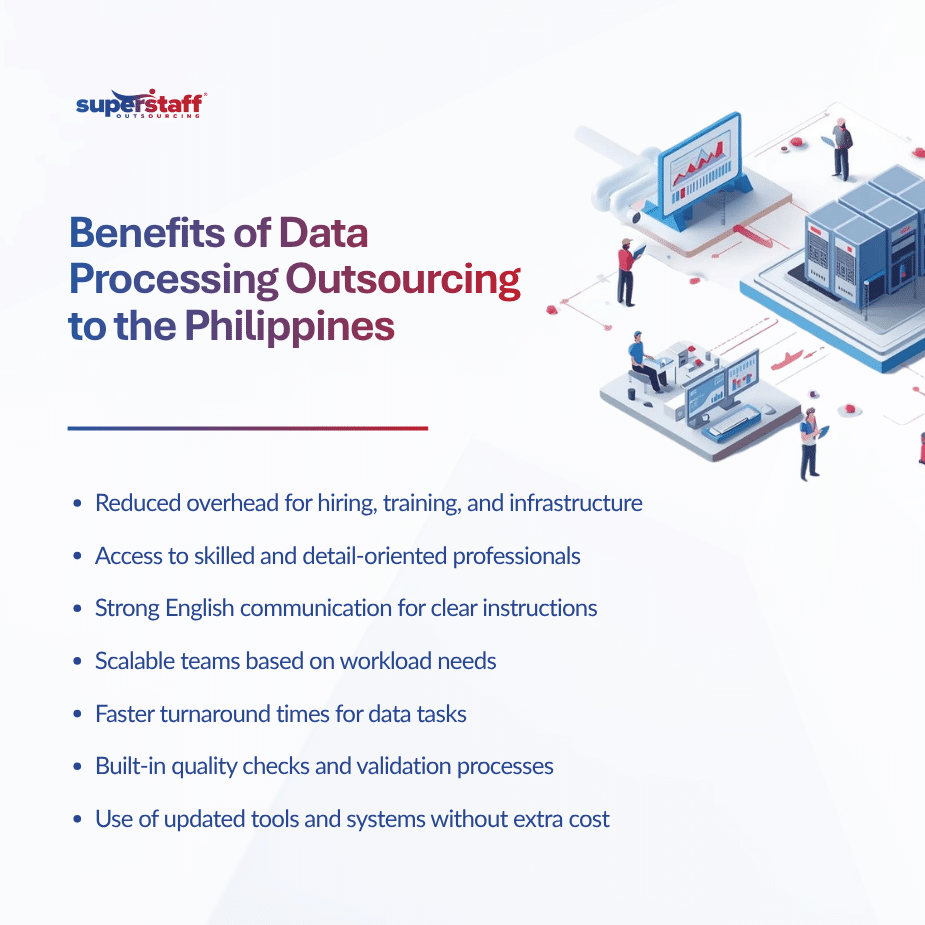
- Skilled Workforce: Filipino professionals are known for their attention to detail. Many have experience in data entry, data validation, and database management.
- Strong English Communication: Clear communication reduces errors. Teams in the Philippines can easily follow instructions and clarify requirements when needed.
- Cost Advantage: Labor costs remain competitive compared to Western countries. This allows companies to lower expenses without reducing output quality.
- Cultural Compatibility: Filipino teams are highly adaptable. They understand Western business practices and align well with client expectations.
Because of these strengths, data processing outsourcing to the Philippines continues to grow across industries.
How Cost Reduction Happens Without Cutting Corners
Saving money does not mean lowering standards. In fact, data processing outsourcing often improves efficiency while reducing costs.
Here are the key ways this happens:
1. Lower Labor Costs
Hiring and maintaining an in-house team is expensive. Salaries, benefits, and infrastructure increase operational costs.
With data processing outsourcing, companies pay only for the services they need. This reduces fixed expenses and improves budget control.
2. Reduced Training Expenses
Training new employees takes time and resources. Outsourcing providers already have trained staff who can start immediately.
This means businesses avoid long onboarding periods while still getting skilled support.
3. Scalable Operations
Workloads are not always consistent. Some months require more data processing than others.
Outsourcing allows companies to scale up or down easily:
- Increase staff during peak periods
- Reduce resources during slow seasons
- Avoid overstaffing
As a result, businesses only pay for what they use.
4. Lower Technology Costs
Data processing requires tools and systems. Maintaining these internally can be costly.
Outsourcing providers invest in:
- Secure data systems
- Automation tools
- Quality control platforms
Clients benefit from these technologies without additional investment.
How Accuracy Is Maintained and Even Improved
Cost savings alone are not enough. Accuracy remains a top priority. Fortunately, data processing outsourcing to the Philippines is known for delivering high-quality results.
Several practices ensure this level of accuracy:
1. Structured Quality Checks
Outsourcing teams follow strict processes. Each task goes through multiple validation steps.
Typical workflow includes:
- Initial data entry
- Review and verification
- Final quality check
This layered approach reduces errors and ensures consistency.
2. Specialized Roles
Instead of generalists, outsourcing providers assign specific roles:
- Data entry specialists
- Quality analysts
- Team supervisors
Each role focuses on a specific task, which improves precision.
3. Use of Standard Operating Procedures
Clear guidelines help teams stay consistent. Providers create detailed instructions for every process.
Because of this, even complex data tasks are handled with accuracy.
4. Continuous Monitoring
Performance is tracked regularly. Metrics such as error rates and turnaround time are reviewed.
If issues arise, they are addressed quickly. This keeps quality levels high over time.
Key Tasks Handled Through Data Processing Outsourcing
Businesses across industries use data processing outsourcing for various functions. These tasks are repetitive but essential for daily operations.
Common services include:
- Data entry and encoding
- Data cleansing and validation
- Document digitization
- Order processing
- Invoice and billing data management
- Database maintenance
By outsourcing these tasks, internal teams can focus on more strategic work.
Industries Benefiting the Most
Many sectors rely on accurate data. Because of this, data processing outsourcing plays a critical role in different industries.
Some of the most active users include:
- Healthcare: Patient records, billing data, and insurance claims require careful handling.
- E-commerce: Order details, inventory updates, and customer information must be processed quickly.
- Finance: Financial records demand high accuracy and strict compliance.
- Logistics: Shipment data and tracking information need constant updates.
- Retail: Sales data and customer insights help drive business decisions.
Across these industries, outsourcing helps improve efficiency while keeping costs under control.
Risks and How to Manage Them
While data processing outsourcing offers many benefits, companies must still manage potential risks.
Here are common concerns and solutions:
- Data Security: Work with providers that follow strict security protocols and compliance standards.
- Communication Gaps: Set clear expectations and maintain regular updates.
- Quality Issues: Choose partners with proven track records and strong QA processes.
- Dependency on External Teams: Build long-term partnerships and ensure proper documentation.
With the right approach, these risks can be minimized.
How to Choose the Right Outsourcing Partner
Not all providers offer the same level of service. Selecting the right partner is key to successful data processing outsourcing.
Consider the following:
- Experience in your industry
- Strong quality assurance systems
- Scalable team structure
- Clear communication process
- Data security compliance
A reliable partner will align with your goals and maintain consistent performance.
The Long-Term Value of Data Processing Outsourcing
Over time, data processing outsourcing delivers more than cost savings. It supports business growth and operational stability.
Companies benefit from:
- Faster turnaround times
- Improved data accuracy
- Reduced internal workload
- Better resource allocation
As businesses grow, the ability to manage data efficiently becomes even more important.
Move Forward With a Trusted Partner
Reducing costs while maintaining accuracy is possible with the right strategy. Data processing outsourcing to the Philippines provides both efficiency and reliability.
SuperStaff offers trained teams who handle data with care and precision. Each process is designed to meet your quality standards while keeping costs manageable.
If your business needs reliable support, now is a good time to act. Partner with SuperStaff and see how data processing outsourcing can improve your operations. Reach out today to get started.