A new year often brings new targets, updated budgets, and plans for business growth. As companies review their priorities, leaders also look at the tasks that take up too much time or slow down daily operations. Some decide to hire more people, while others look for outside support to handle specific business functions.
Year-start outsourcing trends often focus on work that needs consistent attention but does not always require an in-house team. Administrative tasks, bookkeeping, customer support, and data processing are common starting points. By moving these responsibilities to an external team, companies can manage costs, reduce workloads, and give employees more time to focus on business goals.
Why Companies Review Their Outsourcing Needs at the Start of the Year
The first few months of the year are a good time to review how work gets done. Budgets are being finalized, new targets are in place, and teams can identify problems that affected performance in the previous year.
Here are some reasons companies consider outsourcing early in the year:
- Better budget planning
Companies often have a clearer view of their spending plans at the start of the year. Outsourcing gives leaders another way to manage labor costs without taking on the full expense of hiring and maintaining additional in-house staff.
- Faster access to support
Hiring can take weeks or months, depending on the role. An outsourcing partner can help businesses fill specific needs without going through every step of a traditional recruitment process.
- Less pressure on internal teams
Employees may already have full schedules when the year begins. Assigning routine tasks to an external team helps prevent work from piling up and gives internal staff more time for their main responsibilities.
- More time for business priorities
Leaders need to focus on planning, sales, customer relationships, and other activities that support growth. Outsourcing selected support functions can help protect that time.
- Easier performance reviews
Starting with clear roles and targets makes it easier to track results. Companies can review completed tasks, turnaround times, accuracy, and other measures to see whether the arrangement is working.
These decisions also reflect a wider business practice. As ADP explains in its guide to business process outsourcing, companies often use outside providers to handle tasks that take time away from their main business activities.
The First Business Functions Companies Commonly Outsource
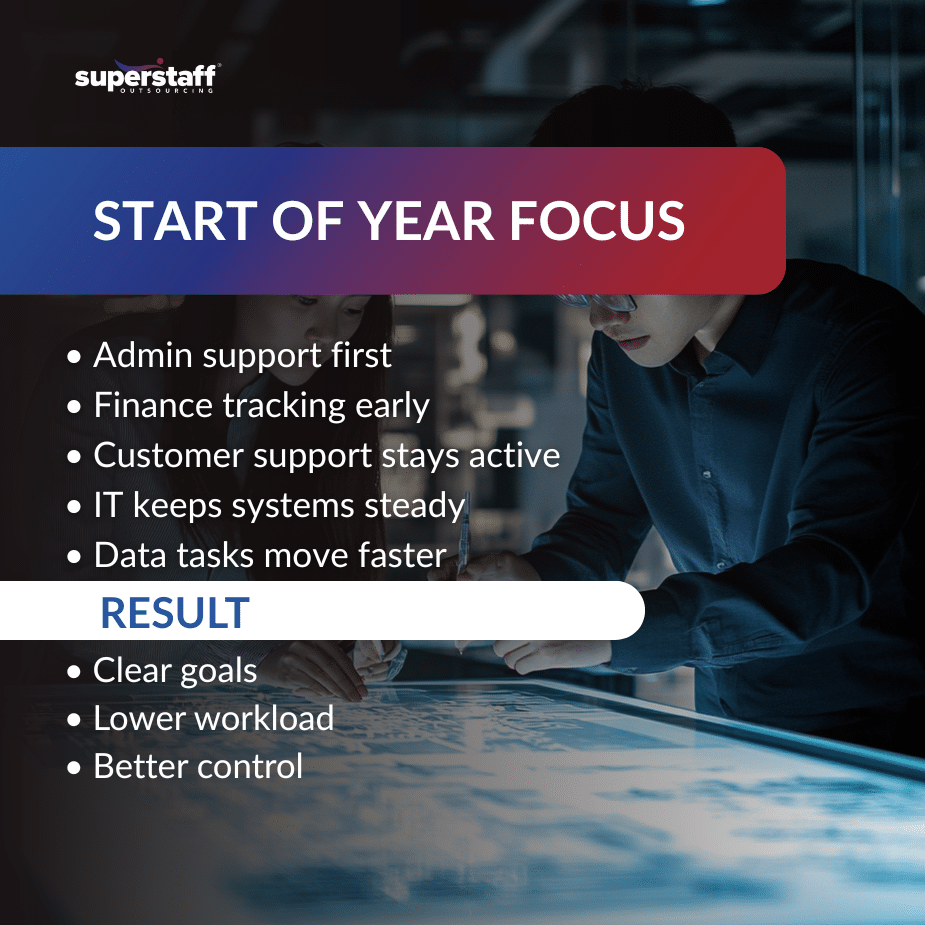
Not every company needs to outsource the same tasks. The right choice depends on its size, industry, budget, and available staff. However, several functions are common starting points because they involve regular tasks that can be handled through clear processes.
- Administrative support
Administrative work is often one of the first areas companies consider. It includes calendar management, email handling, meeting coordination, document preparation, and general office support. Outsourcing these tasks helps managers and employees spend less time on routine work.
- Accounting and bookkeeping
Financial records need regular attention throughout the year. Companies may outsource bookkeeping, invoice processing, account reconciliation, and expense tracking to keep records organized and up to date.
- Customer support
Customers still need help while a company works on its annual plans. Outsourced customer support teams can handle questions, order updates, complaints, and follow-ups. This helps businesses maintain service coverage without adding too much work to their internal teams.
- IT support and maintenance
Technical problems can interrupt daily work. Companies may outsource help desk support, system monitoring, troubleshooting, and routine maintenance to get assistance from trained IT professionals.
- Data entry and processing
Customer records, sales information, inventory details, and other business data need to be updated regularly. Outsourcing data entry and processing helps keep these records accurate and accessible.
These functions are among the areas covered by operations outsourcing services, which can help businesses manage routine work while keeping internal teams focused on their main responsibilities.
How Companies Plan Their Outsourcing Strategy
Choosing what to outsource requires more than identifying tasks that take too much time. Companies also need to understand their current processes, define expectations, and select work that an external team can handle effectively.
- Review last year’s workload
Start by identifying tasks that caused delays, required frequent overtime, or kept employees from completing higher-priority work. Past performance can help leaders decide where additional support is needed.
- Define the responsibilities
List the tasks that the outsourced team will handle. Include expected output, deadlines, tools, reporting requirements, and who will review the work. Clear instructions help prevent confusion once the team starts.
- Choose tasks that can grow with the business
Some functions become busier as a company gains customers or enters new markets. Consider roles that can adjust to changing workloads without requiring a major change to the internal structure.
- Match outsourced roles with yearly goals
Every outsourced function should support a clear business need. For example, a company focused on customer retention may need additional customer support, while a business improving its financial processes may need bookkeeping assistance.
- Set regular communication routines
Schedule check-ins and agree on how updates, questions, and concerns will be handled. Regular communication helps both teams stay informed and address problems before they affect results.
Why Administrative Tasks Often Come First
Administrative support is a practical starting point because many of these tasks follow repeatable steps. They also take up time throughout the day, leaving employees with less room for work that needs their full attention.
Some common responsibilities include:
- Calendar and meeting coordination: Managing appointments, sending reminders, and organizing meetings.
- Email and inbox management: Sorting messages, tracking requests, and forwarding important concerns.
- Document preparation: Updating reports, preparing files, and organizing records.
- CRM updates: Entering customer details, updating sales records, and maintaining contact information.
- Travel and expense support: Coordinating bookings, organizing receipts, and preparing expense reports.
Companies can assign these responsibilities to a virtual assistant or a dedicated administrative support team. This setup can be useful for business owners and managers who need help with daily tasks but are not ready to hire several full-time employees.
A well-defined role also makes it easier to measure performance. Businesses can track task completion, response times, accuracy, and the amount of time saved by their internal teams.
Outsourcing Can Help Companies Manage Early Growth
The start of the year may bring new customers, projects, and business opportunities. However, growth can also increase the workload. Outsourcing gives companies another way to handle these changes without immediately expanding their permanent workforce.
- Flexible staffing levels
Workloads can change from month to month. Outsourcing allows companies to adjust the level of support based on current needs and business activity.
- Faster onboarding
An established outsourcing provider can help prepare trained staff for specific responsibilities. This can reduce the time needed to build a support function from the ground up.
- Less pressure to recruit
Finding and hiring employees requires time from managers and HR teams. Outsourcing can help cover certain roles while internal employees focus on other hiring priorities.
- Access to trained professionals
Businesses can work with people who already have experience in administrative support, bookkeeping, customer service, IT, and other functions.
- More predictable operating costs
Outsourcing agreements can give companies a clearer view of the cost of specific support functions. This makes it easier to compare expenses and plan for changes in demand.
How Leaders Decide What to Outsource First
A company does not need to outsource every task that takes time. Leaders should look at the work itself and decide whether an outside team can handle it without affecting quality or control.
The following questions can help guide that decision:
- Does the task happen every day or every week?
- Does it take employees away from their main responsibilities?
- Can the work be explained through clear instructions and procedures?
- Does it require skills that the company does not currently have?
- Can performance be measured through clear targets?
- Will outsourcing help the company manage costs or improve service?
Tasks that meet several of these conditions may be good candidates. However, sensitive responsibilities and decisions that require close knowledge of the business may be better kept in-house.
Common Outsourcing Mistakes to Avoid
Outsourcing can help reduce workloads, but poor planning can create new problems. Companies should avoid these common mistakes when setting up an arrangement.
Rushing the partner selection
Compare providers based on experience, available skills, communication, security practices, and service quality. Do not make the decision based on price alone.
Giving unclear instructions
A team cannot meet expectations if its responsibilities are not properly defined. Provide written procedures, examples, deadlines, and quality standards.
Skipping communication plans
Agree on who will manage the relationship, how often teams will meet, and how urgent concerns will be raised.
Ignoring performance results
Set measurable targets before work begins. Review the results regularly and make changes when needed.
Outsourcing too much at once
Start with a manageable group of tasks. Once the process is working well, consider adding more responsibilities.
Back-Office Support for a More Organized Start
Administrative work, data entry, bookkeeping, and other routine functions can take up a large part of the workday. Companies that need help with these responsibilities can consider back-office support teams to manage selected tasks while their internal employees focus on business priorities.
The right setup depends on the company’s needs. Some businesses may only need help with data processing, while others may require ongoing support for several administrative and financial functions. Defining the scope early helps make sure the outsourced team has the right responsibilities and resources.
Start the Year with the Right Support
The first few months of the year give companies a chance to review their workloads and decide where additional help can make a difference. Administrative support, bookkeeping, customer service, IT assistance, and data processing are common functions to consider outsourcing first.
A good outsourcing plan starts with clear goals, defined responsibilities, and regular performance reviews. Companies do not need to move every task outside their organization. They only need to identify the work that takes time away from their priorities and find the right support for it.
SuperStaff helps businesses find reliable support for administrative work and other business functions. Whether you need help with daily operations or want to expand your support team, we can help you find an arrangement that fits your goals.
Contact SuperStaff to discuss your outsourcing needs and plan the right support for the year ahead.