
Business leaders today face a constant balancing act. They must scale operations, manage costs, and maintain service quality while navigating labor shortages and shifting customer expectations. Many organizations turn to outsourcing to address these pressures, but success depends on careful planning and disciplined execution.
Understanding how to outsource work is not simply about finding a vendor. It involves aligning operational goals, selecting the right partner, and integrating offshore teams into daily workflows. When executed well, outsourcing strengthens operational resilience and creates long term capacity for growth.
This guide explains how organizations approach how to outsource work successfully, from vendor evaluation to full operational integration.
Define Strategic Objectives Before Outsourcing
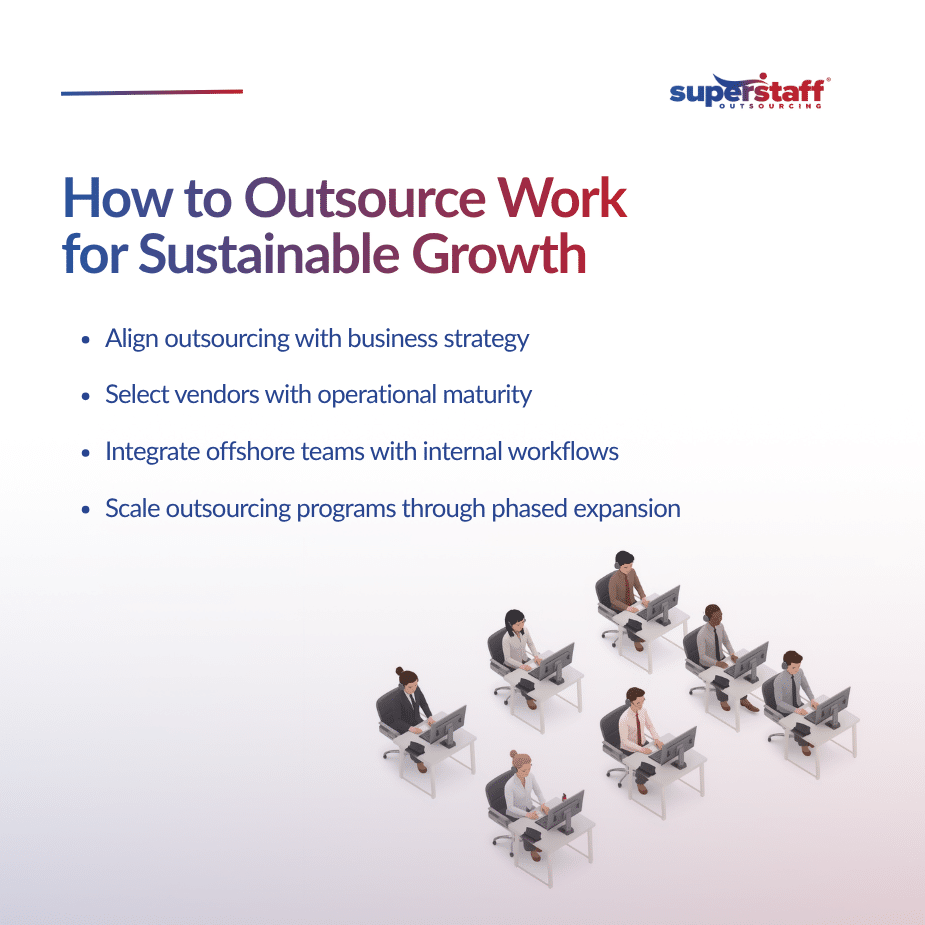
Executives should begin with clear business goals before exploring outsourcing options. Without alignment on objectives, outsourcing initiatives can drift and fail to deliver measurable value.
Leaders who approach how to outsource work strategically start by identifying operational challenges. These often include rising labor costs, difficulty hiring specialized talent, or expanding customer service requirements.
Organizations commonly outsource functions such as customer support, back office administration, data processing, and technical support. The objective is not simply cost reduction. It is operational stability and improved service delivery.
Clear objectives also guide vendor selection and performance evaluation later in the process. This step ensures that outsourcing decisions support broader business strategy.
Transitioning from strategic intent to operational planning requires identifying the specific tasks that should move to an external team.
Identify Processes Suitable for Outsourcing
Not every function is appropriate for outsourcing. Leaders evaluating how to outsource work must determine which processes can operate effectively with distributed teams.
Suitable functions usually share several characteristics. They are structured, repeatable, and supported by defined procedures. Customer service, claims processing, and data management often fall into this category.
Executives should map workflows to determine dependencies and complexity. This analysis helps separate core strategic functions from operational tasks that external teams can manage.
Organizations that carefully select processes often build outsourcing programs that expand gradually. Early success provides internal confidence and supports future outsourcing pipeline growth strategies.
Once the scope is defined, leadership teams can begin evaluating potential outsourcing partners.
Evaluate Potential Vendors Carefully
Vendor selection is the most critical stage in learning how to outsource work effectively. The quality of the outsourcing partner determines operational outcomes.
Executives should evaluate vendors based on experience, operational maturity, and cultural compatibility. The ability to scale services and maintain service level commitments is essential.
During this stage, leaders should focus on tips for successful vendor selection and team integration. These include reviewing training systems, security protocols, management structure, and communication practices.
Site visits, operational reviews, and pilot programs provide deeper insight into vendor capabilities. The goal is to confirm that the provider can support long term operational goals rather than simply offering low costs.
After selecting a partner, companies must establish clear expectations through formal agreements.
Establish Clear Service Level Agreements
Service Level Agreements define the performance standards for outsourced operations. Organizations that master how to outsource work rely heavily on detailed SLAs.
SLAs clarify expectations related to response times, accuracy, service availability, and reporting requirements. They create a shared definition of operational success.
Well structured agreements also outline escalation procedures and performance review cycles. This framework allows leaders to address issues before they disrupt operations.
Clear documentation supports accountability on both sides of the partnership. It ensures that operational performance remains measurable and transparent.
Once expectations are defined, companies can begin building the operational foundation for collaboration.
Design an Effective Onboarding Process
A strong onboarding process sets the tone for the outsourcing partnership. Leaders studying how to outsource work often overlook the importance of structured onboarding.
Offshore teams must understand the company’s products, systems, and customer expectations. Training should cover operational procedures as well as brand standards.
Knowledge transfer sessions are critical during this phase. Internal teams should document workflows and provide clear instructions for handling tasks.
Many companies begin with a phased transition. Initial operations may involve smaller task volumes while offshore teams build familiarity with processes.
A structured onboarding process ensures that outsourced teams operate confidently and consistently from the start.
After onboarding, organizations must focus on integrating outsourced teams into daily operations.
Integrate Offshore Teams With Internal Operations
Integration determines whether outsourcing functions as a separate service provider or as a seamless extension of the business.
Organizations that understand how to outsource work treat offshore teams as part of the broader organization rather than as isolated contractors.
Regular communication channels are essential. Many companies use shared collaboration tools, daily stand ups, and joint planning sessions.
Managers should also establish clear escalation paths. These allow teams to resolve operational challenges quickly.
Successful integration also includes aligning reporting structures and performance goals. When offshore teams understand company priorities, they contribute more effectively to operational outcomes.
Once teams are integrated, performance management becomes the next focus.
Implement Transparent Performance Monitoring
Outsourcing success depends on continuous performance visibility. Leaders who master how to outsource work build strong monitoring frameworks.
Operational dashboards help track metrics such as response times, resolution rates, and customer satisfaction. These indicators provide early signals of operational issues.
Regular performance reviews ensure alignment between internal leadership and outsourced teams. They also create opportunities for process improvements.
Executives often review performance monthly or quarterly to assess operational health. These discussions allow teams to adjust workflows and maintain service quality.
Monitoring frameworks also help organizations capture insights that improve future outsourcing decisions.
Strengthen Collaboration Through Leadership Alignment
Strong leadership alignment plays a central role in how to outsource work successfully.
Executive sponsors from both organizations should maintain open communication and shared accountability for operational outcomes.
Leadership engagement ensures that outsourcing programs receive the attention and resources needed to succeed. It also reinforces trust between partners.
Operational managers should meet regularly to review performance, discuss challenges, and refine processes.
These discussions often generate improvements that increase efficiency and service quality across the organization.
Strong leadership alignment also creates a culture of continuous improvement within outsourced operations.
Scale Outsourcing Programs Gradually
Organizations that succeed with how to outsource work rarely expand too quickly. Gradual scaling allows companies to refine processes and build confidence in the outsourcing partnership.
Once early operations stabilize, companies can evaluate opportunities to expand services. This might include additional customer support channels, back office functions, or technical services.
Many organizations develop outsourcing pipeline growth strategies based on operational results. These strategies prioritize tasks that benefit from external expertise and operational scalability.
Scaling gradually ensures that outsourcing programs maintain quality and operational discipline as they grow.
With the right approach, outsourcing becomes a long term operational capability rather than a short term solution.
Learn From Successful Outsourcing Programs
Leaders exploring how to outsource work often study successful outsourcing examples to understand practical outcomes.
For instance, many growing companies outsource customer support when expanding into new markets. Offshore teams provide extended service hours without increasing domestic staffing costs.
Other organizations outsource administrative and data processing tasks to improve efficiency. Internal teams can then focus on higher value activities such as product development and strategic planning.
These successful outsourcing examples demonstrate a common pattern. Companies that define clear objectives, choose strong partners, and integrate teams effectively achieve sustainable results.
These lessons reinforce the importance of approaching outsourcing as a strategic operational decision.
Building Long Term Success Through Strategic Outsourcing
Organizations that succeed with outsourcing follow a disciplined process from planning through integration. Learning how to outsource work requires clear objectives, thoughtful vendor selection, structured onboarding, and consistent performance management.
When companies treat outsourcing as a strategic partnership rather than a transactional service, offshore teams become an extension of internal operations. This approach strengthens service delivery, improves operational flexibility, and supports sustainable growth.
SuperStaff helps businesses navigate how to outsource work by providing experienced offshore teams in the Philippines who integrate seamlessly with client operations. From customer service to back office support, SuperStaff delivers scalable solutions designed for long term operational success.
If your organization is exploring outsourcing, connect with SuperStaff to learn how dedicated offshore teams can support your next phase of growth.