
Modern companies depend on a wide network of suppliers, service providers, and technology partners. Each vendor supports a piece of daily operations, from logistics and IT to customer support and compliance services. Yet as organizations grow, vendor oversight often becomes difficult to manage internally.
Many firms now explore vendor management outsourcing as a way to regain visibility, improve accountability, and reduce operational friction. When a structured external team manages vendor relationships, companies gain consistent oversight without adding internal complexity.
The Hidden Complexity of Vendor Ecosystems
Vendor networks rarely stay simple. Businesses add new partners as they expand into new markets, adopt new technologies, or outsource specialized work.
Over time, vendor relationships multiply. Procurement teams handle contracts, finance tracks invoices, operations manage service performance, and compliance monitors risk. Without coordination, this structure creates gaps in accountability.
Common challenges include:
- Vendor contracts stored across different departments
- Performance metrics that vary by team
- Inconsistent vendor communication
- Limited visibility into operational risks
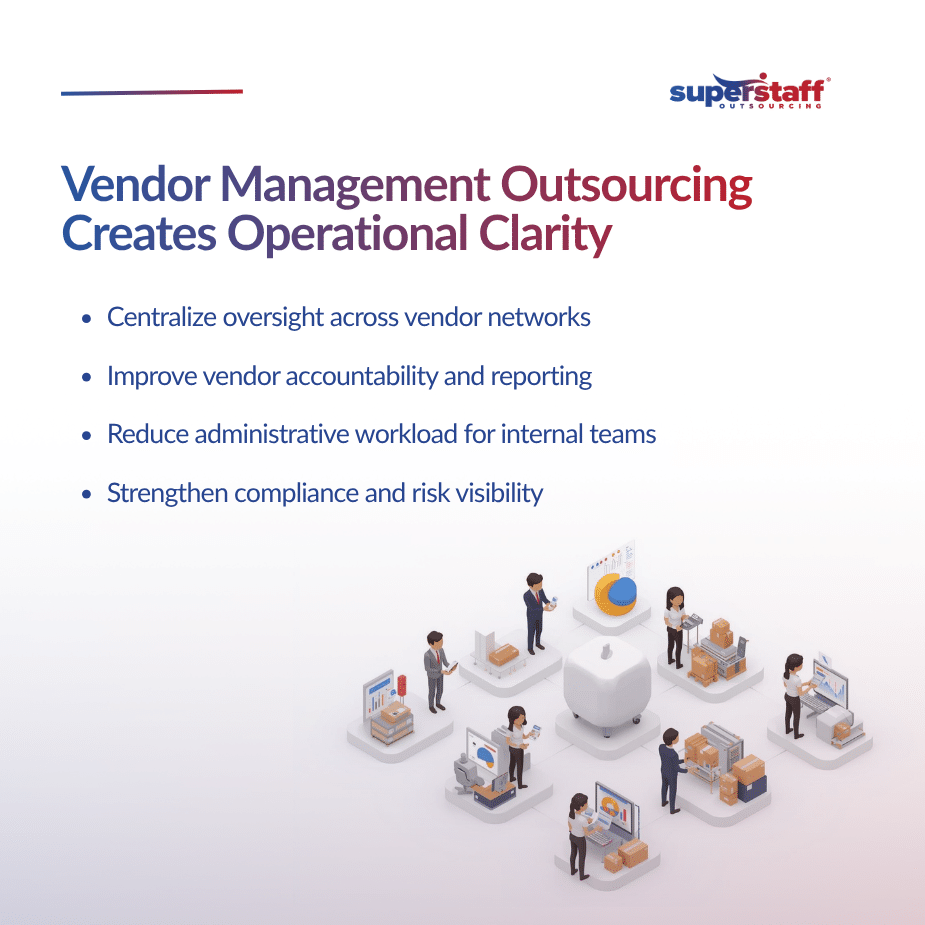
As these issues grow, organizations begin to see the value of vendor management outsourcing to centralize governance and maintain clear operational oversight.
When Vendor Oversight Becomes a Strategic Risk
Vendor relationships influence critical business functions. They affect customer experience, regulatory compliance, service continuity, and cost efficiency.
When oversight weakens, organizations face several operational risks:
- Missed service level commitments
- Contract terms that are not actively monitored
- Slow response times from underperforming vendors
- Lack of visibility into supplier dependencies
These risks often remain hidden until a disruption occurs. For this reason, many organizations evaluate vendor management outsourcing as part of their broader operational risk strategy.
A dedicated oversight team helps ensure vendors meet expectations while keeping internal leaders informed.
The Growing Administrative Burden on Internal Teams
Vendor oversight requires continuous coordination. Contracts must be reviewed, performance reports analyzed, and service issues escalated quickly.
Internal teams already manage many responsibilities. Procurement handles negotiations. Finance tracks payments. Operations monitors service delivery.
As vendor counts increase, the administrative workload expands.
Typical tasks include:
- Tracking service level agreements
- Managing vendor communications
- Coordinating performance reviews
- Monitoring compliance obligations
Organizations often adopt vendor management outsourcing to relieve internal teams from these operational burdens. This approach allows internal staff to focus on strategic priorities rather than administrative oversight.
Centralized Governance Improves Accountability
One of the biggest advantages of vendor management outsourcing is centralized governance.
Instead of multiple departments managing vendors independently, a dedicated oversight team coordinates vendor relationships from a single operational framework.
Central governance provides several benefits:
- Consistent vendor onboarding processes
- Standardized performance monitoring
- Clear documentation of service obligations
- Structured escalation procedures
With centralized oversight, companies gain a clearer view of how each vendor contributes to operational goals. Leaders can identify risks earlier and address performance issues before they affect customers.
Vendor Performance Becomes Measurable
Effective vendor oversight requires consistent performance measurement. Without clear benchmarks, it becomes difficult to evaluate whether vendors deliver the value promised in contracts.
A structured vendor management outsourcing model introduces performance monitoring systems that track vendor outcomes over time.
Typical monitoring activities include:
- Reviewing service delivery reports
- Tracking response and resolution times
- Evaluating contract compliance
- Identifying recurring service issues
These insights help leadership teams make better decisions about renewing contracts, renegotiating terms, or replacing underperforming vendors.
Communication Improves Across the Vendor Network
Vendor relationships often break down due to poor communication rather than poor service.
Different departments may contact the same vendor separately, leading to mixed messages and delayed responses.
With vendor management outsourcing, communication channels become centralized. A dedicated oversight team coordinates all vendor interactions and maintains clear records of discussions, commitments, and service issues.
This structure improves collaboration by:
- Providing a single point of contact for vendors
- Documenting all operational discussions
- Ensuring timely follow up on service requests
- Maintaining consistent expectations across vendors
Better communication leads to stronger vendor partnerships and faster problem resolution.
Compliance and Risk Monitoring Become Stronger
Regulatory expectations continue to grow across industries. Companies must ensure that third party vendors follow the same compliance standards as internal teams.
Managing this requirement internally can be difficult when vendors operate across different regions or regulatory environments.
Many organizations turn to vendor management outsourcing to strengthen risk oversight.
A structured vendor management program supports compliance by:
- Reviewing vendor certifications and documentation
- Monitoring adherence to contractual obligations
- Escalating compliance concerns early
- Maintaining audit ready vendor records
This approach helps businesses protect their reputation while meeting regulatory requirements.
Vendor Costs Become More Transparent
Vendor expenses often appear scattered across departments. Procurement may manage contracts while finance processes invoices and operations evaluates service quality.
Without coordination, companies may overlook opportunities to improve vendor cost efficiency.
A centralized vendor management outsourcing structure creates transparency across the entire vendor lifecycle.
Benefits include:
- Consolidated vendor reporting
- Clear visibility into contract obligations
- Better forecasting of vendor expenses
- Identification of redundant vendor services
Improved visibility allows leaders to make strategic vendor decisions that align with financial goals.
Scalability Without Operational Strain
As companies grow, vendor networks expand quickly. New markets, digital tools, and outsourced services introduce additional partners into the ecosystem.
Internal vendor management teams often struggle to keep pace with this growth.
Through vendor management outsourcing, organizations gain scalable support that grows alongside operations.
Outsourced vendor management teams can:
- Manage onboarding of new vendors
- Maintain vendor documentation and reporting
- Monitor vendor performance across regions
- Coordinate vendor relationships as operations expand
This flexibility allows companies to scale their vendor ecosystem without increasing internal overhead.
Why Many Businesses Turn to the Philippines
Many global companies partner with offshore teams to manage operational support functions. The Philippines has become a trusted destination for these services due to its skilled workforce and strong outsourcing infrastructure.
For vendor oversight programs, offshore teams provide consistent operational support across time zones while maintaining high communication standards.
Organizations using vendor management outsourcing in the Philippines benefit from:
- English fluent professionals
- Strong experience in operational coordination
- Established outsourcing infrastructure
- Cost efficient support without sacrificing service quality
These advantages make the Philippines a practical location for companies seeking structured vendor oversight.
Bringing Structure Back to Vendor Oversight
Vendor networks are essential to modern business operations. However, as these networks grow, managing vendor relationships internally can strain teams and reduce operational visibility.
A structured vendor management outsourcing strategy helps organizations centralize oversight, strengthen accountability, and improve vendor performance across the entire supplier ecosystem.
Companies that adopt this approach gain clearer vendor governance, better operational coordination, and stronger risk management. They also free internal teams to focus on innovation, customer experience, and growth.
SuperStaff helps businesses implement structured vendor oversight through dedicated offshore teams in the Philippines. If your organization is managing a growing network of suppliers and service partners, our specialists can help restore clarity and control.
Connect with SuperStaff today to learn how outsourced operational support can simplify vendor oversight while strengthening your business operations.