Hospitals and healthcare providers need strong teams to keep daily operations running well. However, many facilities still deal with staff shortages, long hiring periods, employee burnout, and rising labor costs. Because of this, many companies now look for better ways to improve healthcare labor management without lowering the quality of patient care.
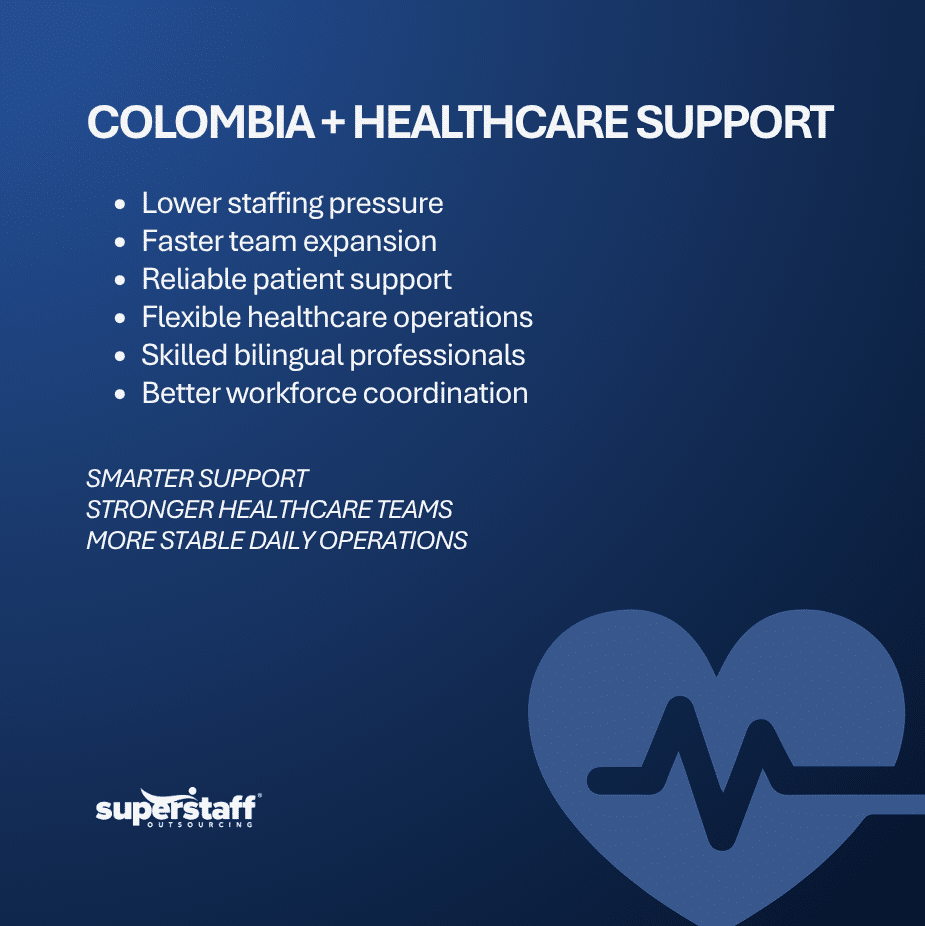
Colombia has become a strong outsourcing destination for healthcare support services. The country offers skilled professionals, strong communication skills, and flexible staffing solutions that help healthcare organizations manage workloads better. At the same time, businesses can reduce operational pressure while improving patient support and administrative efficiency.
Why Colombia Stands Out for Healthcare Support
Colombia continues to attract healthcare companies because of its growing workforce and strong outsourcing sector. Many healthcare organizations now consider healthcare outsourcing to add administrative and patient support capacity without expanding every function internally.
1. Skilled Healthcare Support Professionals
Colombia has a large pool of educated professionals who can support healthcare administration, customer service, and back-office work. With the right training, outsourced teams can assist with medical terminology, insurance processes, patient coordination, and other administrative tasks.
As a result, healthcare providers can build dedicated support teams while keeping clinical responsibilities with qualified medical professionals.
2. Strong English Communication Skills
Clear communication matters when teams handle patient questions, appointment requests, and administrative concerns. Colombia gives healthcare organizations access to bilingual professionals who can support English- and Spanish-speaking populations.
This makes nearshore outsourcing in Colombia useful for organizations that need regular communication between their U.S.-based and outsourced teams.
3. Cost Savings Without Lowering Quality
Building larger internal administrative teams can increase expenses related to recruitment, salaries, equipment, office space, and training. Outsourcing gives healthcare organizations another way to expand operational capacity while controlling overhead.
Companies can also adjust team structures according to workload instead of maintaining unnecessary staffing levels throughout the year.
4. Time Zone Alignment With North America
Colombia’s time zones align closely with U.S. business hours. This setup allows healthcare organizations and outsourced teams to communicate during the same working day.
Real-time collaboration can make it easier to manage scheduling changes, patient questions, billing concerns, and other administrative issues that require timely action.
5. Growing Outsourcing Infrastructure
Colombia supports outsourcing operations across healthcare, customer service, finance, technology, and other business functions. Established providers can offer recruitment, training, technology, and workforce management as part of a broader business process outsourcing model.
This infrastructure gives healthcare organizations another option for building scalable support teams as operational needs change.
Healthcare Roles Colombia Commonly Supports
Healthcare organizations can outsource many non-clinical tasks that take time away from their internal teams. Healthcare back-office support can cover functions ranging from appointment coordination to administrative processing.
1. Medical Scheduling and Appointment Coordination
Scheduling teams can assist patients with booking appointments, rescheduling visits, confirming availability, and receiving reminders.
Dedicated patient scheduling support can also reduce the amount of time front-office employees spend managing calls and calendar changes.
2. Medical Billing and Insurance Verification
Billing support teams can assist with claims processing, insurance verification, payment follow-ups, and related administrative work.
Organized billing processes can reduce backlogs and give internal finance teams additional capacity to address complex claims and revenue cycle concerns.
3. Customer Service and Patient Support
Patients may contact healthcare organizations with questions about appointments, billing, insurance, or other non-clinical concerns. A dedicated healthcare customer service team can manage these interactions through approved communication channels.
This additional capacity allows healthcare organizations to respond to patient inquiries while reducing pressure on clinical and front-office employees.
4. Data Entry and Records Management
Healthcare facilities manage large amounts of administrative and patient information. Outsourced support teams can assist with approved data entry, database updates, document organization, and records-related administrative tasks.
These services can reduce repetitive work for internal employees while supporting more organized operations.
5. Remote Administrative Assistance
Remote administrative professionals can assist healthcare managers with reports, documentation, scheduling, and operational coordination. Businesses can also use broader back-office outsourcing services to move routine administrative work away from already busy internal departments.
As operations grow, this additional support gives managers more time to focus on workforce planning and service delivery.
How Outsourcing Supports Workforce Stability
Healthcare facilities often deal with high workloads, overtime, and staffing shortages. Outsourcing selected non-clinical responsibilities can give internal employees additional operational support.
1. Reduced Administrative Burden
Doctors, nurses, and in-house staff already manage demanding responsibilities. Administrative work can take additional time away from tasks that require their direct attention.
Using healthcare BPO services for suitable non-clinical tasks allows internal teams to concentrate more of their time on patient-facing and specialized responsibilities.
2. Faster Hiring and Team Expansion
Healthcare organizations sometimes need additional administrative capacity quickly. However, recruiting, screening, and onboarding employees internally can take time.
An established outsourcing provider can manage recruitment and training for agreed support roles. This gives businesses another way to strengthen healthcare labor management without relying entirely on internal recruitment.
3. Better Workforce Flexibility
Patient demand and administrative workloads can change throughout the year. Some periods may require additional scheduling, billing, or customer service support.
Scalable outsourcing allows healthcare organizations to adjust support capacity according to operational needs rather than relying on a fixed team size for every period.
4. Improved Employee Retention
Heavy administrative workloads can place additional pressure on employees. When suitable routine tasks are assigned to dedicated support teams, internal staff can spend more time on their primary responsibilities.
Healthcare organizations should still address broader retention factors such as workload, management, compensation, scheduling, and workplace conditions. Outsourcing can support workload management, but it does not replace these internal workforce strategies.
5. Stronger Operational Efficiency
Efficient support systems can help healthcare organizations manage patient inquiries, paperwork, scheduling, and other administrative processes more consistently.
Combining internal employees with dedicated outsourced teams can strengthen healthcare labor management by assigning responsibilities according to skills, workload, and operational priorities.
Important Factors When Choosing a Colombia Outsourcing Partner
Healthcare providers should evaluate outsourcing partners carefully before making long-term decisions. Because healthcare organizations handle sensitive information, data security and compliance should be part of the provider review process.
Key factors include:
- Healthcare industry experience
- Staff training and onboarding processes
- Data security and privacy practices
- Clear communication and escalation procedures
- Flexible staffing options
- Quality monitoring and reporting
Organizations subject to U.S. healthcare privacy requirements should also determine whether an outsourcing arrangement involves protected health information and what HIPAA obligations apply. The U.S. Department of Health and Human Services provides guidance on business associate requirements for organizations working with outside service providers.
Build Stronger Healthcare Teams With SuperStaff
Healthcare companies need reliable support systems to manage growing workloads, staffing gaps, and administrative demands. Colombia offers access to professionals who can support suitable non-clinical functions while giving healthcare organizations greater flexibility in how they structure their operations.
SuperStaff provides healthcare outsourcing solutions for organizations that need additional support across patient communication, administrative processes, customer service, and back-office functions. These services can complement internal healthcare teams and support broader healthcare labor management goals.
Send SuperStaff a message to discuss your operational needs and determine which healthcare support functions may be suitable for outsourcing.