Managing business finances takes time and attention. Receipts, invoices, payment records, and monthly reports can quickly pile up as a company grows. When financial tasks fall behind, business owners may struggle to track expenses, monitor cash flow, and prepare accurate reports. Outsourced bookkeeping services can help businesses organize these responsibilities and maintain consistent financial records.
By assigning routine bookkeeping tasks to experienced professionals, companies can reduce their administrative workload and gain a clearer view of their finances. This support allows business owners to focus on daily operations, customer relationships, and growth plans while keeping their financial records organized.
The Growing Need for Outsourced Bookkeeping Services
As businesses grow, they usually handle more transactions, suppliers, employees, and expenses. Managing these records manually can become difficult, especially when the same employees are responsible for several financial tasks. Outsourced bookkeeping services provide additional support for maintaining records and completing routine accounting work on time.
1. Simplifying Daily Financial Operations
Bookkeeping involves recording transactions, categorizing expenses, updating ledgers, and tracking payments. Outsourced professionals can manage these tasks using agreed procedures and accounting software. This helps businesses maintain organized records and reduces the amount of paperwork handled by internal employees.
2. Reducing Accounting Errors
Missing entries, duplicate transactions, and incorrect figures can affect financial reports. Professional bookkeepers can use reconciliation procedures and regular reviews to identify discrepancies. Businesses should still review important reports and establish approval procedures for financial transactions.
3. Improving Cash Flow Management
Tracking incoming payments and outgoing expenses helps businesses understand how much money is available for daily operations. Regular bookkeeping updates can help owners identify overdue invoices, monitor spending, and prepare for upcoming payments.
4. Saving Time for Core Operations
Business owners often spend hours organizing receipts, checking invoices, and updating spreadsheets. Delegating these tasks gives them more time to manage employees, serve customers, and improve their products or services.
5. Building a Reliable Financial Foundation
Organized financial records help businesses prepare budgets, review expenses, and assess performance. The IRS guidance on business recordkeeping explains which records can support income, expenses, and tax reporting. Businesses should follow the recordkeeping rules that apply to their location and industry.
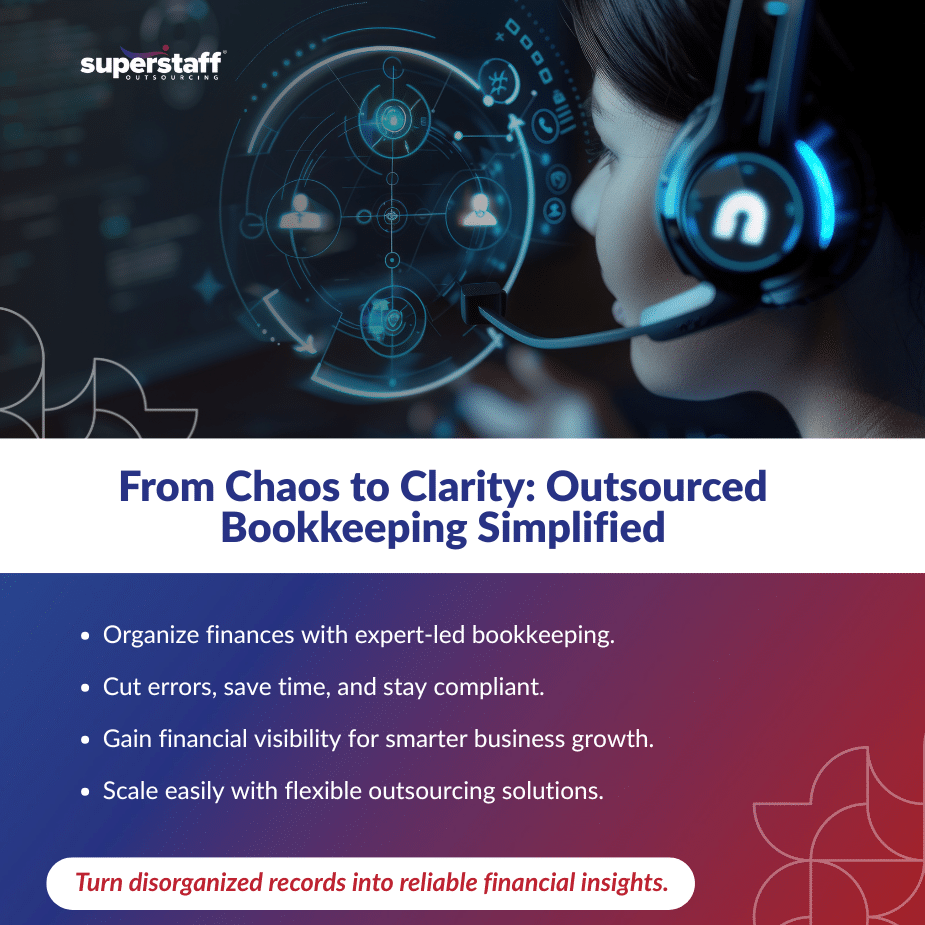
Benefits of Outsourcing Bookkeeping Services
The benefits of outsourcing bookkeeping services go beyond reducing the amount of work handled internally. A well-managed arrangement can give businesses access to trained professionals, flexible support, and more consistent financial reporting.
1. Access to Skilled Professionals
Outsourcing allows companies to work with professionals experienced in transaction recording, account reconciliation, expense tracking, and financial documentation. Businesses should confirm that their provider has the skills and experience needed for their accounting systems and reporting requirements.
2. Enhanced Accuracy and Compliance
Consistent bookkeeping helps businesses maintain reliable records for financial reviews and tax preparation. Outsourced teams can follow documented procedures, reconcile accounts, and flag unusual transactions for review. The business remains responsible for ensuring that its records meet applicable legal and tax requirements.
3. Cost Efficiency
Hiring full-time bookkeeping staff involves salaries, recruitment, training, software, and other operating expenses. Bookkeeping outsourcing gives businesses another option by allowing them to purchase support based on their workload and requirements. The actual savings depend on service fees, transaction volume, and the amount of internal oversight needed.
4. Scalability for Growing Businesses
A company may need basic transaction recording at first but require more detailed reporting as it expands. Outsourced services can be adjusted to support changes in transaction volume and reporting needs, subject to the provider’s available capacity and service agreement.
5. Data Security and Confidentiality
Financial records contain sensitive information about customers, employees, suppliers, and business performance. Providers should use appropriate access controls, secure systems, confidentiality agreements, and documented data-handling procedures. Businesses should also review how their financial information is stored, accessed, and transferred.
How Outsourced Bookkeeping Helps Small Businesses
Small businesses often operate with limited staff and budgets. Owners may handle bookkeeping themselves or assign it to employees who already have other responsibilities. Outsourced bookkeeping services can help reduce this workload while giving the business a more consistent approach to financial recordkeeping.
1. Affordable Financial Management
Small businesses may not need a full-time bookkeeper. Outsourcing allows owners to arrange support based on the tasks they need to complete, such as transaction recording, account reconciliation, or monthly reports. Comparing service packages helps businesses select an arrangement that fits their budget.
2. Better Budget Control
Accurate financial records help owners compare income with expenses and understand where their money goes. Regular reviews can reveal rising costs, recurring expenses, and payment delays that need attention.
3. Regular Financial Updates
Outsourced accounting solutions can support the preparation of income statements, expense summaries, and other reports based on the business’s needs. Timely reports help owners review financial performance and plan upcoming expenses.
4. Reduced Workload for Owners
Managing finances alongside sales, customer service, and employee supervision can leave business owners with little time for planning. Delegating routine bookkeeping tasks allows them to focus on operations while retaining oversight of financial decisions.
5. Better Preparation for Growth
Consistent records make it easier to assess business performance, plan budgets, and prepare financial information for lenders or potential investors. Reliable records do not guarantee business growth, but they provide useful information for making informed decisions.
Choosing the Right Outsourced Bookkeeping Partner
Selecting a bookkeeping provider requires more than comparing prices. Businesses should consider the provider’s experience, technology, communication practices, and ability to handle financial information responsibly.
1. Verify Experience and Reputation
Review the provider’s experience with businesses of a similar size or industry. Ask about the types of accounts they manage, their quality control procedures, and how they handle errors or missing information.
2. Check Service Offerings
Some firms focus on basic bookkeeping, while others offer broader accounting support. Depending on the agreement, services may include account reconciliation, accounts payable and receivable support, payroll data processing, and financial reporting. Identify which tasks your business needs before choosing a package.
3. Assess Technology Compatibility
The provider should be able to work with your accounting software, document management systems, and approved file-sharing tools. Agree on how financial records will be transferred, updated, reviewed, and returned when the service ends.
4. Understand Pricing and Flexibility
Ask whether fees depend on transaction volume, hours worked, the number of accounts, or the range of services included. Clarify any extra charges for additional reporting, historical record cleanup, or changes in workload.
5. Evaluate Communication and Support
A reliable provider should explain how often reports will be delivered, who will answer questions, and how urgent discrepancies will be handled. Clear communication helps prevent misunderstandings and keeps financial tasks on schedule.
From Financial Mess to Organized Records
Outsourced bookkeeping services can help businesses replace inconsistent recordkeeping with regular processes and clearer financial reports. The results depend on the quality of the records provided, the procedures used, and the level of review maintained by the business.
1. Consistent Reporting and Analysis
Regular reports give owners a clearer view of revenue, expenses, and account balances. Reviewing these figures over time can help identify changes in business performance and areas that require attention.
2. Transparent Financial Management
Well-maintained records make it easier to trace transactions and check how funds are being used. Clear documentation also helps employees answer questions about invoices, payments, and account balances.
3. Support for Long-Term Planning
Accurate financial information helps businesses prepare budgets, estimate expenses, and evaluate planned investments. Owners can use these records to compare actual results with their financial goals.
4. Better Audit Preparation
Organized invoices, receipts, bank statements, and transaction records make it easier to respond to requests for supporting documents. Businesses should maintain records for the periods required by applicable laws and regulations.
5. Greater Confidence in Financial Decisions
Reliable reports give business owners a stronger basis for deciding when to control spending, adjust budgets, or invest in new resources. Financial decisions should also consider business conditions and other relevant information beyond bookkeeping reports.
Streamline Your Finances With Expert Support
The right bookkeeping arrangement can help businesses maintain accurate records without placing every routine financial task on internal staff. Outsourced bookkeeping services provide support for transaction recording, account reconciliation, and reporting, helping owners spend more time on their main responsibilities.
SuperStaff provides back-office support for businesses that need help with routine financial administration. Depending on their requirements, companies may need assistance with accounting tasks such as bookkeeping and financial record management, alongside other administrative responsibilities.
Discuss Your Bookkeeping Needs
Before choosing an outsourcing arrangement, review your current workload, reporting schedule, accounting systems, and internal approval procedures. Consider which tasks take the most time, where errors commonly occur, and whether your team can keep up with monthly financial deadlines. These details can help you identify which responsibilities are suitable for external support and where additional help may improve your workflow.
It is also important to establish clear expectations for recordkeeping, report delivery, data security, and communication. A well-defined process helps ensure that outsourced bookkeepers understand your requirements while your internal team retains control over financial decisions and approvals.
If you are considering outsourcing your bookkeeping, you can discuss your bookkeeping requirements with SuperStaff to review your business needs and possible support options. Understanding your current challenges and goals can help you determine which tasks to delegate and how external support may fit into your existing financial processes.