Every customer interaction influences how people view a retail brand. Shoppers expect quick answers about orders, clear return instructions, accurate product information, and reliable support when something goes wrong. Managing these requests internally can become expensive and difficult as a retailer expands into new markets, adds sales channels, or experiences seasonal increases in demand.
Retail call center services help businesses manage customer inquiries while maintaining consistent service across locations and channels. From tracking deliveries and processing returns to answering product questions and assisting loyalty members, trained support teams handle the everyday interactions that shape the shopping experience. For global retailers, outsourcing can provide flexible staffing and dependable customer support without requiring a large in-house team.
The Growing Role of Retail Call Center Services
Retail customer service involves more than answering calls. Support teams help customers navigate purchases, resolve problems, and get the information they need before and after a sale. Research into customer experience and consumer expectations also highlights why businesses need to understand what customers expect from their interactions with brands.
1. Building Customer Loyalty
Customers are more likely to return when they receive helpful, timely responses. Agents who listen carefully, explain available options, and resolve concerns professionally can help retailers build stronger customer relationships.
2. Supporting Multiple Communication Channels
Shoppers may contact a retailer by phone, email, live chat, or social media. Coordinated support helps customers receive consistent information regardless of the channel they choose, reducing confusion and repeated explanations.
3. Serving Customers Across Markets
Global retailers must account for different time zones, customer expectations, and communication needs. Extended operating hours and carefully planned staffing help businesses provide support when customers need it.
4. Improving Service Accuracy
Agents need access to current product details, order records, and return policies. Clear procedures and updated knowledge resources help reduce errors and limit unnecessary follow-ups.
5. Protecting Brand Reputation
A delayed delivery or incorrect order can affect a customer’s impression of a brand. Prompt, professional responses help retailers address issues before they escalate and show customers that their concerns are taken seriously.
Core Functions of Retail Call Center Services
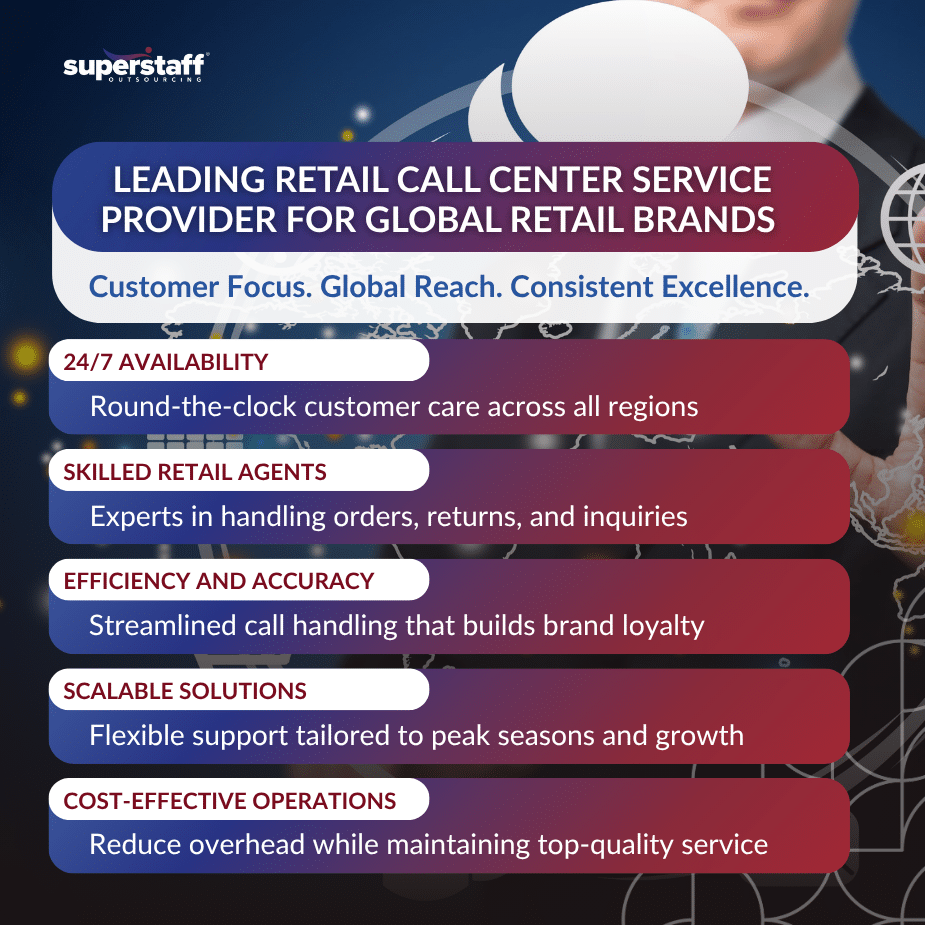
Retail support teams can handle a range of customer-facing tasks. The exact responsibilities depend on the retailer’s products, systems, policies, and service requirements.
1. Order Management and Delivery Tracking
Agents answer questions about order confirmations, shipping progress, delivery schedules, and delayed shipments. By checking order information and communicating available updates, they help customers understand what to expect.
2. Returns, Refunds, and Exchanges
Returns are a routine part of retail operations. Support agents explain eligibility requirements, guide customers through return procedures, and coordinate requests according to company policies.
3. Product Information and Customer Assistance
Customers may need help comparing products, checking availability, understanding product features, or resolving basic usage issues. Well-trained agents provide clear information and direct technical concerns to the appropriate team when necessary.
4. Loyalty Program Support
Retail call center agents can assist with membership registration, rewards balances, points redemption, and promotional offers. Accurate information helps customers understand their benefits and use loyalty programs correctly.
5. Relevant Upselling and Cross-Selling
Agents with strong product knowledge can suggest complementary items when they genuinely fit a customer’s needs. Recommendations should be helpful and relevant rather than adding pressure to the buying process.
Benefits of Outsourced Retail Customer Service
Outsourcing can help retailers manage customer support costs while maintaining service coverage. Its value depends on the provider’s capabilities, the agreed scope of work, and how well the outsourced team integrates with internal operations.
1. More Predictable Operating Costs
Building an in-house team requires recruitment, training, supervision, technology, and ongoing staffing expenses. Outsourcing can reduce the need to manage all these resources internally, although businesses should compare service fees with their current costs.
2. Flexible Staffing During Peak Seasons
Holiday shopping, product launches, and promotional campaigns can cause sudden increases in customer inquiries. Outsourced teams can provide additional capacity to help manage these periods without requiring retailers to maintain the same staffing level throughout the year.
3. Access to Trained Support Professionals
Retail support requires knowledge of product catalogs, order systems, return policies, and customer service procedures. Experienced agents can help retailers establish consistent workflows and handle common customer concerns more efficiently.
4. Faster Response and Resolution
Dedicated staffing and clear escalation procedures help teams respond to inquiries promptly. Access to accurate order records and internal knowledge resources also makes it easier to resolve routine questions without unnecessary transfers.
5. Greater Focus on Retail Operations
When an external team manages routine inquiries, internal employees can devote more time to merchandising, inventory planning, marketing, and business development. Retailers exploring external support can review customer service outsourcing solutions to understand how an outsourced team may fit their operations.
Why Global Brands Consider Philippine Retail Call Centers
The Philippines has an established business process outsourcing industry that serves international companies across multiple sectors. Retailers can work with Philippine-based teams to handle customer communication and related support tasks.
1. Strong Customer Communication Skills
Clear communication helps agents explain policies, confirm order details, and respond to complaints. Retailers should assess a provider’s communication standards and training procedures to ensure they match the brand’s customer experience requirements.
2. Experience Supporting International Customers
Outsourcing providers may have experience serving customers across different markets and communication channels. Retailers should confirm language coverage, operating hours, and familiarity with their target customer base.
3. Flexible Staffing Arrangements
Retailers can explore staffing models that align with their customer inquiry volumes and operating schedules. This flexibility can be useful when launching products, entering new markets, or preparing for seasonal demand.
4. Established BPO Infrastructure
The Philippines has a mature outsourcing sector with professionals experienced in customer service and business support. Businesses should still assess each provider’s technology, continuity plans, data security, and quality assurance practices.
5. Extended Service Coverage
Philippine-based teams can work in shifts that support customers in different time zones. Clear schedules, escalation rules, and handoff procedures help maintain continuity across shifts.
Retail Industries That Benefit from Outsourced Customer Support
Different retail categories face different customer service demands. Outsourced teams can be trained around the products, policies, and common inquiries associated with each business.
1. Fashion and Apparel
Customers frequently ask about sizing, product availability, delivery estimates, and return eligibility. Clear guidance helps shoppers make informed purchases and resolve problems after delivery.
2. Electronics and Appliances
Support teams answer questions about product features, warranties, delivery arrangements, and basic troubleshooting. More complex technical issues can be escalated to qualified specialists.
3. Health and Beauty
Retailers in this category receive questions about product details, order status, subscriptions, and promotions. Agents should follow approved product information and refer medical or safety-related questions to appropriate professionals when needed.
4. Home and Lifestyle
Furniture, homeware, and lifestyle retailers often coordinate delivery schedules, order changes, damaged-item reports, and returns. Timely communication helps customers understand the next steps.
5. E-Commerce and Online Retail
Online retailers may receive high volumes of inquiries about payment issues, order tracking, promotions, and returns. Organized support workflows help manage these requests while keeping customers informed throughout the purchase process. Retailers can also explore customer experience outsourcing to learn how external teams can support customer interactions.
Best Practices for Managing Outsourced Retail Teams
A successful outsourcing arrangement requires clear responsibilities, regular communication, and ongoing performance reviews. Retailers should provide the information and tools agents need to represent the brand accurately.
1. Establish Clear Service Standards
Set measurable targets for response times, resolution rates, customer satisfaction, and quality scores. These indicators help both parties understand expectations and identify areas that need improvement.
2. Provide Product and Policy Training
Agents should understand product details, return procedures, shipping policies, and promotional terms. Training materials must be updated whenever products, pricing, or customer service policies change.
3. Maintain Regular Communication
Routine meetings help retailers and outsourcing partners review performance, discuss recurring issues, and prepare for upcoming campaigns. Clear points of contact also help resolve operational questions quickly.
4. Monitor Customer Feedback
Customer surveys, complaints, and recurring inquiry patterns can reveal gaps in the shopping experience. Reviewing this feedback helps retailers improve support procedures and address underlying problems.
5. Review Performance and Quality
Call reviews, interaction audits, and performance reports help assess whether agents follow company standards. Retailers looking for additional guidance can refer to this customer service outsourcing guide when evaluating support models and operational requirements.
How Outsourcing Supports Retail Growth
When managed well, outsourcing gives retailers the flexibility to respond to changing customer needs while maintaining service standards.
1. Supporting Business Expansion
Retailers entering new markets can use outsourced teams to help manage increased inquiries and customer communication. The service model should reflect the needs of each market and the brand’s operating requirements.
2. Extending Customer Service Hours
Shift-based staffing can help businesses offer support outside standard office hours. Retailers should define which channels and services will be available at each time of day.
3. Improving Operational Efficiency
Documented procedures and dedicated support teams help standardize routine tasks. This can reduce unnecessary handoffs and give internal teams a clearer view of recurring customer concerns.
4. Maintaining a Consistent Brand Experience
Training, approved response guidelines, and regular quality checks help agents communicate in line with the retailer’s standards. Consistency matters when customers interact with a brand through different channels or locations.
5. Managing Costs as Demand Changes
Flexible support arrangements can help retailers adjust staffing as inquiry volumes rise or fall. Regular performance and cost reviews help determine whether the arrangement continues to meet business needs.
Strengthen Your Retail Brand Through Reliable Support
Choosing a retail call center service provider is an important decision for global brands that need consistent customer service across markets. The right partner should understand retail workflows, communicate clearly, protect customer information, and adapt to changing demand.
SuperStaff helps businesses explore customer support outsourcing arrangements suited to their operational needs. With defined service standards, relevant training, and regular performance reviews, retailers can build a support process that serves customers while allowing internal teams to focus on growth.
If your retail business needs help managing customer inquiries, returns, and order-related concerns, contact SuperStaff to discuss your requirements and explore a suitable support arrangement.