Healthcare providers work hard to deliver quality care, yet many face revenue challenges that begin long before treatment starts. A missed call, a delayed appointment, or a complicated registration process can cause patients to seek care elsewhere. As a result, healthcare organizations lose opportunities to serve patients and generate revenue.
Many providers focus on clinical outcomes and operational costs, but patient access has become an equally important factor. When patients cannot easily schedule appointments, verify insurance, or receive timely assistance, frustration grows. Consequently, patient satisfaction declines and revenue opportunities disappear. This is why many organizations are exploring patient access outsourcing to improve service levels while supporting financial performance.
Why Patient Access Directly Affects Revenue
Patient access serves as the first point of contact between providers and patients. Every interaction can influence whether a patient continues with care or looks for alternatives.
1. Appointment Delays Lead to Lost Revenue
Patients often expect quick scheduling options. However, when providers experience staffing shortages or high call volumes, scheduling delays become common.
As a result, some patients cancel plans or choose another provider. Every missed appointment represents a potential loss of revenue and reduced patient engagement.
2. Long Wait Times Increase Patient Frustration
Many patients do not want to spend several minutes waiting on hold. Therefore, lengthy response times often lead to abandoned calls.
When providers fail to connect with patients quickly, they risk losing both new and existing patients. Over time, these missed opportunities can significantly affect revenue.
3. Insurance Verification Errors Cause Payment Issues
Accurate insurance verification helps providers avoid claim denials and billing disputes. However, administrative teams often handle large volumes of information daily.
Even small mistakes can delay payments and increase administrative costs. Therefore, efficient processes remain essential for financial stability.
4. Poor Communication Impacts Patient Retention
Patients want clear answers regarding appointments, insurance coverage, and care instructions. When communication breaks down, trust weakens.
Consequently, patients may decide not to return for future services. Retention challenges can directly affect long-term revenue growth.
5. Access Problems Damage Reputation
Online reviews and patient referrals play an important role in healthcare growth. When patients experience scheduling issues or poor service, they often share their concerns.
As a result, providers may struggle to attract new patients despite offering excellent clinical care.
Patient access is also part of the revenue cycle, not just a customer service function. The Healthcare Financial Management Association explains how scheduling, registration, and insurance verification contribute to patient access and revenue cycle performance.
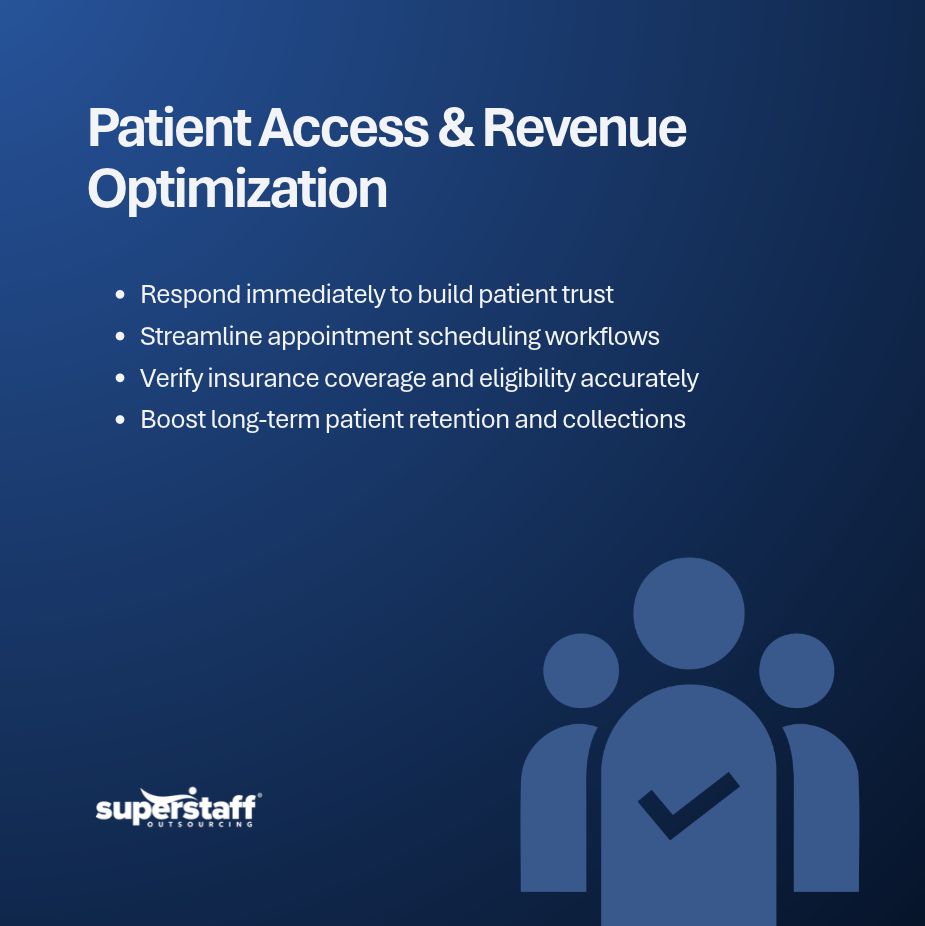
How Administrative Challenges Create Access Barriers
Patient access issues rarely result from a single problem. Instead, several operational challenges often contribute to delays and inefficiencies.
1. Staffing Gaps Affect Daily Operations
Many healthcare organizations continue to face workforce shortages. Consequently, front-office teams frequently manage more responsibilities than they can comfortably handle.
This situation often leads to slower response times and increased employee stress.
2. Growing Patient Demand Increases Workloads
Healthcare demand continues to rise across many specialties. Therefore, administrative teams process more calls, appointments, and insurance requests than ever before.
Without additional support, service quality may decline.
3. Manual Processes Slow Down Service
Many providers still rely on manual workflows for scheduling and patient intake. While these systems may work, they often require significant staff time.
As a result, patients may experience unnecessary delays throughout the access process.
4. Administrative Burnout Reduces Productivity
Heavy workloads can affect employee morale and performance. Consequently, staff members may struggle to maintain consistent service levels.
This challenge can create a cycle of inefficiencies that affects both patient experience and revenue.
5. Limited Coverage Creates Service Gaps
Healthcare organizations often need support outside regular business hours. However, maintaining full staffing coverage can be difficult and expensive.
Therefore, unanswered calls and delayed responses become common concerns.
How Patient Access Outsourcing Supports Financial Performance
Many providers are turning to patient access outsourcing to improve efficiency while maintaining high service standards. Dedicated support teams can take on selected administrative responsibilities, allowing internal employees to focus on more complex patient needs.
1. Faster Scheduling and Appointment Management
Dedicated support teams can help manage appointment requests promptly. As a result, providers reduce scheduling delays and capture more revenue opportunities.
Patients also benefit from a smoother experience.
2. Improved Call Handling
Patient access outsourcing allows providers to manage higher call volumes without overwhelming internal teams.
Consequently, fewer calls go unanswered and patient satisfaction can improve.
3. Better Insurance Verification Support
Outsourced specialists can assist with eligibility checks and documentation processes. Therefore, providers can reduce errors that may lead to claim denials.
This support contributes to healthier revenue cycle operations.
4. Greater Operational Flexibility
Healthcare organizations often experience fluctuations in patient demand. Outsourcing solutions make it easier to scale support as needs change.
As a result, providers can maintain service quality during busy periods.
5. Stronger Focus on Patient Care
When administrative responsibilities receive adequate support, internal teams can focus more attention on patient care.
Consequently, healthcare organizations can improve both operational efficiency and patient experiences.
Choosing the Right Patient Access Support Partner
Not every outsourcing provider offers the same level of healthcare experience. Before choosing a partner, healthcare organizations should review the services offered and how the provider handles sensitive patient information.
Important factors include:
- Experience with healthcare scheduling and patient communication
- Familiarity with insurance verification and registration workflows
- Training in patient privacy and data security
- Ability to support the organization’s existing systems
- Flexible staffing and service coverage
- Clear reporting and quality monitoring
Providers should also discuss how outsourced teams will work with internal staff. Clear responsibilities, escalation procedures, and communication guidelines help prevent delays and ensure patient concerns reach the right people.
Improve Scheduling and Reduce Patient Wait Times
Scheduling is one of the first steps in a patient’s experience with a healthcare provider. When appointment requests, confirmations, and follow-ups are handled consistently, patients have fewer reasons to delay or abandon care.
Healthcare organizations can review how specialized teams help solve medical scheduling bottlenecks to understand how additional support can help manage appointment backlogs and reduce pressure on internal staff.
Measure the Results of Patient Access Improvements
Healthcare providers should track whether their patient access processes are meeting both service and financial goals. Reviewing performance regularly helps identify where patients experience delays and which processes need attention.
Useful metrics include:
- Average call response time
- Call abandonment rate
- Appointment scheduling completion rate
- No-show and cancellation rates
- Insurance verification accuracy
- Patient satisfaction scores
These measures help providers understand whether their support teams are handling requests efficiently. They can also show whether changes in staffing, scheduling, or communication are improving the patient experience.
Support More Healthcare Administrative Functions
Patient access is closely connected to other administrative activities, including patient registration, insurance checks, billing assistance, and follow-up communication. When these processes work together, providers can reduce unnecessary delays and keep information organized.
Healthcare organizations can also use healthcare outsourcing teams in the Philippines to support selected administrative and patient coordination tasks. This gives internal teams additional capacity while allowing clinical professionals to focus on patient care.
Patient Access Support for Better Healthcare Operations
SuperStaff provides healthcare outsourcing services that help providers manage patient intake, appointment scheduling, insurance verification, inbound inquiries, and other administrative functions.
With dedicated support for patient access and revenue cycle operations, healthcare organizations can manage service demands more effectively while giving internal teams more time for their primary responsibilities.
Stronger Access Creates Stronger Financial Results
Patient access influences every stage of the healthcare journey. From scheduling appointments to verifying insurance, each interaction can affect revenue, patient satisfaction, and retention. Therefore, providers must treat access as a strategic business priority.
SuperStaff helps healthcare organizations strengthen operations through patient access outsourcing solutions that support scheduling, administrative processes, and patient communication.
If your team wants to improve service levels while protecting revenue opportunities, contact SuperStaff to discuss your healthcare support needs and find a solution that fits your organization.