
Healthcare organizations rely on efficient scheduling to keep operations running smoothly. Yet many hospitals, clinics, and medical groups struggle with appointment backlogs, long patient wait times, and overwhelmed administrative teams. These issues often stem from outdated processes and limited staffing capacity.
One strategy gaining traction among U.S. healthcare providers is to outsource medical scheduling to specialized offshore or nearshore teams. When managed properly, external support helps providers stabilize administrative workloads, improve patient access, and free clinical staff to focus on care delivery.
Why Scheduling Has Become a Major Operational Challenge
Healthcare scheduling is more complex than many organizations realize. Every appointment involves insurance verification, provider availability checks, patient communication, and system documentation.
As healthcare networks grow, these tasks multiply rapidly. A single clinic may process hundreds of scheduling interactions each day across phone, online, and referral channels.
When providers outsource medical scheduling, they gain the operational support needed to manage these growing volumes without overwhelming internal teams.
Key factors driving scheduling pressure include:
- Rising patient demand across primary and specialty care
- Staffing shortages among administrative teams
- Increasing complexity of insurance and referral requirements
- Expansion of telehealth and multi-location practices
Without enough scheduling capacity, even high-quality providers struggle to keep patient access consistent.
How Scheduling Bottlenecks Affect Patient Access
Scheduling delays create ripple effects across the entire care journey. Patients often judge healthcare quality based on how easily they can secure appointments.
Long hold times and delayed callbacks can discourage patients from seeking care or prompt them to switch providers.
Organizations that outsource medical scheduling often see improvements in accessibility because dedicated teams manage appointment workflows continuously.
Common patient access issues caused by scheduling bottlenecks include:
- Long wait times for appointments
- Missed follow-ups due to administrative overload
- Delayed referrals between providers
- Poor coordination across departments
Improving scheduling efficiency directly improves patient satisfaction and continuity of care.
The Administrative Burden on Healthcare Staff
Many healthcare systems still rely on front desk staff to handle both patient interactions and scheduling responsibilities.
These employees already manage check-ins, billing inquiries, and documentation tasks. Adding high scheduling volumes often stretches teams beyond their capacity.
When providers outsource medical scheduling, internal teams regain focus on in-clinic operations instead of managing constant phone queues.
This shift allows staff to prioritize tasks such as:
- Supporting patients during visits
- Managing clinical documentation
- Coordinating with care teams
- Handling billing or insurance inquiries
Administrative relief improves morale while maintaining operational stability.
Why Nearshore and Offshore Support Are Becoming Essential
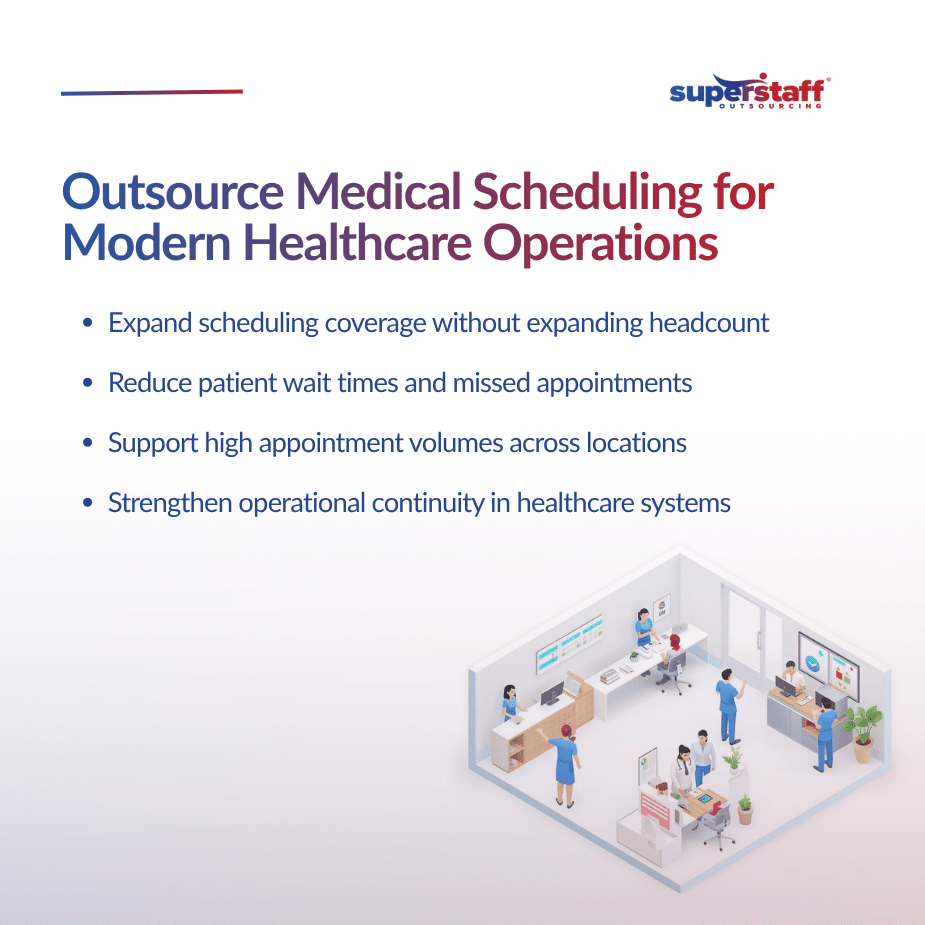
Healthcare providers increasingly recognize that administrative workloads cannot always be handled internally.
Outsourcing provides scalable staffing options that allow organizations to expand scheduling capacity without expanding physical office teams.
Many organizations outsource medical scheduling to trained agents who specialize in healthcare workflows and patient communication.
These teams typically support functions such as:
- Appointment scheduling and rescheduling
- Referral coordination
- Patient reminders and confirmations
- Insurance eligibility checks
These services often fall under broader healthcare back office support services that handle non-clinical operations efficiently.
What Makes Nearshore Scheduling Teams Effective
Nearshore and offshore scheduling teams operate within structured processes designed specifically for healthcare environments.
These professionals receive training on scheduling systems, patient communication standards, and compliance protocols.
Organizations that outsource medical scheduling benefit from teams that operate during extended hours, helping healthcare providers maintain accessibility beyond typical office schedules.
Operational advantages include:
- Extended scheduling coverage
- Faster response to appointment requests
- Dedicated teams focused on administrative workflows
- Consistent handling of high patient volumes
This support allows healthcare organizations to maintain consistent patient access even during peak demand.
Technology Integration Improves Scheduling Efficiency
Healthcare scheduling systems often include electronic health records, practice management software, and digital communication platforms.
When organizations outsource medical scheduling, support teams integrate directly with these platforms to maintain accurate appointment data.
Effective outsourcing providers train agents to work inside healthcare systems while following strict documentation procedures.
Typical systems involved include:
- Electronic health record platforms
- Scheduling software used by multi-location practices
- Patient communication portals
- Insurance verification tools
Technology alignment ensures external teams function as an extension of internal operations.
Solving Healthcare Scheduling Bottlenecks with Nearshore Teams
One of the most effective ways to stabilize scheduling operations is solving healthcare scheduling bottlenecks with nearshore teams that specialize in healthcare administration.
These teams bring operational discipline and consistent coverage to scheduling workflows that often fluctuate throughout the day.
Healthcare organizations that outsource medical scheduling benefit from predictable scheduling processes even during seasonal patient surges.
Nearshore scheduling teams often support:
- Same-day appointment management
- Referral scheduling coordination
- Follow-up appointment tracking
- Multi-provider calendar management
This support prevents backlogs that often slow patient access.
Compliance and Security in Medical Scheduling Operations
Healthcare providers must maintain strict compliance standards when sharing patient information with external teams.
Leading providers follow established security protocols that align with healthcare regulations.
Organizations that outsource medical scheduling partner with vendors that understand data protection requirements and patient confidentiality.
Operational safeguards typically include:
- Secure system access protocols
- Compliance training for scheduling agents
- Controlled handling of patient information
- Monitoring and quality assurance processes
These practices allow healthcare organizations to expand administrative support while maintaining patient privacy.
Choosing the Right Healthcare Outsourcing Partner
Healthcare providers must evaluate potential vendors carefully before outsourcing administrative operations.
Not all outsourcing providers specialize in healthcare workflows.
Many organizations prioritize vendors recognized among the top healthcare BPO companies because these firms have established experience supporting healthcare systems.
When evaluating partners, healthcare leaders typically review:
- Training programs for healthcare scheduling teams
- Experience supporting U.S. healthcare providers
- Compliance frameworks and security standards
- Integration capabilities with healthcare software
A strong partner ensures scheduling operations run smoothly without introducing new operational risks.
How Outsourcing Creates Operational Stability
Scheduling efficiency directly affects healthcare revenue cycles and patient satisfaction.
Missed appointments, delayed referrals, and poor scheduling coordination can disrupt provider schedules and reduce clinic productivity.
When healthcare organizations outsource medical scheduling, they gain operational stability that supports both clinical teams and patients.
This stability often leads to:
- Reduced patient wait times
- Improved appointment adherence
- Better utilization of provider schedules
- Increased administrative efficiency
These improvements help healthcare providers deliver consistent care while maintaining operational control.
A Smarter Approach to Healthcare Scheduling
Healthcare organizations cannot deliver timely care without efficient administrative systems.
Scheduling bottlenecks often develop quietly as patient demand grows and administrative teams struggle to keep up with rising workloads.
Many providers now outsource medical scheduling to specialized support teams that help maintain patient access and reduce operational pressure on in-house staff.
SuperStaff supports healthcare organizations by providing trained professionals who understand medical scheduling workflows and healthcare administrative operations. With the right support structure, healthcare providers can stabilize scheduling, improve patient experience, and keep clinical teams focused on care delivery.
Explore how SuperStaff can help your organization strengthen scheduling operations and streamline healthcare administrative support.