
Customer service once meant answering questions, solving complaints, and helping customers complete basic requests. Now, companies expect customer teams to handle more. They manage account updates, customer data, order issues, billing concerns, escalations, feedback, and other tasks that support the entire customer journey.
As these responsibilities grow, businesses need more than a traditional support desk. They need organized processes that connect customer-facing work with the operations behind it. This shift has increased interest in customer operations outsourcing, especially among companies that want to expand their support capabilities without adding a large internal team.
Instead of focusing only on conversations with customers, customer operations looks at the work that keeps those conversations accurate, timely, and consistent. Therefore, outsourcing this work can help companies manage growing workloads while allowing internal teams to focus on decisions, strategy, and customer relationships.
What Customer Operations Covers Today
Customer operations connects customer service with the processes that support it. As a result, the function can include several tasks that customers may never see directly.
1. Customer Data Management
Customer teams need accurate information to provide useful support. However, customer records can become outdated when employees manage changes manually.
Customer operations teams can update contact details, account information, service records, and other customer data. Therefore, support agents can access more reliable information when they assist customers.
2. Order and Account Support
Customers often contact businesses about orders, subscriptions, accounts, returns, or service changes. These requests may require more than a simple response.
For example, an employee may need to check an order record, confirm account details, update a system, and coordinate with another department. Customer operations helps manage these steps so the customer receives a complete response.
3. Billing and Payment Assistance
Billing questions can take time because employees often need to check multiple records. Customers may ask about invoices, payment status, refunds, or account charges.
An operations team can handle the administrative work behind these requests. Meanwhile, customer-facing employees can spend more time communicating with customers and resolving complex concerns.
4. Case and Ticket Management
Customer issues need proper tracking. Without organized case management, requests can remain unresolved or move between teams without clear ownership.
Customer operations teams can categorize cases, update records, monitor pending requests, and route issues to the right department. Consequently, companies can reduce missed follow-ups.
5. Escalation Support
Some customer concerns require additional review. For instance, a billing dispute may need finance input, while a technical problem may require a specialist.
Customer operations can help identify these cases and send them to the right team. This process allows businesses to handle exceptions without making every customer interaction more complicated. Companies managing a growing volume of customer requests can also use customer care outsourcing services to provide additional support for inquiries, account assistance, and customer follow-ups.
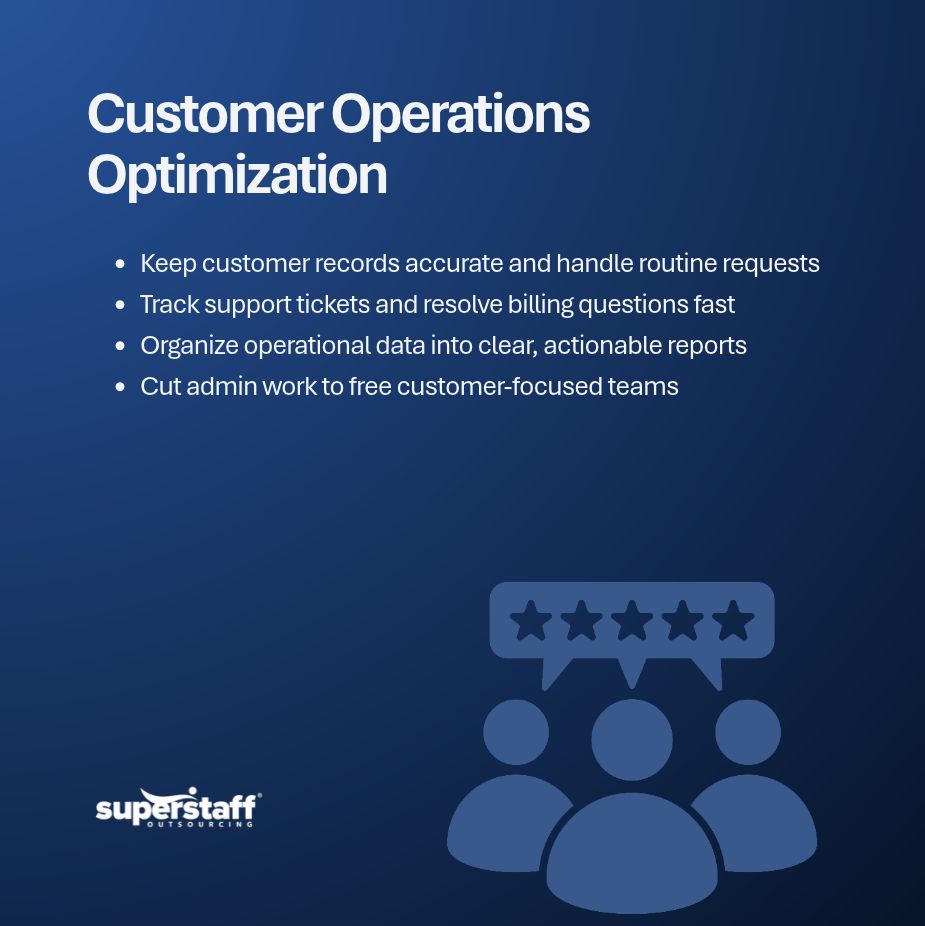
Why Companies Are Moving Beyond Traditional Support
Customer expectations have changed, but internal processes also need to change. Companies now need customer teams that can manage both conversations and the work behind them.
1. Support Volumes Keep Growing
More customers usually mean more questions, requests, and account changes. However, hiring internal employees for every increase can raise operating costs.
Therefore, customer operations outsourcing gives companies another option. An external team can take on defined tasks while the internal team handles higher-level responsibilities.
2. Customer Service Needs Better Data
A customer service representative can only provide accurate help when the right information is available. However, disconnected systems and outdated records can slow down the process.
Customer operations teams can help maintain customer records and support data accuracy. As a result, agents can spend less time searching for information.
3. Back-Office Tasks Affect Customer Experience
Customers may never see the internal work behind their request. Nevertheless, they notice when an update takes too long or when they need to repeat the same information.
For example, a delayed account update can lead to another customer call. By improving the work behind customer service, companies can reduce unnecessary delays. This also reflects the broader role of customer service operations, which connects daily processes, data, and service activities with the overall customer experience.
4. Internal Teams Need More Focus
Customer leaders often manage staffing, performance, quality, processes, and customer issues at the same time. Adding more administrative tasks can make that workload harder to manage.
Outsourcing selected operations tasks can give internal teams more time to focus on customer strategy and service improvements. At the same time, an external team can handle repetitive processes.
5. Businesses Need Flexible Support
Customer demand does not always stay consistent. A product launch, seasonal promotion, or business expansion can increase customer requests within a short period.
Customer operations outsourcing can provide additional capacity during these periods. Companies can also adjust the scope of outsourced work as their needs change.
What Companies Can Outsource
Not every customer operations task requires an internal employee. Businesses can outsource processes that follow clear rules and require consistent execution.
1. Customer Record Updates
External teams can maintain customer information across approved systems. They can also review submitted details and flag records that need additional attention.
This work can reduce the administrative load on customer-facing employees. It can also support cleaner customer databases.
2. Order Processing Support
Order-related administration can involve checking details, updating records, confirming information, and coordinating with other teams.
An outsourced team can handle these tasks based on defined procedures. Therefore, internal employees can focus on exceptions and customer concerns that require judgment.
3. Customer Feedback Management
Companies collect feedback through surveys, emails, calls, reviews, and other channels. However, collecting feedback does not help if no one organizes or reviews it.
An operations team can categorize feedback, update records, and prepare information for internal teams. This gives customer leaders a clearer view of recurring concerns.
4. Ticket Administration
Customer operations teams can support ticket classification, updates, routing, and follow-ups. They can also monitor tickets that remain open beyond the expected timeframe.
As a result, customer service teams can work with a more organized queue and clearer case information.
5. Reporting and Administrative Tasks
Customer teams need reports to understand workload, response trends, unresolved cases, and other performance measures. Yet, preparing these reports can consume significant employee time.
An outsourced team can collect and organize approved data for reporting. Meanwhile, managers can spend more time reviewing results and deciding what actions to take. Businesses that need additional support for customer interactions can also consider customer service outsourcing to manage calls, emails, chats, and other customer communication channels.
How to Build a Strong Outsourcing Model
Outsourcing customer operations works best when companies define the work clearly. The goal should not simply involve moving tasks to another team.
1. Choose the Right Processes
Start with tasks that follow clear procedures and have measurable outcomes. These may include data updates, ticket administration, order support, and routine follow-ups.
Avoid outsourcing a process before understanding how it currently works. Otherwise, the external team may inherit the same problems instead of improving them.
2. Set Clear Responsibilities
Both teams should understand who handles each task. A simple responsibility matrix can identify which activities the outsourced team completes and which decisions remain with internal employees.
This approach also reduces confusion when a request needs escalation.
3. Create Quality Standards
Define the expected accuracy, response time, completion time, and escalation process. Then, review these measures regularly.
Clear standards help the provider understand expectations. They also give the company a practical way to measure performance.
4. Protect Customer Information
Customer operations involve access to business and customer data. Therefore, companies should establish appropriate access controls, security procedures, and internal requirements before work begins.
Teams should also limit system access to the information needed for each task.
5. Review and Improve the Process
Customer operations should not remain unchanged after outsourcing. Companies should review performance, identify repeated issues, and update procedures when needed.
For example, if the same ticket type repeatedly requires escalation, the company can review the process and determine whether the team needs better instructions or additional training. Businesses can also apply lessons from customer success outsourcing in the Philippines when building dedicated teams that support customer relationships and ongoing account needs.
Customer Operations Can Support Business Growth
Customer service remains important, but companies also need the operational work that supports every customer interaction. Customer operations brings these activities together by managing data, tickets, orders, account updates, reporting, and other processes that help customer teams work effectively.
Customer operations outsourcing can give businesses additional capacity without requiring every task to stay inside the company. Furthermore, it can help internal teams spend less time on repetitive administration and more time on customer strategy, service quality, and business decisions.
SuperStaff provides outsourcing support for companies that need help managing customer-facing and operational processes. If your customer team spends too much time on repetitive administrative work, contact SuperStaff to discuss how dedicated support can help your business manage growing customer operations.