
Customer expectations for real-time support are reshaping how companies design service models. Buyers want fast answers across digital channels without compromising clarity or tone. Chat has moved from a secondary support option to a core engagement layer.
As a result, many organizations are evaluating chat support outsource services that can deliver responsiveness without sacrificing brand alignment or operational control.
Executives are no longer asking whether to outsource chat. The focus has shifted toward finding the right balance between affordability, cultural alignment, and geographic accessibility when investing in chat support outsource services.
Chat Is Now a Primary Customer Touchpoint
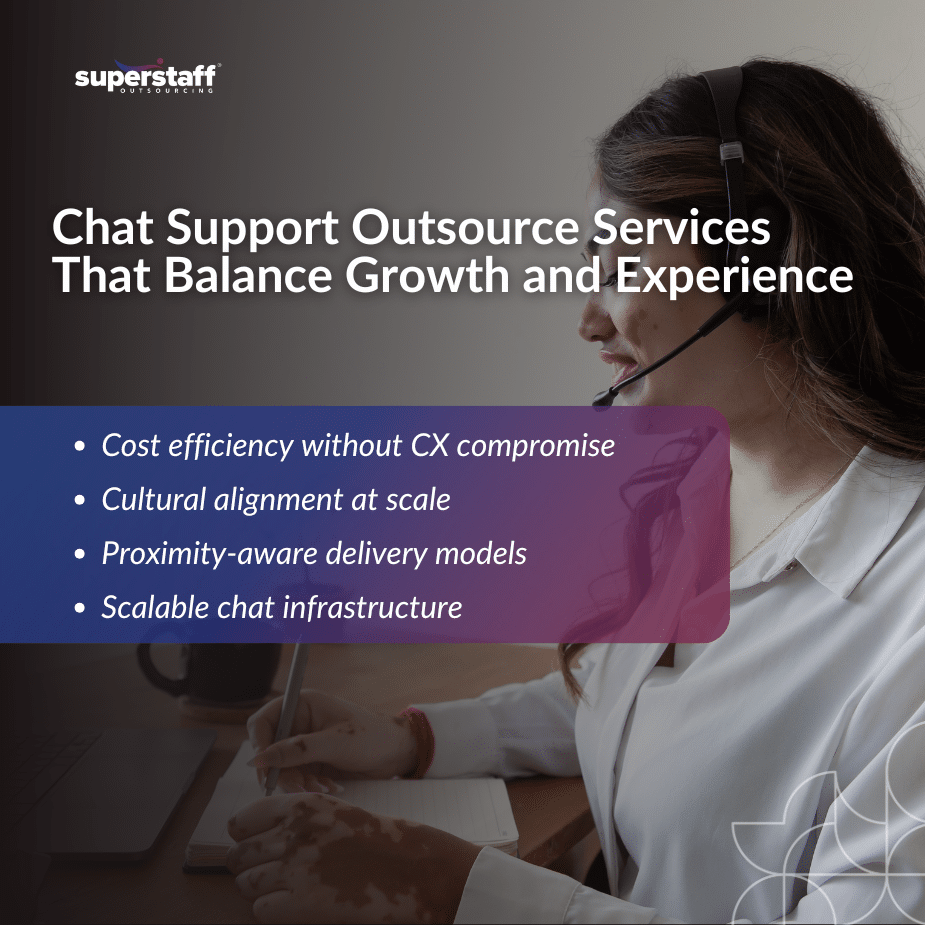
Chat has become a default entry point for customer interaction. Digital-first buyers often prefer messaging over voice, especially in e-commerce, SaaS, healthcare coordination, and logistics.
Several factors drive this shift:
- Customers expect instant responses
- Messaging feels less intrusive than calls
- Chat supports multitasking behavior
For businesses, chat introduces operational efficiency. One agent can manage multiple conversations simultaneously, improving productivity compared to voice support. This makes chat an attractive entry point into customer service outsourcing strategies and a natural gateway into chat support outsource services.
Cost Efficiency Still Drives Outsourcing Decisions
Financial considerations remain a central reason companies adopt chat support outsource services. Chat channels create efficiency gains that translate into measurable cost advantages.
Key cost drivers include:
- Higher agent concurrency rates
- Lower telephony infrastructure needs
- Flexible staffing models
Organizations also benefit from variable cost structures. Teams can scale up during demand spikes and contract during slower cycles without long-term hiring commitments. However, focusing purely on cost often leads to inconsistent customer experiences.
That is why decision-makers now evaluate broader value dimensions when comparing chat support outsource services providers.
Cultural Alignment Shapes Customer Perception
Written communication amplifies brand perception risks. Unlike voice interactions, chat leaves a permanent textual impression. Tone, clarity, and phrasing must align closely with brand voice.
Cultural alignment plays a critical role in:
- Maintaining conversational authenticity
- Avoiding misinterpretation in text-based communication
- Preserving brand identity across digital channels
This is where mature outsourcing markets stand out. Providers with deep experience in live chat support outsourcing understand the nuances of tone, empathy, and contextual communication.
When cultural fit is strong, outsourced chat feels seamless to customers.
Geographic Proximity Impacts Collaboration
While chat is asynchronous, operational coordination is not. Training sessions, quality calibrations, and escalation handling still require real-time collaboration.
Proximity influences:
- Leadership accessibility
- Onboarding alignment
- Speed of issue resolution
Organizations with distributed leadership teams often prefer overlapping working hours. This consideration explains the growing interest in nearshore chat support outsourcing for US companies, particularly in Latin America.
Still, proximity alone does not determine effectiveness.
The Nearshore Trade-Off
Nearshore providers offer appealing time zone alignment. US-based companies benefit from easier collaboration and faster escalation cycles. Bilingual capabilities also support Spanish-language markets.
However, nearshore chat models present trade-offs:
- Higher operating costs compared to offshore locations
- Limited talent pools in some regions
- Capacity constraints during rapid scaling
These factors often lead companies to evaluate offshore destinations that offer greater scalability without losing cultural compatibility.
Why the Philippines Continues to Lead
The Philippines remains one of the most mature markets for chat support outsource services. Decades of specialization in customer service outsourcing have created a strong operational ecosystem.
Several factors sustain this leadership:
- Strong English proficiency across the workforce
- Cultural familiarity with US communication styles
- Extensive experience supporting global brands
The country’s service orientation also supports tone-sensitive channels like chat. Agents are trained to adapt communication styles based on brand guidelines and customer context, which strengthens the reliability of chat support outsource services delivered from the region.
This maturity translates into consistency at scale.
Scalability Supports Growth and Stability
Elasticity is a defining advantage of offshore chat outsourcing. Growth-oriented companies require partners that can scale rapidly without compromising quality.
Scalability matters in scenarios such as:
- Product launches and feature rollouts
- Seasonal e-commerce spikes
- Rapid geographic expansion
Established chat support outsource services providers in the Philippines maintain structured talent pipelines. This allows businesses to expand support capacity without restarting recruitment cycles each time demand increases.
Scalable infrastructure creates operational resilience.
Technology Integration Strengthens Outcomes
Modern live chat support outsourcing blends human expertise with platform-driven insights. Technology integration enhances both performance and visibility.
Key capabilities include:
- CRM and helpdesk integrations
- AI-assisted agent tools
- Real-time analytics dashboards
These tools enable leaders to monitor performance without micromanaging offshore teams. Metrics such as resolution time, customer satisfaction, and concurrency become transparent.
Technology also supports continuous optimization, turning chat into a measurable growth lever and reinforcing the long-term value of chat support outsource services.
Balancing Cost, Culture, and Proximity
Selecting chat support outsource services requires a balanced evaluation framework. Cost efficiency alone does not guarantee customer satisfaction. Cultural alignment without scalability creates growth limitations. Proximity without maturity may restrict operational depth.
Effective decision frameworks consider:
- Total cost of ownership
- Brand voice consistency
- Collaboration accessibility
- Talent scalability
Companies that evaluate these dimensions together are more likely to achieve sustainable outcomes.
This balanced perspective is especially important for midmarket organizations navigating rapid growth.
Partner Selection Defines Long-Term Value
The right outsourcing partner delivers more than staffing. They bring process discipline, training rigor, and governance frameworks that support long-term performance.
Key evaluation criteria include:
- Industry specialization
- Training and onboarding methodology
- Quality assurance systems
- Transparency in reporting
Strategic providers embed themselves into the client’s operational rhythm. They align with internal teams, share performance insights, and evolve alongside business growth.
This partnership model transforms chat from a cost center into a strategic enabler.
A Strategic Approach to Chat Outsourcing
Chat has become a defining layer of modern customer engagement. Businesses that treat it as a strategic function gain advantages in responsiveness, scalability, and brand consistency.
The most effective chat support outsource services balance affordability with cultural compatibility and operational accessibility. Offshore hubs like the Philippines offer a strong equilibrium between cost efficiency and customer alignment, while still enabling collaboration across time zones.
For organizations seeking to modernize support delivery, chat outsourcing represents a practical and scalable next step. SuperStaff helps companies design chat strategies that align with brand expectations, growth goals, and customer experience priorities.
Explore how SuperStaff can support your digital CX roadmap with tailored chat support outsource services.