
Early startups often move quickly, yet their teams stay small for a long time. They handle product work, marketing tasks, client requests, and internal operations at the same time. As they move closer to a funding round, the workload grows even faster. This is where leased employees help founders keep projects organized and moving. Startups use them to manage tasks that cannot wait, especially when budgets remain limited. Because leased employees offer flexibility, founders can assign short-term tasks without worrying about long-term hiring. This structure helps startups stay consistent, reach key milestones, and prepare for funding with better accuracy.
Why Startups Need Early Support
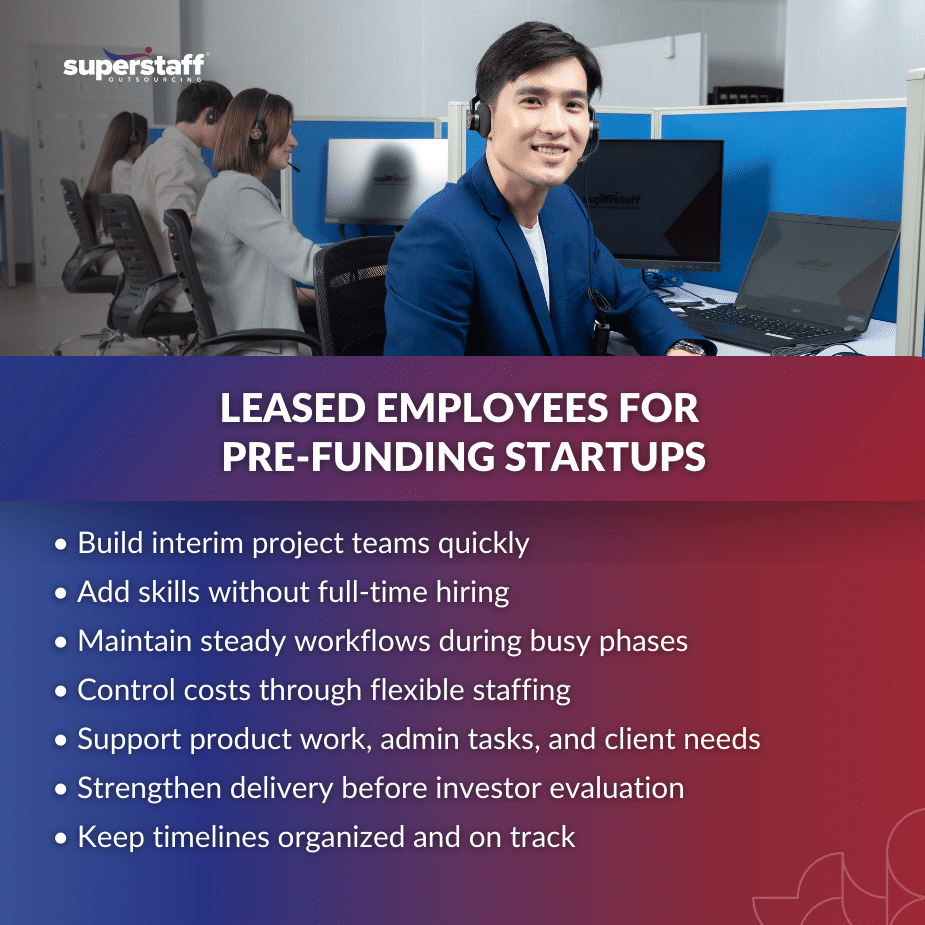
Startups often need support before they secure major funding. Leased employees help them cover skill gaps and avoid delays.
1. Support for MVP and Technical Work
Startups want steady progress on product development, so they bring in leased employees to handle coding tasks, testing, or small feature changes. This allows internal team members to work on core design decisions. As a result, progress stays steady.
2. Better Coverage for Daily Operations
Founders usually handle several tasks at once. However, operational work slows down when the team becomes overloaded. Leased employees help manage admin tasks, documentation, and coordination, so the internal team can focus on priorities.
3. More Control Over Early Budgets
Hiring full-time employees early requires steady funding. Since startups want to avoid long-term commitments, they use leased employees for short-term needs. This helps them manage cash flow while still moving projects forward.
4. Quick Access to Skills
Sometimes a task needs expertise that the current team does not have. Leased employees fill these gaps with trained talent. This ensures that progress does not stop because of skill shortages.
5. Support for Client Deliverables
Many early startups take on client work to generate revenue. Leased employees help them deliver work on time, handle communication, and complete documentation. This strengthens client trust and keeps revenue stable.
Operational Issues That Push Startups Toward Leasing
Startups turn to leased employees because certain operational issues slow them down.
1. Overloaded Founders
Founders often manage development, sales, marketing, and operations. As workload increases, tasks fall behind. Leased employees help distribute work so deadlines remain manageable.
2. Delays in Technical or Admin Tasks
Technical or admin tasks often pile up. With leased employees, startups can assign these tasks quickly and reduce backlogs. This helps maintain workflow consistency.
3. Skill Shortages That Block Progress
Missing skills delay projects. Leased employees bring the right abilities, so startups avoid slowdowns and keep timelines on track.
4. Unpredictable Workflows
Small teams often struggle with sudden increases in work. Adding leased employees stabilizes output, even during peak periods.
5. Limited Hiring Capacity
Startups cannot always hire full-time staff. Leased employees help them get work done without long-term obligations. This supports operational continuity.
How Leased Employees Strengthen Project Delivery
Startups experience better workflow and accuracy when they use leased employees for structured tasks.
1. Added Capacity for Project Sprints
During critical project sprints, leased employees assist with testing, documentation, and coordination. This helps the team finish tasks faster.
2. More Accurate and Organized Documentation
Many startups fall behind on documentation. Leased employees manage updates, create clear records, and maintain order. This prevents confusion later.
3. Better Coordination Across Teams
When teams shift between priorities, coordination becomes harder. Leased employees help track progress and support communication. This ensures fewer errors.
4. Improved Delivery Accuracy
Since leased employees follow assigned workflows, delivery becomes more consistent. Startups experience fewer missed deadlines and more predictable output.
5. Support for Quick Adjustments
Startups often change priorities. Leased employees adapt quickly and help the team shift direction without losing momentum.
Key Areas Where Leased Employees Provide Value
Startups spread the workload by assigning leased employees to different functions.
1. Product Development Assistance
They support testing, bug reviews, and small development tasks. This helps product teams stay focused.
2. Administrative Support
They handle scheduling, documentation, and basic coordination. This ensures smoother daily operations.
3. Customer Service and Communication
Startups preparing for launches often need help responding to users. Leased employees help manage inquiries and feedback.
4. Research and Data Work
Market research and data processing take time. Leased employees help gather information that supports investor reports.
5. Quality Assurance and Monitoring
They manage basic checks to ensure workflows stay accurate. This reduces rework.
When Startups Should Bring In Temporary Teams
Temporary support becomes useful during periods of growth.
1. New Client Projects
Startups accept more work as they grow. Leased employees help them deliver tasks on time.
2. MVP Launch Periods
Launch periods require testing, coordination, and communication. Leased employees help complete these tasks.
3. Investor Preparation
Early investor meetings require reports and organized documentation. Leased employees prepare data and summaries.
4. Onboarding Early Customers
Startups often receive early users before funding. Leased employees provide onboarding assistance.
5. Sudden Capacity Shortages
When internal teams reach their limit, leased employees help stabilize output.
How Startups Benefit From Choosing the Right Partner
Choosing the right provider ensures better results. This is important for staff augmentation services and contract staffing services.
1. Clear Staffing Processes
A provider with defined processes helps startups integrate leased employees smoothly.
2. Strong Experience With Early-Stage Teams
Providers familiar with startup workflows understand quick changes and shifting demands.
3. Transparent Reporting
Reports help founders track work and adjust plans quickly.
4. Secure Data Handling
Startups want safe processes, especially when handling customer information.
5. Scalable Teams
Startups can expand or reduce team size based on their needs.
Let SuperStaff Strengthen Your Startup Operations
Leased employees give startups the flexibility to work faster, maintain steady output, and manage changing workloads before a funding round. SuperStaff supports startups with structured processes, trained staff, and reliable coordination. Our services help you understand why startups use employee leasing before funding. We also offer options that align with staff augmentation services and contract staffing services. Call us now to explore how our leased employees can support your next phase of growth.