Denied claims continue to pressure U.S. healthcare margins. Even well-run revenue cycle operations struggle to keep pace with growing volumes, changing payer rules, and limited internal capacity.
Denial management services have become a critical lever for protecting revenue, not a back-office afterthought.
For healthcare leaders seeking operational control without expanding domestic headcount, denial management services delivered from Colombia present a practical nearshore solution.
The Real Cost of Unmanaged Claim Denials
Revenue leakage rarely comes from a single breakdown. It builds quietly when claims sit unresolved, appeals miss deadlines, or denial trends go unaddressed. Over time, this erodes cash flow and increases operational strain.
Denial management services exist to prevent that outcome. Yet many organizations rely on internal teams that are already stretched thin. Staff juggle billing, follow-ups, and payer communication at the same time. As a result, denial recovery becomes reactive rather than disciplined.
When denial management services lack focus, recovery rates drop. The issue is not effort. It is structured.
Why Denial Management Requires Dedicated Expertise
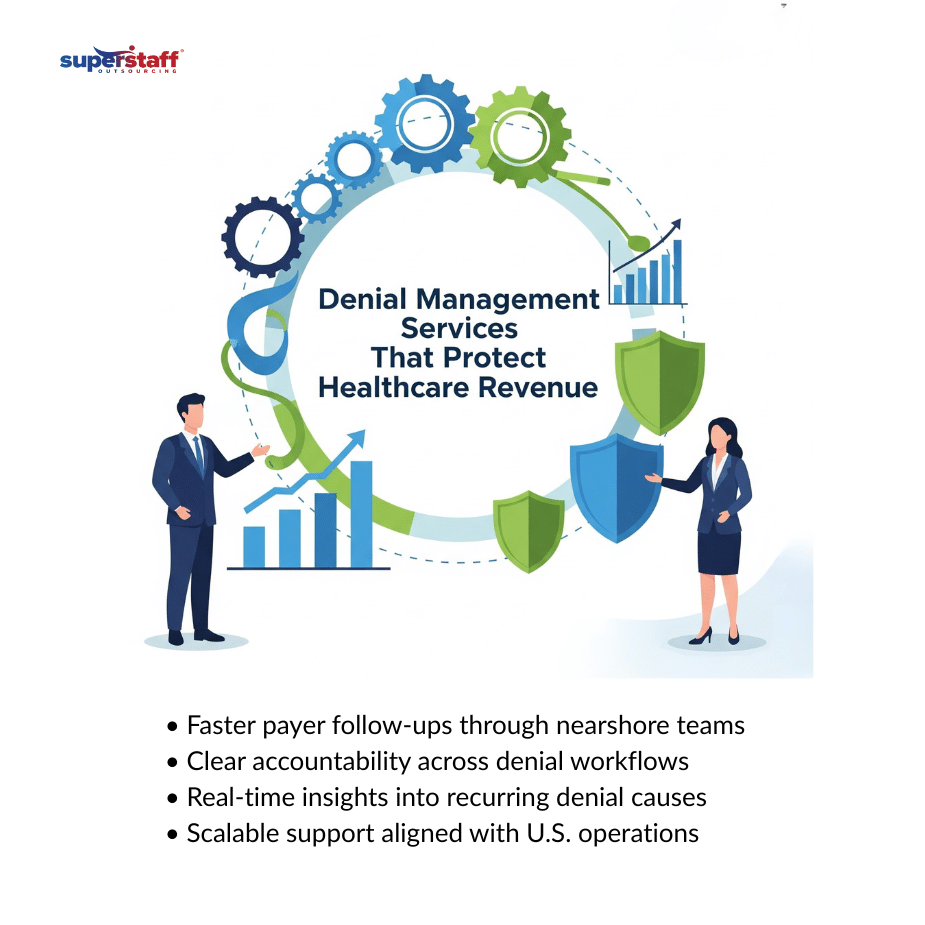
Effective denial management services require specialized knowledge. Appeals demand familiarity with payer-specific rules, documentation standards, and response timelines. These tasks do not scale easily when handled alongside other revenue cycle responsibilities.
Medical denial management services are most effective when teams are dedicated to denial categories, payer segments, and appeal workflows. This level of specialization is difficult to sustain internally, especially for SMEs and midmarket providers facing staffing constraints.
Denial management services perform best when supported by teams that focus exclusively on recovery and prevention. That reality is driving interest in outsourcing models designed around specialization rather than volume alone.
The Role of Nearshore Delivery in Denial Recovery
Denial management outsourcing has evolved beyond cost considerations. Nearshore delivery models now emphasize operational alignment, speed, and communication quality. Colombia fits well within this framework.
Nearshore denial management services allow healthcare organizations to work with teams operating in U.S. time zones. This alignment supports real-time payer calls, faster escalation handling, and closer collaboration with internal billing leaders.
Denial management outsourcing in a nearshore setting reduces delays that often occur with offshore models. Appeals move faster. Follow-ups are more consistent. Communication cycles shorten.
Why Colombia Is Emerging as a Denial Management Hub
Colombia has built a strong foundation in healthcare support services. Professionals in the market bring experience in administrative healthcare functions and adapt quickly to U.S. payer requirements.
Denial management services delivered from Colombia benefit from high English proficiency and strong process discipline. These qualities matter when handling complex payer conversations and documentation reviews.
Outsourced denial management services for healthcare depend on accuracy and accountability. Colombia’s talent pool supports both. Teams are well positioned to manage appeals, track payer responses, and document outcomes with precision.
Time Zone Alignment Drives Faster Resolution
One of the most overlooked advantages of nearshore denial management services is time zone alignment. Many denial delays stem from missed communication windows. Payers respond during U.S. business hours. Appeals often stall when teams operate outside those hours.
Colombia-based denial management services eliminate that friction. Teams can engage payers in real time, address documentation requests immediately, and resolve issues the same day they arise.
This responsiveness improves recovery speed and reduces the risk of missed appeal deadlines. Over time, it directly impacts revenue protection.
Using Denial Data to Prevent Future Losses
Recovery is only part of the equation. Strong denial management services also focus on prevention. Tracking denial patterns reveals upstream issues that can be corrected before claims are submitted.
Medical denial management services that incorporate analytics help organizations identify recurring documentation gaps, coding issues, and authorization failures. These insights support collaboration with front-end teams and reduce repeat denials.
Denial management outsourcing becomes more valuable when teams contribute to process improvement, not just recovery metrics. This is where nearshore teams can function as strategic partners rather than task executors.
Outsourced Teams as an Extension of Revenue Cycle Operations
Well-structured outsourced denial management services integrate closely with internal teams. Clear KPIs, shared dashboards, and defined escalation paths create alignment.
Denial management services should support both daily execution and long-term improvement. Nearshore teams in Colombia can participate in regular performance reviews, contribute insights, and adapt workflows as payer behavior changes.
This level of integration helps healthcare leaders maintain control while benefiting from external capacity and expertise.
Governance and Compliance Remain Non-Negotiable
Healthcare leaders rightly prioritize data security and compliance. Denial management services must operate within strict governance frameworks.
Effective denial management outsourcing includes defined access controls, audit trails, and escalation protocols. Nearshore delivery does not reduce these requirements. It reinforces the need for partners with mature security practices.
When governance is clearly defined, outsourced denial management services for healthcare can meet compliance standards while improving operational efficiency.
Choosing the Right Denial Management Partner
Not all providers offering denial management services understand healthcare complexity. Experience matters. So does transparency.
Healthcare leaders should look for partners with proven healthcare operations, structured onboarding, and measurable performance management. Denial management services must be supported by leadership oversight and continuous training.
Nearshore location alone does not guarantee success. The partner’s healthcare expertise determines outcomes.
A Sustainable Approach to Revenue Protection
Denial management services in Colombia offer a sustainable model for addressing U.S. healthcare revenue leakage. The combination of skilled talent, time zone alignment, and operational discipline supports consistent recovery and prevention.
Denial management outsourcing allows internal teams to focus on strategic priorities while maintaining confidence in revenue protection processes. Over time, denial management services become a stabilizing force rather than a recurring challenge.
Strengthening Revenue Integrity Through Nearshore Denial Management
Denial management services play a critical role in protecting healthcare revenue. When delivered through a nearshore model in Colombia, denial management services offer speed, specialization, and accountability without sacrificing control.
For healthcare organizations seeking reliable medical denial management services, denial management outsourcing can support both recovery and prevention. With the right partner, outsourced denial management services for healthcare become a strategic extension of revenue cycle operations.
SuperStaff works with healthcare leaders to build disciplined, secure, and scalable denial management services that align with U.S. operational standards. Explore how SuperStaff can support your revenue integrity goals through structured nearshore solutions.