Hiring employees across different countries sounds exciting at first. However, many businesses quickly face delays, legal issues, payroll concerns, and compliance problems. As companies expand, they need a hiring model that supports growth without adding unnecessary risk. That is why many businesses now compare traditional hiring with employer of record outsourcing before entering new markets.
Some companies still prefer to build local entities and manage hiring internally. Meanwhile, others choose faster and more flexible solutions that help them hire talent legally without setting up a branch office. Both models offer benefits, but they also come with limitations. Understanding the differences can help businesses choose the right path for their expansion goals.
Understanding Modern Hiring Approaches
Companies now have more ways to build teams globally. However, each hiring model affects cost, speed, compliance, and workforce management differently.
1. Traditional Hiring Requires Local Setup
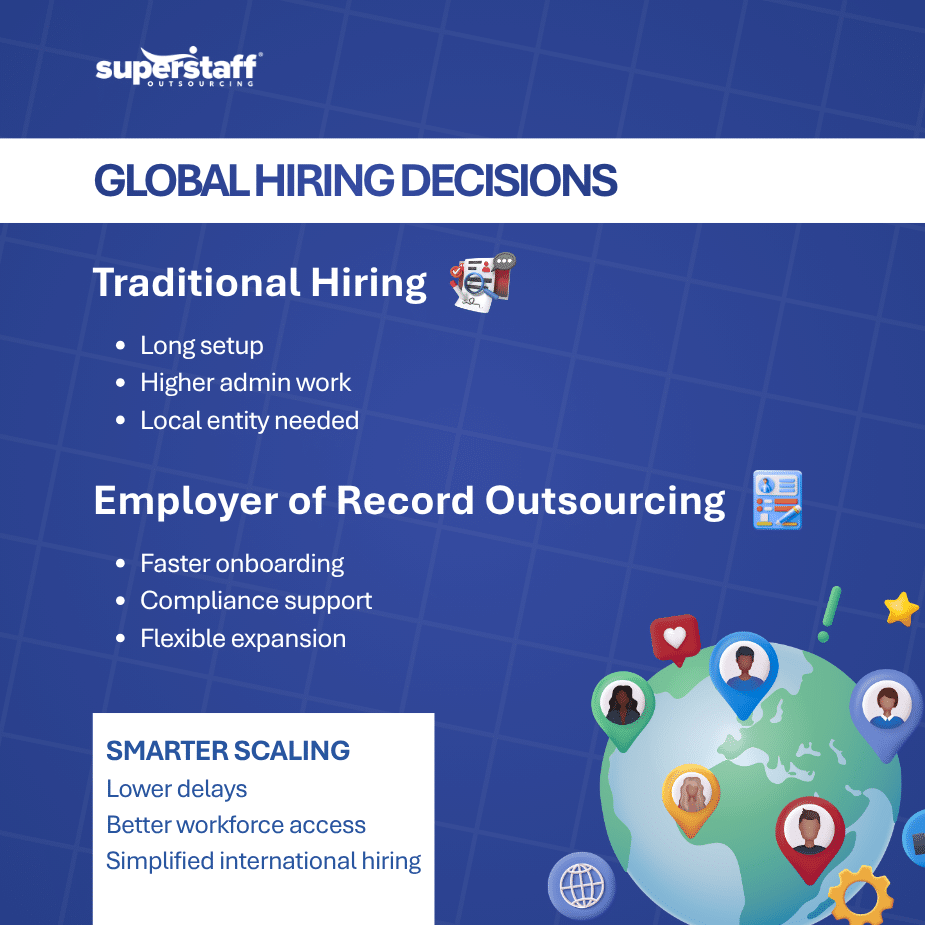
Traditional hiring usually requires a company to register a legal entity in the country where it wants to hire employees. After that, the business must manage payroll, taxes, labor laws, and employee benefits on its own.
Although this model gives companies full control, it also takes time and resources. Many businesses spend months handling registration, legal paperwork, and compliance requirements before hiring their first employee.
2. Employer of Record Services Simplify Expansion
With employer-of-record outsourcing, a third-party provider legally hires employees on behalf of the client company. The employees still work for the client’s business, but the provider manages payroll, taxes, contracts, and compliance.
As a result, companies can hire workers in new countries faster. They also avoid the cost and complexity of establishing a local entity.
3. Compliance Responsibilities Differ Greatly
Compliance remains one of the biggest differences between these hiring models. In traditional hiring, the company carries full responsibility for labor laws, tax rules, and employee regulations.
On the other hand, employer-of-record outsourcing providers handle many compliance tasks. Therefore, businesses reduce legal risks while focusing more on operations and growth.
4. Hiring Speed Impacts Business Growth
Traditional hiring often slows expansion because businesses must complete legal processes first. Delays can affect operations, project timelines, and recruitment plans.
Meanwhile, employer of record services allow businesses to onboard workers quickly. This speed helps companies respond faster to market demands and staffing needs.
5. Cost Structures Work Differently
Establishing a local entity often involves setup costs, legal fees, accounting expenses, and ongoing HR management requirements. These costs can be challenging for startups and growing companies to manage.
In comparison, employer of record outsourcing typically operates through a service fee structure. Many businesses find this arrangement more cost-effective and easier to manage, particularly during the early stages of expansion.
Key Differences Between the Two Hiring Models
Both hiring methods support workforce growth, but they function differently in daily operations. Companies should compare flexibility, control, and long-term business goals before deciding.
1. Control Over Internal Processes
Traditional hiring gives companies direct control over HR systems, contracts, and employee policies. Some businesses prefer this structure because they want complete oversight.
However, employer of record providers still allow companies to manage employee performance and daily work. The provider mainly handles administrative and legal responsibilities.
2. Global Hiring Becomes Easier
Expanding internationally through traditional hiring takes significant preparation. Businesses often need legal experts and local advisors before entering a new country.
By comparison, employer-of-record outsourcing helps businesses access international talent much faster. Companies can hire workers in multiple countries without building separate legal entities.
3. Administrative Workload Changes
Traditional hiring creates a larger administrative burden for HR and finance teams. Businesses must process payroll, manage tax filings, and monitor local labor regulations continuously.
Meanwhile, employer-of-record providers handle these responsibilities directly. Therefore, internal teams spend less time on paperwork and compliance tasks.
4. Risk Exposure Varies
Employment laws differ across countries, and mistakes can become expensive. Traditional hiring places all legal responsibility on the company itself.
Employer of record outsourcing helps reduce this exposure because the provider manages local employment compliance. This support becomes especially useful for businesses entering unfamiliar markets.
5. Flexibility Supports Modern Workforce Needs
Some businesses only need remote employees or short-term international teams. Setting up a legal entity for a small workforce may not make financial sense.
Because of this, many companies choose employer-of-record solutions for flexible hiring. They can test new markets or build temporary teams without long-term commitments.
When Traditional Hiring Makes Sense
Despite the growth of outsourcing solutions, traditional hiring still works well for certain businesses. Companies with long-term plans in one country may benefit from direct hiring structures.
1. Large Businesses With Established Operations
Large corporations often have enough resources to manage global compliance internally. They may already have legal teams, HR departments, and accounting support in place.
Therefore, traditional hiring may fit businesses with stable international operations and large employee populations.
2. Companies Seeking Full Entity Ownership
Some organizations prefer complete ownership of their operations in every country. They may want direct authority over taxes, benefits, and corporate structures.
Although this approach requires more effort, it provides long-term operational independence.
3. Businesses With Long-Term Expansion Plans
If a company plans to build a permanent presence in one market, traditional hiring may become more cost-effective over time.
However, businesses still need to prepare for compliance management and operational costs during expansion.
4. Industries With Strict Internal Policies
Certain industries require direct employment structures due to internal policies or regulatory standards. Some companies also prefer direct hiring for security and governance reasons.
In these cases, traditional hiring may align better with company requirements.
5. Organizations With Existing Local Expertise
Companies that already understand local employment laws may feel comfortable handling hiring independently. Their existing experience reduces the learning curve and compliance challenges.
As a result, traditional hiring becomes easier to manage internally.
Why Many Businesses Choose Employer of Record Services
Many companies now prioritize speed, flexibility, and cost control during expansion. Because of that, employer of record solutions continue to gain attention across industries.
1. Faster Market Entry
Businesses can hire employees quickly without waiting for entity registration. This advantage helps companies launch operations faster and stay competitive.
2. Lower Expansion Costs
Companies avoid large upfront investments connected to legal setup and administration. Instead, they pay for the services they need while growing gradually.
3. Easier Remote Workforce Management
Remote work continues to shape hiring strategies worldwide. Employer of record providers help businesses hire remote employees legally across multiple regions.
4. Reduced Compliance Pressure
Employment laws constantly change across countries. Employer of record providers monitor these updates and help businesses remain compliant.
5. Better Focus on Core Operations
Instead of spending time on payroll and legal processes, businesses can focus on sales, operations, customer service, and growth strategies.
Smarter Global Hiring Starts With The Right Partner
Choosing between traditional hiring and employer-of-record outsourcing depends on your business goals, budget, and expansion timeline. Some companies need full operational control, while others need flexibility and speed. Understanding both models helps businesses avoid costly mistakes and hiring delays.
SuperStaff helps companies simplify global workforce expansion through reliable employer-of-record outsourcing solutions. Our team supports businesses with recruitment, payroll, compliance, and workforce management across different markets. Call us now and discover how SuperStaff can help your business grow with confidence.