
Customer service leaders are rethinking how support teams connect with customers. Speed and efficiency still matter. Yet, many organizations now recognize that empathy, clarity, and trust shape long-term loyalty. This shift explains why global brands increasingly associate Filipino agents with the human touch in customer service.
The Philippines has built a reputation for service that feels personal, consistent, and respectful, even at scale. That reputation did not happen by chance. It reflects culture, communication habits, and how customer support roles are trained and valued across the country.
Cultural Foundations That Prioritize People
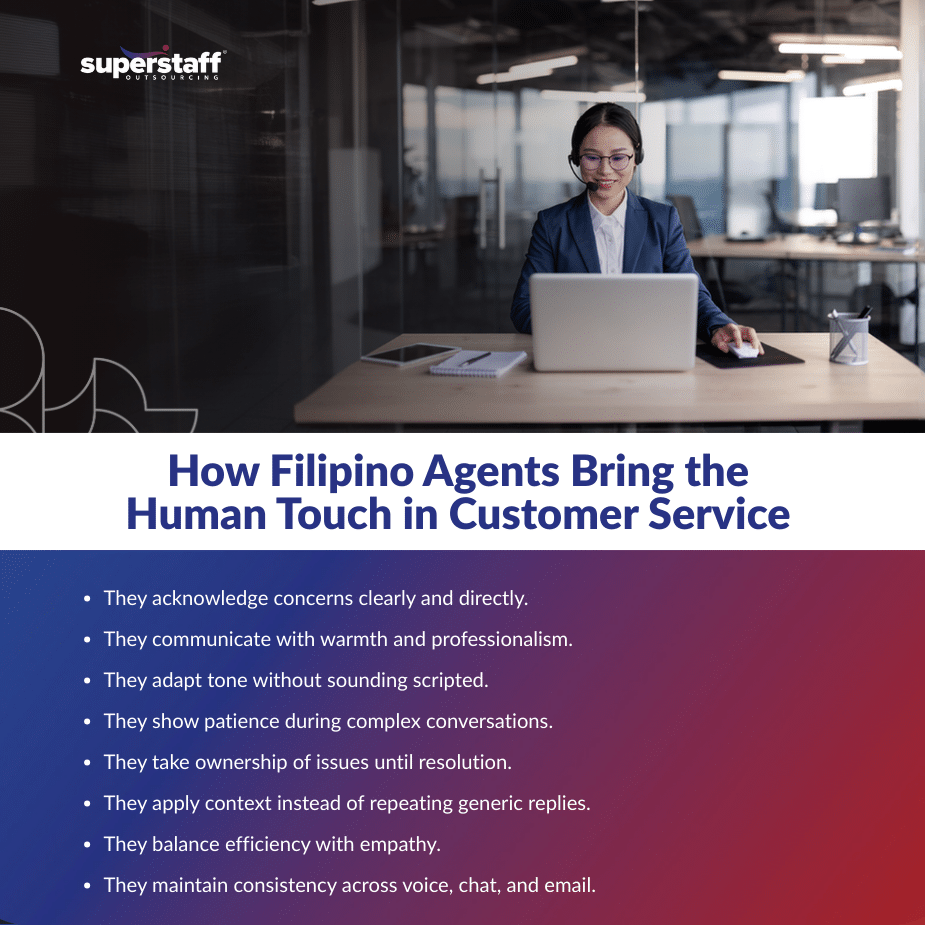
Filipino culture places strong emphasis on respect and attentiveness. These values carry over naturally into customer interactions. Agents are conditioned to listen carefully before responding. They acknowledge concerns directly, and they also show patience when conversations take time.
This mindset reinforces the human touch in customer service because customers feel heard rather than processed. Conversations move at a pace that allows understanding. As a result, customers are more open and cooperative, which often leads to faster resolution without escalation.
From a business perspective, this approach reduces friction. It improves first-contact resolution without forcing scripts or robotic responses.
Communication Style That Builds Comfort
Clear communication remains central to effective support. Filipino agents are known for neutral accents and strong English proficiency. More importantly, they communicate with warmth and clarity.
Tone matters in service interactions. Filipino professionals instinctively soften difficult conversations without sounding scripted. They know when to reassure, and they know when to clarify next steps. This balance strengthens the human touch in customer service across voice, chat, and email channels.
Customers do not feel rushed. They feel guided. That experience directly supports a customer experience human touch that many in-house teams struggle to maintain during peak demand.
Training That Reinforces Empathy at Scale
Strong service culture alone is not enough. Training systems in the Philippines reinforce empathy as a measurable skill. Agents learn how to ask the right questions. They practice active listening, and they are coached to respond with context, not assumptions.
Within these programs, the human touch in customer service is treated as an operational capability. Managers track tone, clarity, and resolution quality. Feedback focuses on how well agents connect, not just how fast they close tickets.
This structure helps organizations deliver a personalized customer service experience even as volumes grow. Consistency becomes achievable without sacrificing authenticity.
Service Mindset That Supports Long-Term Relationships
Many Filipino agents view customer service as a profession, not a temporary role. This mindset influences how they approach each interaction. They focus on solving problems thoroughly. They follow up when needed. They respect customer time.
That commitment strengthens the human touch in customer service because customers sense accountability. Issues are owned, not passed along. Trust builds over repeat interactions, especially in subscription-based or service-driven industries.
For U.S. SMEs and midmarket companies, this reliability supports retention goals without increasing management overhead.
Emotional Intelligence Without Emotional Language
Effective service does not require emotional dramatization. Filipino agents excel at emotional intelligence without exaggeration. They recognize frustration signals, respond calmly, and de-escalate situations through logic and reassurance.
This approach supports the human touch in customer service while remaining professional. Customers feel supported without being patronized. Conversations stay focused on solutions rather than emotion.
Executives often value this balance because it protects brand credibility while improving satisfaction.
Alignment With U.S. Customer Expectations
Cultural alignment matters when outsourcing. Filipino agents are familiar with Western service expectations. Many have experience supporting U.S. customers across healthcare, retail, logistics, and technology sectors.
This familiarity strengthens the human touch in customer service by reducing misunderstandings. Agents anticipate questions. They understand urgency. They adapt tone to match customer expectations without constant oversight.
The result is a customer experience human touch that feels seamless, not offshore.
Flexibility Across Channels and Scenarios
Modern support environments require agility. Filipino agents transition smoothly between channels. They maintain tone consistency whether on the phone, live chat, or email.
That flexibility allows organizations to preserve the human touch in customer service across omnichannel setups. Customers receive the same level of care regardless of how they reach out.
Scenarios involving billing concerns, service disruptions, or onboarding questions benefit from this adaptability. Agents adjust responses without losing structure.
Why Human Interaction Still Matters
Automation continues to play a role in support operations, especially for routing, verification, and basic inquiries. However, leaders still ask why human interaction is important in customer service when efficiency tools are widely available. The answer becomes most visible during complex, time-sensitive, or emotionally charged situations where judgment matters.
Customers want reassurance when something goes wrong. They want accountability when issues require follow-through. At the same time, they want someone who understands context rather than repeating scripted responses. Filipino agents provide that reassurance through a consistent human touch in customer service, even when technology handles initial triage or data collection.
This model allows automation to support speed while people handle nuance. As a result, companies scale service operations without sacrificing trust, clarity, or relationship strength.
Operational Benefits for Growing Companies
For SMEs and midmarket firms, outsourcing often introduces concerns about quality control. Filipino teams address this through disciplined processes and people-centered execution.
Managers monitor performance metrics. Agents receive regular coaching. Service standards remain clear. These practices ensure the human touch in customer service does not fade as teams expand.
Organizations benefit from predictable service quality while maintaining a personalized customer service experience that supports brand differentiation.
A Strategic Advantage, Not a Soft Skill
Many executives underestimate empathy as a strategic lever. In reality, the human touch in customer service influences customer lifetime value, retention, and brand perception.
Filipino agents deliver this capability consistently because it aligns with cultural values and operational discipline. The result is service that feels human without becoming inefficient.
For decision-makers, this combination supports growth without compromising experience.
Human Touch in Customer Service: Empower Your Brand With SuperStaff Offshore CX Professionals
Customer service success depends on more than tools and scripts. It depends on how customers feel during every interaction. Filipino agents have earned global recognition for delivering the human touch in customer service through empathy, clarity, and accountability.
SuperStaff builds on these strengths by providing trained, well-managed teams that align with U.S. business expectations. Explore how SuperStaff can help your organization deliver customer support that feels personal, consistent, and ready to scale.