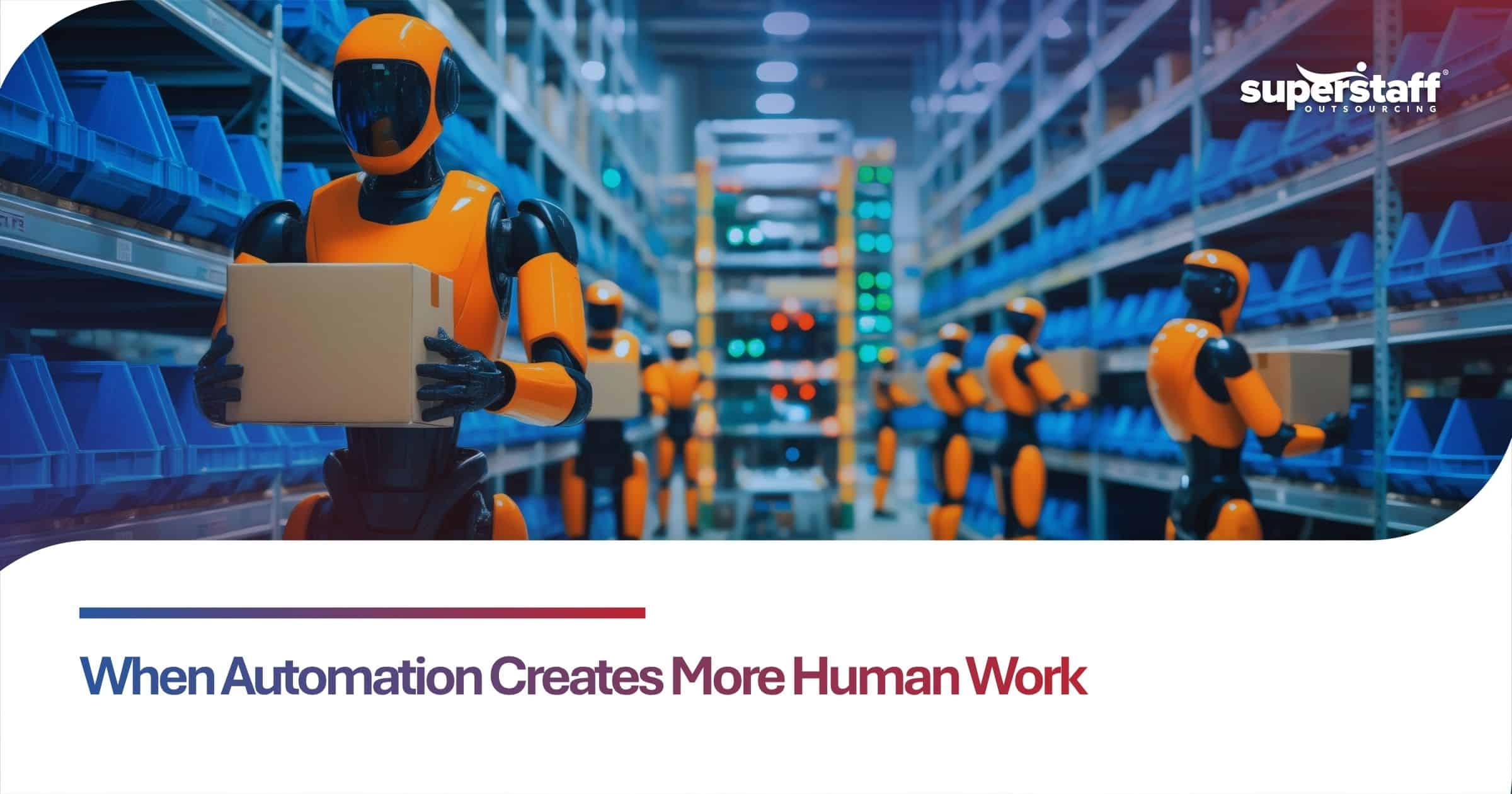

Artificial intelligence is now embedded in customer support operations across industries. Automation handles routing, data retrieval, and basic interactions. Yet results vary widely. The difference often comes down to how companies approach AI outsourcing and the workforce model behind it.
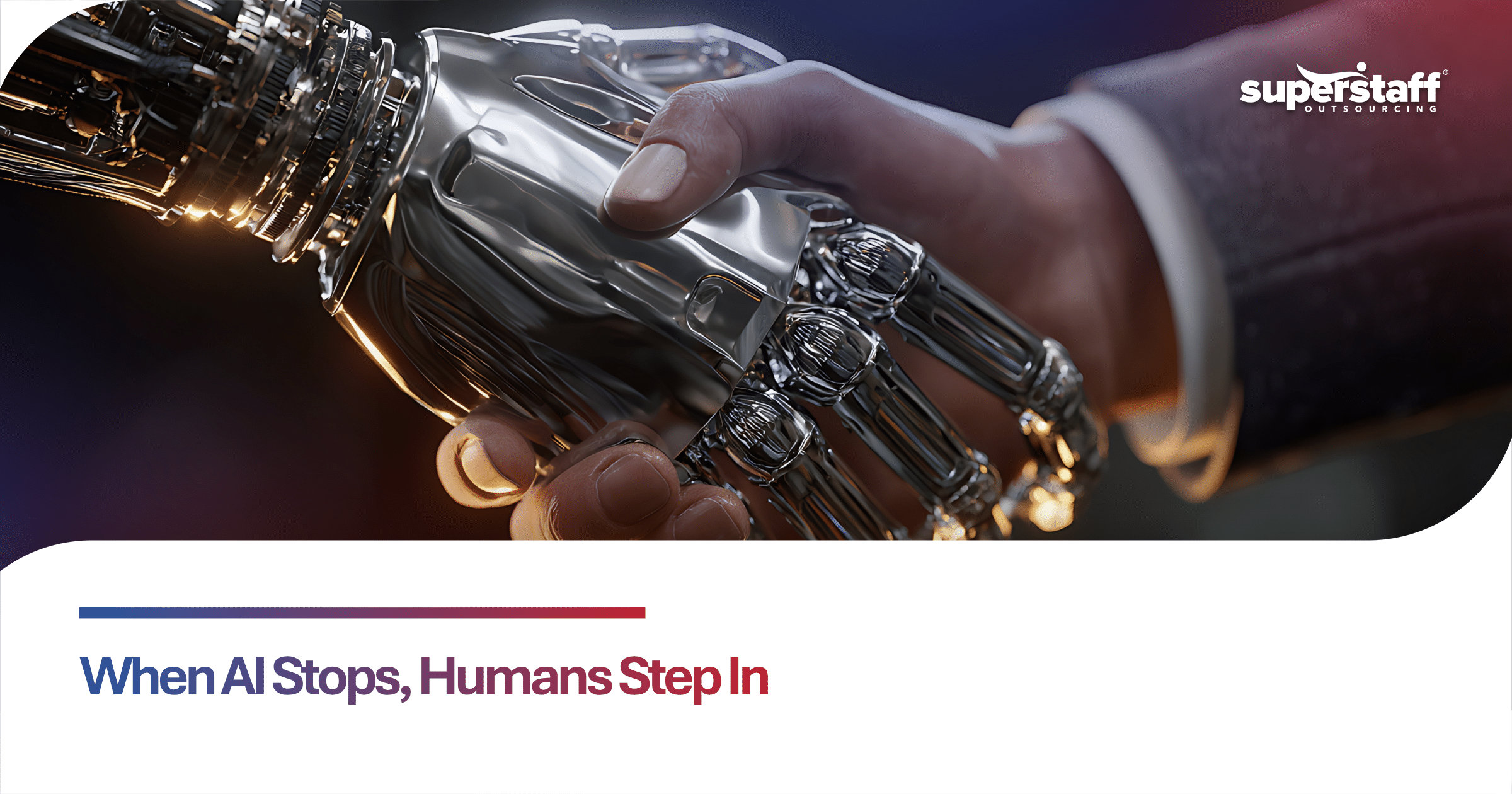
Many leaders assume AI success depends on software selection alone. That view misses a critical operational reality. AI managed services perform best when humans remain actively involved in training, validation, and exception handling. This is where the human-in-the-loop model becomes essential.
Human-in-the-loop is not a temporary bridge. It is a durable workforce strategy that aligns automation with real customer expectations. For SMEs and midmarket companies, this model determines whether AI strengthens service quality or quietly erodes it.
Why AI Alone Does Not Deliver Consistent CX
AI tools are effective at pattern recognition and speed. They struggle with nuance, ambiguity, and accountability. Customer conversations rarely follow clean scripts. Policies change. Emotions surface. Context matters.
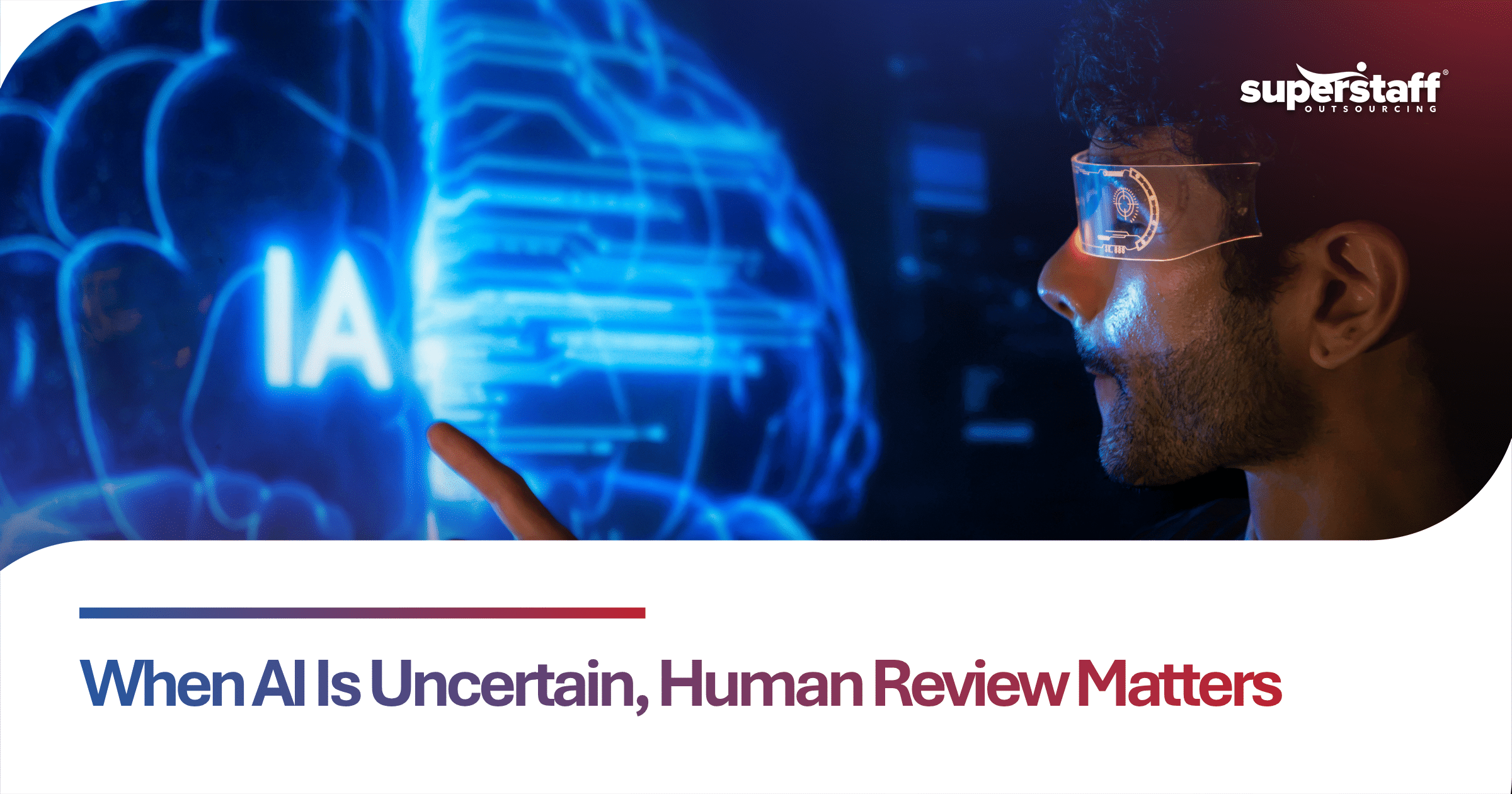
When AI operates without structured human oversight, errors compound. Misclassifications go uncorrected. Automated responses drift from brand tone. Edge cases pile up and frustrate customers.
Successful AI outsourcing recognizes these limits early. It treats AI as an accelerator, not a replacement for human judgment. Human-in-the-loop teams provide the corrective layer that keeps systems accurate and aligned with business goals.
What Human-in-the-Loop Really Means in Operations
Human-in-the-loop is often misunderstood as manual cleanup. In practice, it is an integrated operating model.
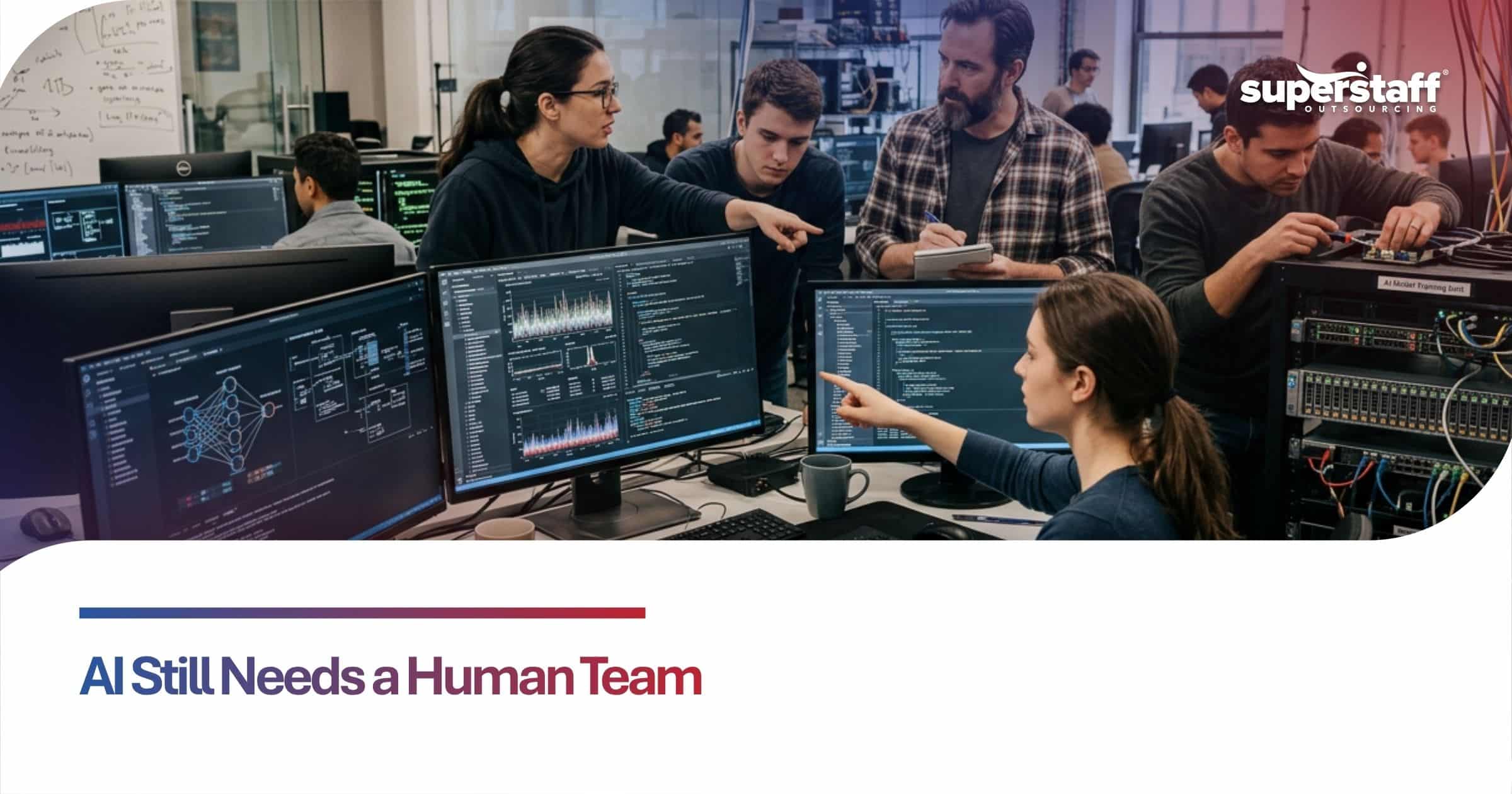
It includes trained professionals who review AI outputs, refine workflows, and intervene when automation reaches its limits. These teams do not slow operations. They stabilize them.
In mature AI outsourcing environments, human-in-the-loop roles typically support:
- Model training and retraining based on live customer interactions
- Quality assurance for automated responses and classifications
- Escalation handling for complex or sensitive cases
- Continuous feedback loops between agents and AI systems
This structure allows automation to scale without sacrificing control.
The Workforce Skills That Make AI Outsourcing Work
Not every agent is suited for human-in-the-loop work. The role requires a different skill profile than traditional Tier 1 support.
Effective teams combine operational discipline with analytical thinking. They understand both customer intent and system behavior. This blend is difficult to build internally at scale.
AI outsourcing providers with strong human-in-the-loop programs invest heavily in:
- Process comprehension and documentation
- Data literacy and annotation accuracy
- Policy interpretation and exception handling
- Communication clarity and escalation judgment
These skills ensure AI customer service training systems improve over time instead of drifting.

Why the Philippines Supports Human-in-the-Loop at Scale
The Philippines has long supported global customer operations. That experience now extends naturally into AI-supported environments.
English fluency enables precise interpretation of customer language. Service culture reinforces accountability and consistency. Education systems produce professionals comfortable with structured processes and technology-enabled workflows.
For U.S. companies pursuing AI outsourcing, the Philippines offers a workforce that adapts quickly to hybrid human and AI models. Teams are accustomed to working alongside systems, not around them.
This foundation makes it easier to deploy human-in-the-loop structures without constant rework.
Where Human-in-the-Loop Adds the Most Business Value
Not every function requires the same level of human oversight. Strategic deployment focuses on moments where errors are costly or trust is fragile.
Human-in-the-loop teams create the most value in areas such as:
- Customer intent validation during automated triage
- Billing and account adjustments triggered by AI workflows
- Compliance-sensitive interactions in regulated industries
- Sentiment-driven escalations where tone matters
These are moments where AI accelerates detection, but humans ensure the outcome is right.
AI outsourcing strategies that ignore these pressure points often experience quiet churn and rising rework costs.
Governance and Accountability in AI Outsourcing
Automation changes how accountability flows through an organization. When outcomes are unclear, blame becomes diffuse.
Human-in-the-loop restores clear ownership. Every automated decision has a human checkpoint. Every exception has a defined escalation path.
Strong AI outsourcing programs define governance early. They document where AI acts independently and where humans intervene. They assign responsibility for monitoring, auditing, and improvement.
This clarity reduces risk and builds executive confidence in scaling automation.
Cost Control Without Sacrificing Quality
Cost efficiency remains a driver for AI outsourcing. The mistake is assuming fewer humans always means lower costs.
In reality, poorly governed automation creates downstream expenses. Customer recovery efforts grow. QA costs rise. Brand trust weakens.
Human-in-the-loop models optimize cost by preventing these failures. They focus human effort where it matters most. Automation handles volume. Humans handle judgment.
This balance delivers sustainable savings instead of short-term reductions followed by correction cycles.
How Human-in-the-Loop Supports Continuous Improvement
AI systems are not static. Customer behavior shifts. Products evolve. Policies change.
Human-in-the-loop teams act as the sensing layer. They identify patterns AI misses. They flag outdated logic. They provide structured feedback that informs retraining.
In advanced AI outsourcing engagements, this feedback loop becomes a competitive advantage. Service quality improves steadily. Automation becomes more accurate over time.
Without human input, AI stagnates.
What Decision Makers Should Evaluate in AI Outsourcing Partners
Technology platforms are easy to compare. Workforce models are not.
Executives should examine how providers structure human-in-the-loop roles. Questions worth asking include:
- How are agents trained to work alongside AI systems
- What metrics track human intervention and outcomes
- How feedback flows from agents to system improvement
- How governance and escalation are enforced
Clear answers signal operational maturity.
The SuperStaff Approach to Human-in-the-Loop AI Outsourcing
SuperStaff approaches AI outsourcing as a workforce design challenge, not a software deployment. Our teams are built to complement automation with human judgment, discipline, and accountability.
We train agents to understand both customer needs and system behavior. We embed quality control into daily workflows. We treat human-in-the-loop as a core capability, not an afterthought.
This approach allows clients to scale AI-supported operations with confidence.
Accelerate AI Outsourcing Projects With SuperStaff
AI succeeds in customer operations when humans remain actively involved. The human-in-the-loop model provides the structure, accountability, and adaptability that automation alone cannot deliver.
For U.S. SMEs and midmarket companies, AI outsourcing works best when it is grounded in a disciplined workforce strategy. SuperStaff helps organizations deploy AI responsibly through experienced offshore teams in the Philippines.
Are you searching for AI outsourcing with quality control and human validation? Explore how our human-in-the-loop approach can strengthen your customer support operations and support smarter, more sustainable growth.