Customer conversations no longer stay in one place. A prospect may ask a question in a Facebook group, comment on a product update, send a direct message, join a brand forum, and expect the same level of care across every channel.
For SMEs and midmarket companies, an online community management system helps organize those interactions, protect the brand experience, and turn daily conversations into useful business insight.
But the system itself is only part of the solution. A platform can collect messages, tag issues, and track engagement. What it cannot do on its own is understand tone, calm frustration, spot patterns, and make people feel heard.
Why An Online Community Management System Needs Human Support
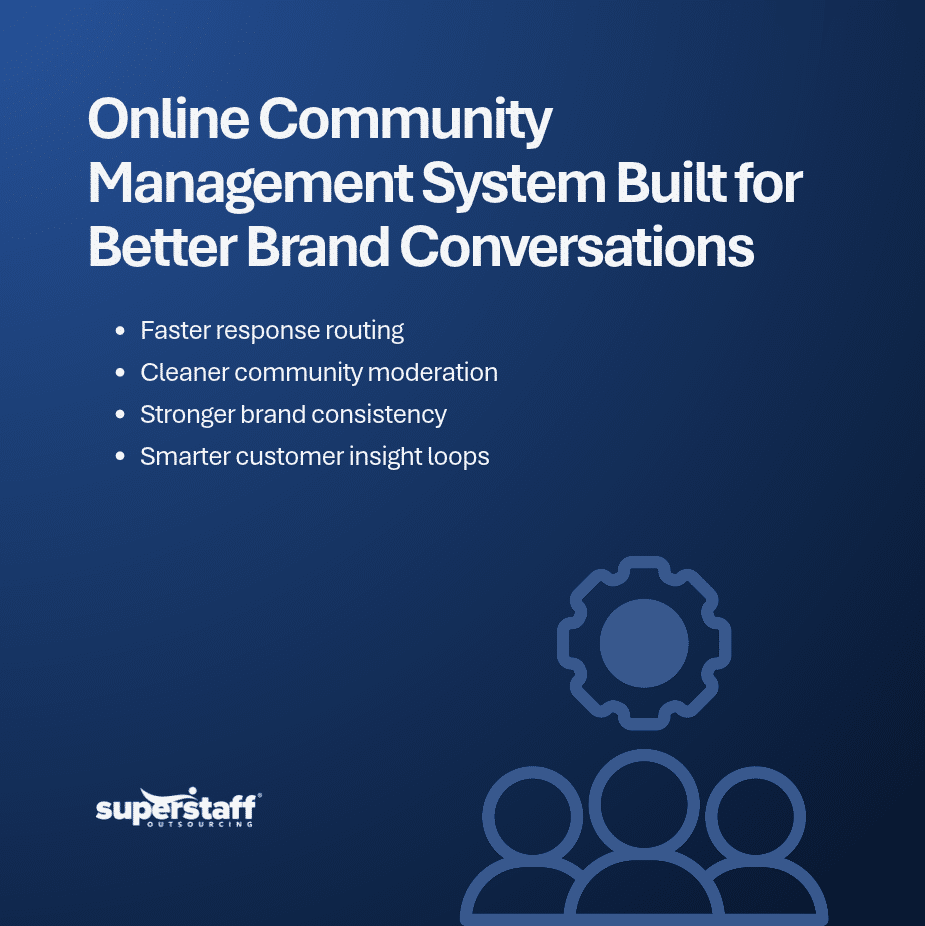
An online community management system gives companies structure. It helps teams monitor discussions, manage responses, route concerns, and keep brand communities active.
Still, communities are built through trust. Customers notice when replies sound copied, delayed, or disconnected from the conversation. They also notice when a brand responds with care, consistency, and context.
For growing businesses, the challenge is volume. A small internal team may be able to manage community engagement when activity is light. But as the brand grows, the same team must handle:
- Customer questions across multiple channels
- Product feedback and feature requests
- Complaints that need fast escalation
- Spam, irrelevant posts, and policy violations
- Community engagement that keeps discussions active
- Sentiment tracking and recurring issue reports
An online community management system can centralize the work. Outsourced community support can make sure the work actually gets done well.
The Real Business Value Behind Community Management
Many companies treat community management as a marketing task. That is too narrow.
A strong community function supports customer service, sales, retention, product development, and reputation management. Every conversation can reveal what customers care about, what confuses them, and what keeps them from moving forward.
An online community management system helps organize these signals. A trained offshore team helps interpret and act on them.
For example, repeated questions about shipping may point to a gap in checkout communication. Frequent complaints about onboarding may signal the need for better product education. A sudden rise in negative comments may require immediate escalation before the issue spreads.
When community teams know what to watch for, they become an early warning system for the business.
Why U.S. SMEs Struggle To Manage Online Communities In House
Community management looks simple from the outside. Someone replies to comments, answers questions, and keeps discussions moving.
The reality is more complex. Teams need judgment, speed, empathy, documentation skills, escalation discipline, and brand awareness. They must know when to respond publicly, when to move the conversation privately, and when to alert leadership.
For many SMEs, hiring locally for full coverage can be difficult. Internal teams are already focused on campaigns, product updates, customer success, and revenue goals. Community tasks often become reactive.
That creates risk. Slow replies can frustrate customers. Inconsistent answers can weaken trust. Missed complaints can turn into bigger issues.
An online community management system can reduce chaos, but staffing remains the bigger challenge. Without enough trained people behind the platform, even the best tool becomes a crowded inbox.
How Offshore Teams Strengthen Community Operations
The Philippines has long been a strong destination for customer-facing support. Filipino professionals are known for strong English communication, service orientation, cultural adaptability, and experience supporting U.S. customers.
For community management, these strengths matter. The role requires more than answering tickets. It requires reading tone, understanding context, and responding in a way that feels professional but human.
With SuperStaff, businesses can build an offshore team that supports an online community management system while staying aligned with the brand’s voice, policies, and customer experience standards.
These teams can help with:
- Daily monitoring of community channels
- Comment moderation and message triage
- Response drafting and publishing
- Escalation of urgent customer concerns
- FAQ management and knowledge base updates
- Sentiment tagging and recurring theme reports
- Support for product launches, events, and campaigns
This allows internal teams to stay focused on strategy while offshore teams handle the daily rhythm of engagement.
What A Strong Community Workflow Looks Like
A reliable community operation needs clear process design. The online community management system should support the workflow, not complicate it.
A practical structure may include three levels.
First, the frontline team monitors conversations and handles standard questions. These may include account inquiries, product information, event details, membership rules, or basic troubleshooting.
Second, trained specialists review sensitive concerns. These may involve complaints, refund questions, policy issues, or posts that could affect brand reputation.
Third, internal leaders receive escalations, reports, and insights. They make decisions on product changes, campaign messaging, or policy updates based on what the community reveals.
This workflow gives every team member a clear role. It also prevents urgent concerns from being buried under routine engagement.
The Role Of Brand Voice In Community Management
An online community management system can track conversations, but it cannot define your brand personality. That responsibility belongs to the business.
Before outsourcing community management, companies should document how they want to sound. Should replies be warm and casual, or more formal and direct? Which phrases should teams avoid? What topics require legal or leadership approval?
A good outsourcing partner will not guess. The partner should help build response guidelines, escalation rules, and quality assurance checks.
This is especially important for companies that serve U.S. customers. Tone expectations can vary depending on the industry. A healthcare community needs reassurance and care. A software community may need technical clarity. An e-commerce community may need speed and product familiarity.
The keyword is consistency. Customers should feel like they are speaking with one brand, even when different team members handle the response.
Turning Community Conversations Into Business Insight
The best community teams do more than respond. They report what they see.
An online community management system should help capture useful patterns. Offshore support teams can tag conversations, summarize recurring concerns, and share observations with internal stakeholders.
This insight can help companies answer important questions:
- What questions do customers ask before buying?
- Which issues create the most frustration?
- What product features do users request often?
- Which topics generate the most engagement?
- Where do customers need clearer instructions?
- What concerns should sales or success teams address sooner?
These answers can improve more than community engagement. They can sharpen messaging, reduce support tickets, improve onboarding, and help leadership make better customer experience decisions.
Why Outsourcing Works Best With Clear Governance
Outsourcing community management works best when expectations are clear. Companies should define response times, escalation rules, approval flows, brand standards, and reporting formats before the team goes live.
The online community management system should reflect these rules. Tags, templates, user roles, and dashboards should match the way the business wants to operate.
Governance also protects quality. Supervisors can review conversations, coach agents, identify training gaps, and ensure sensitive issues are handled properly.
For SMEs and midmarket companies, this structure brings control without overloading internal teams. Leaders can stay informed without managing every comment or message themselves.
Choosing The Right Partner For Community Management
The right outsourcing partner should understand both customer care and brand protection. Community management sits between marketing, support, and reputation management, so the team must know how to balance speed with judgment.
When evaluating a partner, businesses should look for:
- Strong English communication skills
- Experience with customer-facing digital channels
- Clear training and quality assurance processes
- Ability to follow brand voice guidelines
- Escalation discipline for sensitive conversations
- Reporting that turns activity into insight
- Flexible staffing for growth, launches, and peak periods
An online community management system becomes more valuable when the team using it understands the business behind the conversations.
Build A Community Function That Can Grow With You
A growing community can be one of the strongest assets a business has. It can support customers, influence prospects, surface product feedback, and strengthen loyalty over time. But it needs consistent attention.
An online community management system gives your business the structure to manage conversations. SuperStaff gives you the trained offshore support to keep those conversations timely, thoughtful, and aligned with your brand.
If your internal team is stretched thin, community engagement should not fall to the bottom of the list. Explore SuperStaff’s outsourcing services and build a community support team that helps your brand stay responsive, organized, and ready to grow.