
Many leaders still picture an outsource service provider as a separate vendor handling overflow tasks. That mental model no longer matches how effective outsourcing works today.
Modern companies rely on partners who operate as integrated extensions of their internal teams. This shift changes how businesses scale, manage service quality, and control costs without expanding local headcount.
The Vendor Model That No Longer Works
Early outsourcing relationships were built around delegation. A company passed tasks to an external team and expected outputs on schedule. Communication was limited. Visibility was minimal. Performance was judged by volume completed rather than business impact.
This setup created distance. Teams operated in silos. Managers spent time correcting work instead of collaborating on improvement. Over time, businesses realized this structure limited the value they could gain from an outsource service provider.
Why Companies Started Expecting More
As customer expectations increased, service quality became harder to separate from daily operations. Leaders saw that outsourcing could not remain disconnected from internal systems and workflows. They needed teams that understood how the business ran, not just what tasks to complete.
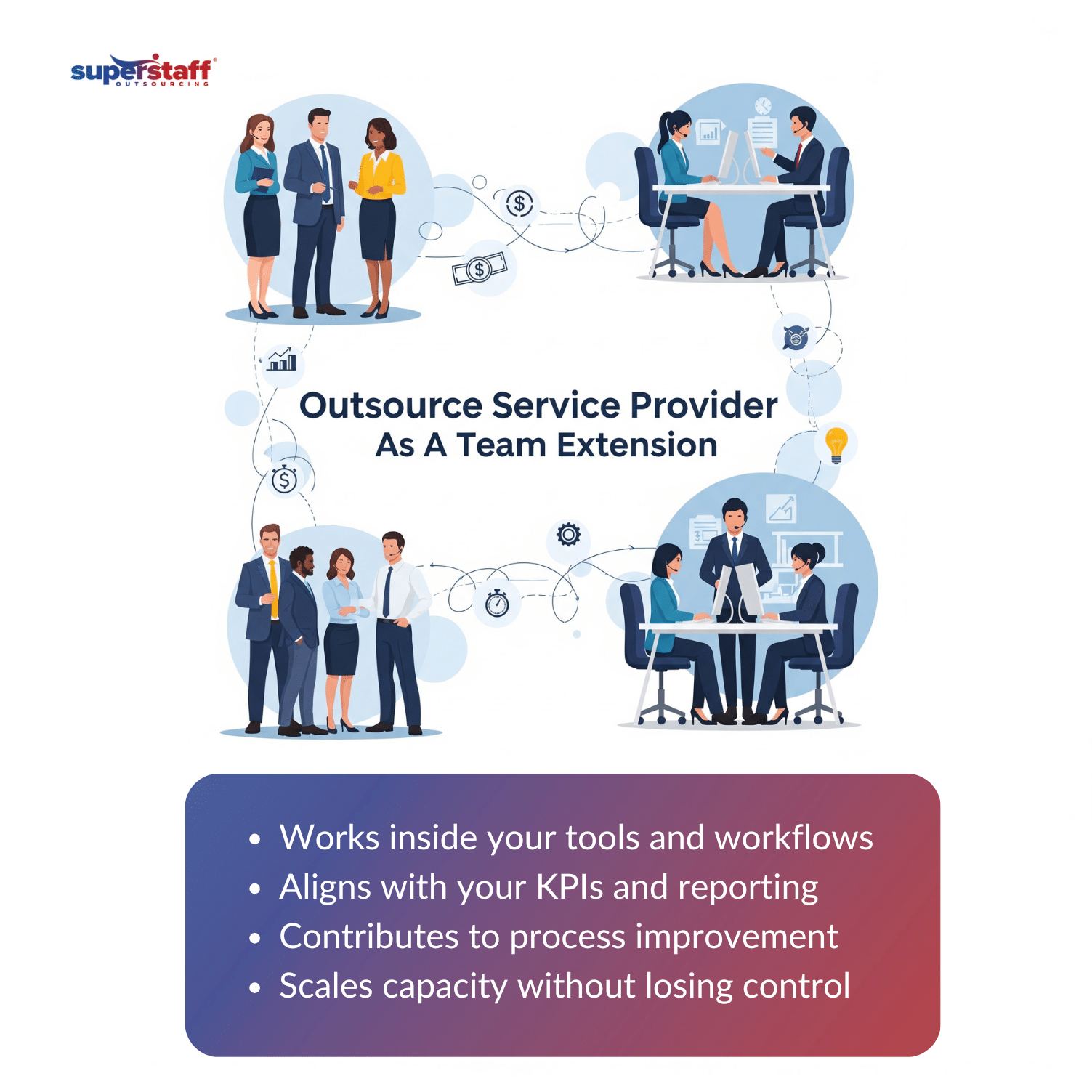
Companies began looking for an outsource service provider that could work inside their tools, align with their metrics, and participate in regular operational conversations. This demand reshaped how outsourcing relationships were defined.
Integration Into Daily Workflows
Modern outsourcing depends on shared systems. Teams use the same CRM platforms. They follow the same escalation paths. They join the same daily huddles. They report using the same dashboards.
This integration allows an outsource service provider to function as part of the daily rhythm of the business. Work no longer feels handed off. It feels shared. That difference has a direct effect on speed, accuracy, and customer experience.
Shifting From Output Metrics to Outcome Metrics
Volume is no longer the main measure of success. Leaders now expect outsourced teams to contribute to customer satisfaction, response times, resolution quality, and operational efficiency.
An effective outsource service provider aligns its performance tracking with the company’s existing KPIs. Reports reflect business outcomes, not just completed tickets. This alignment creates accountability that feels no different from internal teams.
Cultural Alignment Matters More Than Ever
Service roles require understanding how customers think and communicate. Teams must recognize tone, expectations, and service etiquette that match the brand.
This is where the Philippines has become a strategic location for companies seeking an outsource service provider. Filipino professionals bring strong English proficiency, cultural familiarity with U.S. customers, and a natural service orientation that supports customer facing roles.
Cultural alignment shows up in small details that affect every interaction. Agents understand conversational pacing. They recognize when to be formal and when to be friendly. They know how to express empathy without sounding scripted. These nuances are difficult to teach but critical in customer support.
An effective outsource service provider in the Philippines trains teams to mirror the communication style of the client’s brand. This includes vocabulary choices, tone guidelines, and response structures that reflect how the company speaks to its customers.
As a result, customers do not feel like they are speaking to a third party. They feel like they are speaking directly to the company.
Time zone compatibility also supports this alignment. Teams can work overlapping hours with U.S. operations, which allows real time coaching, feedback, and collaboration. Managers can guide communication styles as situations happen, not days later.
Over time, this cultural fit reduces escalations, improves customer satisfaction, and strengthens brand consistency across every touchpoint handled by the outsource service provider.
Leadership Collaboration Strengthens Integration
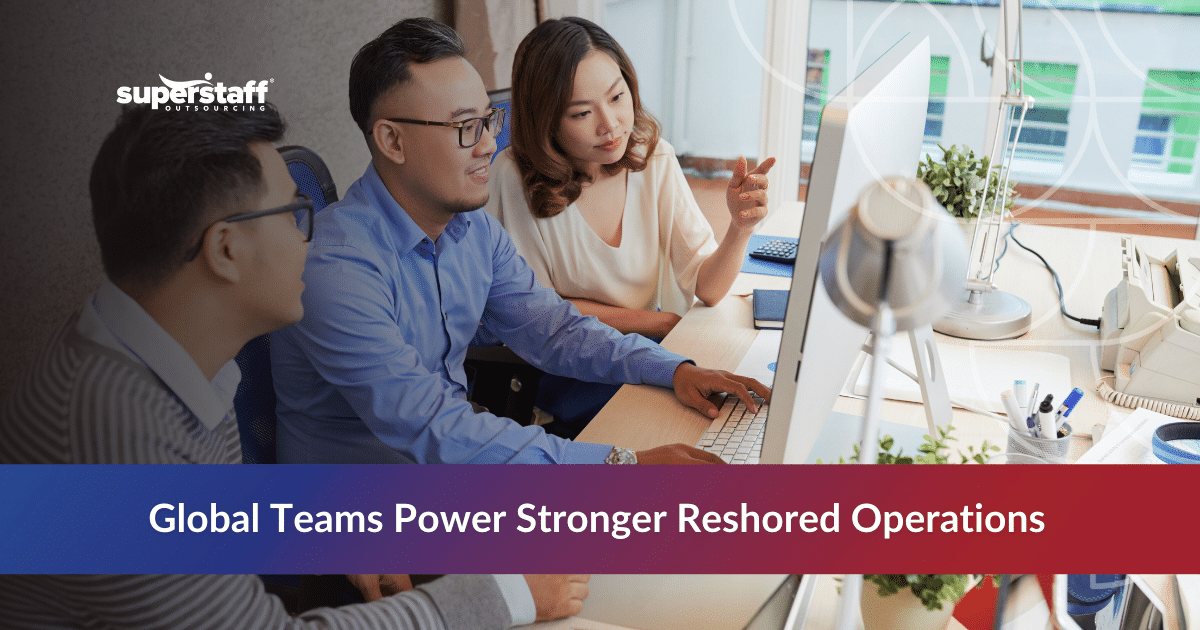
Outsourcing relationships now involve leadership on both sides. Internal managers work closely with offshore team leads. They conduct joint planning sessions. They review performance together. They share goals.
This level of collaboration turns the outsource service provider into an operational partner rather than a separate entity. Leadership alignment ensures consistency and long term performance stability.
Technology Removes the Distance
Communication tools and project management platforms make real time collaboration simple. Teams connect instantly. Issues are addressed quickly. Visibility is constant.
Geography becomes less relevant when an outsource service provider operates inside the same digital environment as the in house team. What matters is process alignment, not physical location.
Contributing to Process Improvement
Because integrated teams work inside daily operations, they often spot inefficiencies first. They suggest documentation improvements. They identify workflow gaps. They provide feedback that improves internal systems.
An outsource service provider that contributes to process improvement adds value beyond task execution. This contribution strengthens the partnership and improves overall operations.
Scaling Without Losing Control
Companies want to grow support capacity without sacrificing oversight. Integrated outsourcing makes this possible. Managers maintain visibility. Standards remain consistent. Expansion feels controlled.
Working with the right outsource service provider allows companies to add capacity quickly while maintaining the same quality expectations they apply to internal teams.
What This Means for Modern Businesses
The future of outsourcing is built on partnership and integration. Companies that still treat outsourcing as task delegation miss the opportunity to create operational leverage.
A modern outsource service provider acts as a true extension of the team. They participate in workflows, contribute to outcomes, and support the business as if they were part of the organization.
Building Teams That Work as One
The role of the outsource service provider has evolved from vendor to integrated team extension. Businesses now expect alignment, accountability, cultural fit, and leadership collaboration from their outsourcing partners.
SuperStaff builds offshore teams in the Philippines that operate inside your systems, follow your processes, and contribute to your service goals as if they were part of your organization.
If you are ready to move beyond transactional outsourcing, explore how SuperStaff can become the extension of your team.