
Real-time visibility is now a requirement for supply chain leaders under pressure to keep shipments moving and customers informed. Global disruptions, carrier delays, and capacity shifts have pushed companies to strengthen operational support.
Many are turning to nearshore teams to handle tracking, coordination, and customer communication. Colombia has emerged as a preferred location for outsourcing supply chain management because it aligns with U.S. time zones, offers bilingual talent, and maintains strong logistics expertise.
This blog explains how Colombia enhances visibility, responsiveness, and operational continuity through a modern outsourcing model built for today’s supply chain demands.
Shift to real-time monitoring for better decisions
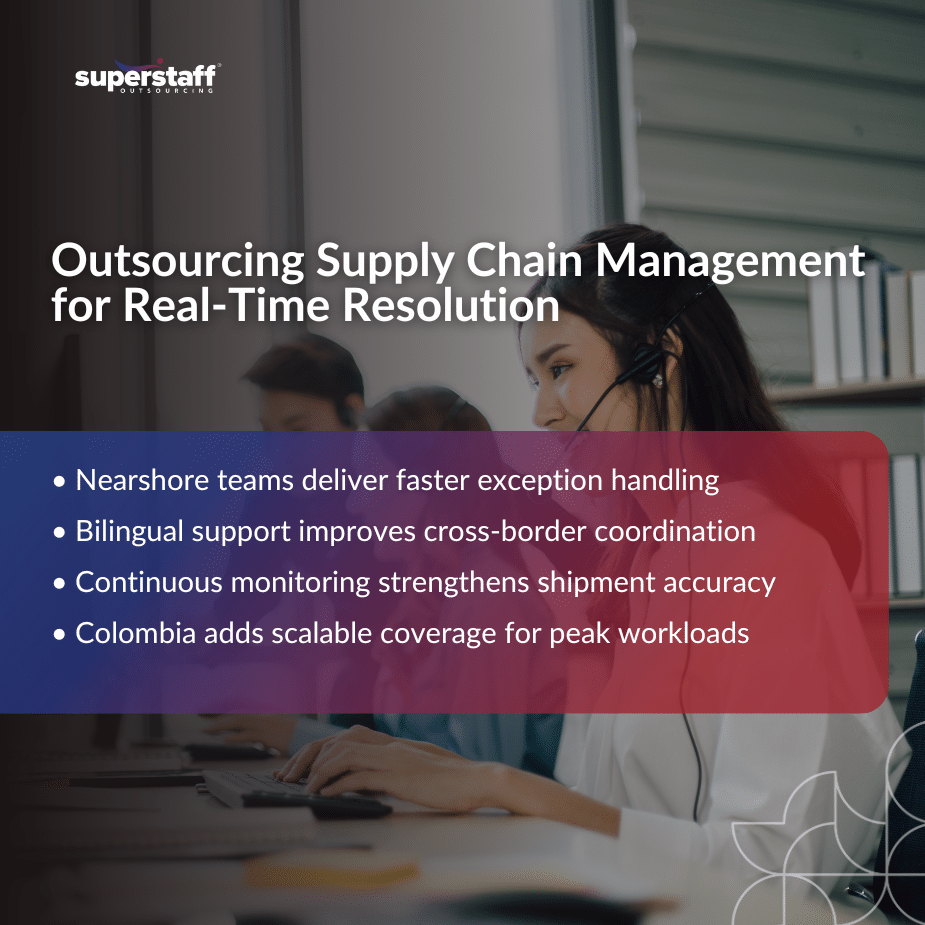
Companies depend on continuous data monitoring to manage exceptions and maintain service commitments. Visibility gaps lead to missed delivery windows, inaccurate reporting, and higher issue resolution times. Teams in Colombia support outsourcing supply chain management by monitoring platforms in real time and escalating issues as soon as they appear.
This level of attention improves cycle times because exceptions are identified earlier. It also strengthens customer communication by supplying accurate updates and preventing delays from escalating into wider service failures.
Time zone alignment supports faster responses
Colombia works in similar business hours as the United States. This enables near-instant communication between logistics teams, carriers, and warehouse partners. Faster responses reduce wait times and shorten the lifecycle of transportation exceptions.
Nearshore supply chain outsourcing also makes it easier to coordinate with U.S. dispatch teams that need immediate answers. Real-time dialogue improves handoffs and prevents small delays from growing into larger disruptions.
Teams trained in outsourcing supply chain management use this alignment to maintain speed and accuracy across daily operations.
Bilingual communication improves global coordination
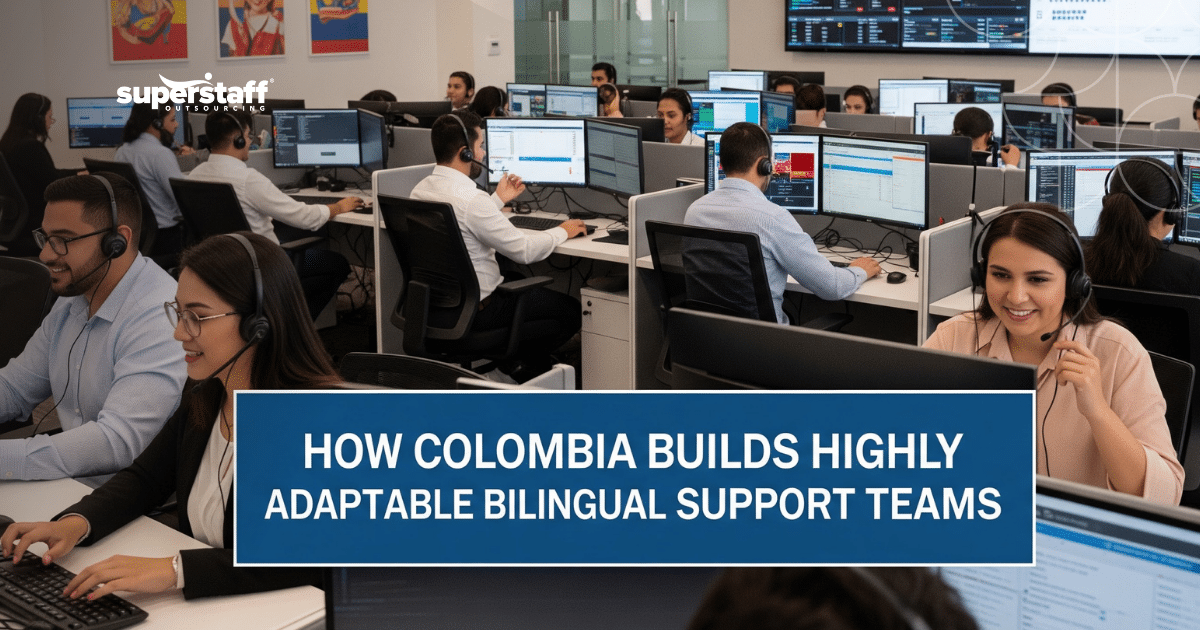
Global logistics networks require clear communication to avoid misunderstandings. Colombian teams speak English and Spanish with professional fluency, which helps move shipments efficiently along North American and Latin American routes.
This capability allows companies to expand their supply chain outsourcing services without communication gaps. It improves carrier follow-ups, documentation handling, and customer service interactions. Bilingual teams also reduce the risk of errors when managing cross-border shipping activities.
The result is a smoother flow of information across multiple operational touchpoints.
Cost efficiency supports expanded coverage
Operational costs continue to influence supply chain decisions for midmarket companies. Colombia offers cost structures that make continuous monitoring and customer support more attainable. Companies can add staff for track and trace, exception handling, and reporting without increasing overhead.
These cost advantages help leaders extend their outsourcing supply chain management programs during peak seasons. It also allows them to invest more in accuracy, timeliness, and customer satisfaction.
Nearshore teams deliver consistency while supporting long-term financial planning.
A strong logistics talent pool reduces onboarding time
Colombia has deep experience in transportation and logistics operations. Many professionals have supported freight, distribution, and customer operations for U.S. companies. That familiarity reduces onboarding time and increases operational readiness.
Typical roles handled through supply chain outsourcing solutions in Colombia include track and trace, proof of delivery verification, customer updates, and carrier coordination. These tasks require attention to detail and urgency, which are strengths of the region’s workforce.
Teams adapt quickly to client systems and protocols, creating a seamless handoff for new programs involved in outsourcing supply chain management.
Technology capability supports data accuracy
Supply chain teams in Colombia are skilled in transportation management systems, warehouse management platforms, freight visibility tools, and CRM systems. This improves the accuracy of data input, shipment updates, and customer notes.
Technology proficiency allows nearshore supply chain outsourcing teams to maintain consistent information flow across the entire shipment lifecycle. It also helps reduce backlogs and prevents duplicate entries or delays in system updates.
Strong digital capability is one of the reasons more leaders rely on outsourcing supply chain management as part of their operational strategy.
Continuous monitoring shortens exception cycles
Shipment exceptions often result from late pickups, address issues, damaged freight, or customs delays. The speed at which these issues are identified directly affects customer outcomes.
Nearshore teams in Colombia provide continuous monitoring that shortens exceptions by intervening earlier. Faster escalations lead to quicker answers from carriers and help customers plan around changes.
Real-time supply chain visibility outsourcing ensures that no issue goes unnoticed during off-hours or high-volume periods.
Compliance support strengthens documentation accuracy
Supply chain operations rely on accurate billing, proof of delivery, and carrier documentation. Errors in these areas slow down payment cycles and strain partner relationships.
Teams in Colombia support compliance tasks by reviewing documentation, validating shipment details, and identifying discrepancies before they impact financial outcomes. This reduces disputes and helps companies maintain complete records across all shipments.
Companies that use outsourcing supply chain management benefit from more predictable processes and fewer operational bottlenecks.
Customer service performance increases with nearshore teams
Shippers expect timely updates and informed responses when issues occur. Colombia’s bilingual workforce strengthens this experience by providing accurate information with reasonable response times.
Teams support inquiries, track packages, and coordinate with carriers to relay status updates. This level of attention builds trust with customers and supports long-term relationships.
Companies using supply chain outsourcing services often gain improved satisfaction scores because issues are handled with clarity and consistency.
Scalability supports peak season demands
Freight volumes fluctuate throughout the year, especially during retail peaks. Colombia offers scalable support that adapts to these shifts. Staffing can increase during high-demand seasons and adjust when volume stabilizes.
This flexibility is a major advantage for outsourcing supply chain management because internal teams often struggle to scale quickly. Colombia’s model supports workload balance and protects service levels during seasonal surges.
It also increases resilience by allowing companies to adjust resources to match demand.
Strengthening Supply Chain Performance Through Nearshore Support
Outsourcing supply chain management gives companies a reliable way to strengthen real-time visibility, speed, and communication. Colombia enhances this model with time zone alignment, bilingual expertise, logistics capability, and scalable staffing.
These strengths create an outsourcing supply chain management framework that supports continuous monitoring, faster exception handling, and improved customer outcomes. SuperStaff works with U.S. companies to build stable, high-performing nearshore teams that support every stage of the supply chain.
To learn how our Colombia-based operations can strengthen your logistics performance, contact our team today.