A technology investment can create work long before a new product reaches the market. Companies need people to manage documents, coordinate suppliers, process information, support employees, and keep daily operations organized. As a result, a new technology hub can create demand for business services that have little to do with traditional customer calls.
This raises an important question about Pax Silica Philippines BPO demand. Could companies connected to the project outsource functions beyond customer support?
The answer will depend on how companies build their operations and which services they choose to keep in-house. However, the focus of the planned Pax Silica development on artificial intelligence, semiconductors, advanced manufacturing, and related industries creates several possible areas for BPO support. For Philippine outsourcing providers, that could mean a wider range of services as new businesses enter the ecosystem.
Why Pax Silica Could Need New BPO Functions
The Philippines has built a large outsourcing industry around customer service and other business processes. However, technology-focused companies often need specialized operational support.
1. Technology Companies Need Data Support
Technology businesses handle large amounts of information. Employees may need to organize records, check data, update systems, and identify errors.
Therefore, data processing and validation could become useful outsourced functions. BPO teams can follow clear procedures while internal technology teams focus on product development and other specialized work. Companies exploring this option can review how data processing outsourcing to the Philippines can support data accuracy and daily operations.
2. Manufacturing Needs Back-Office Teams
Advanced manufacturing involves more than production. Companies also need people to manage orders, inventory records, supplier documents, purchasing information, and other administrative tasks.
As manufacturing activity grows, businesses may outsource these functions to reduce the amount of routine work handled by internal teams. This could create opportunities for BPO providers with experience in back-office operations.
3. Logistics Requires Daily Coordination
Technology and manufacturing companies depend on the movement of materials, equipment, and finished products. Logistics teams must track shipments, update records, communicate with carriers, and manage delivery documents.
Consequently, logistics support could become another area for outsourcing. BPO employees can handle routine coordination while logistics managers focus on planning and supplier relationships.
4. Finance Tasks Can Move Outside
Every company needs finance operations. Invoice processing, accounts payable support, expense records, payment follow-ups, and data entry can consume significant employee time.
However, these tasks often follow defined procedures. This makes them potential candidates for outsourced support, especially for companies that want to keep their internal finance teams focused on analysis and decision-making.
5. Recruitment Can Become a Support Need
New companies need employees before they can expand operations. Recruitment teams may need help with sourcing, screening, interview scheduling, document collection, and onboarding.
A BPO team can support these activities while internal HR leaders manage workforce planning and final hiring decisions. Therefore, recruitment support could become part of the wider Pax Silica Philippines BPO opportunity.
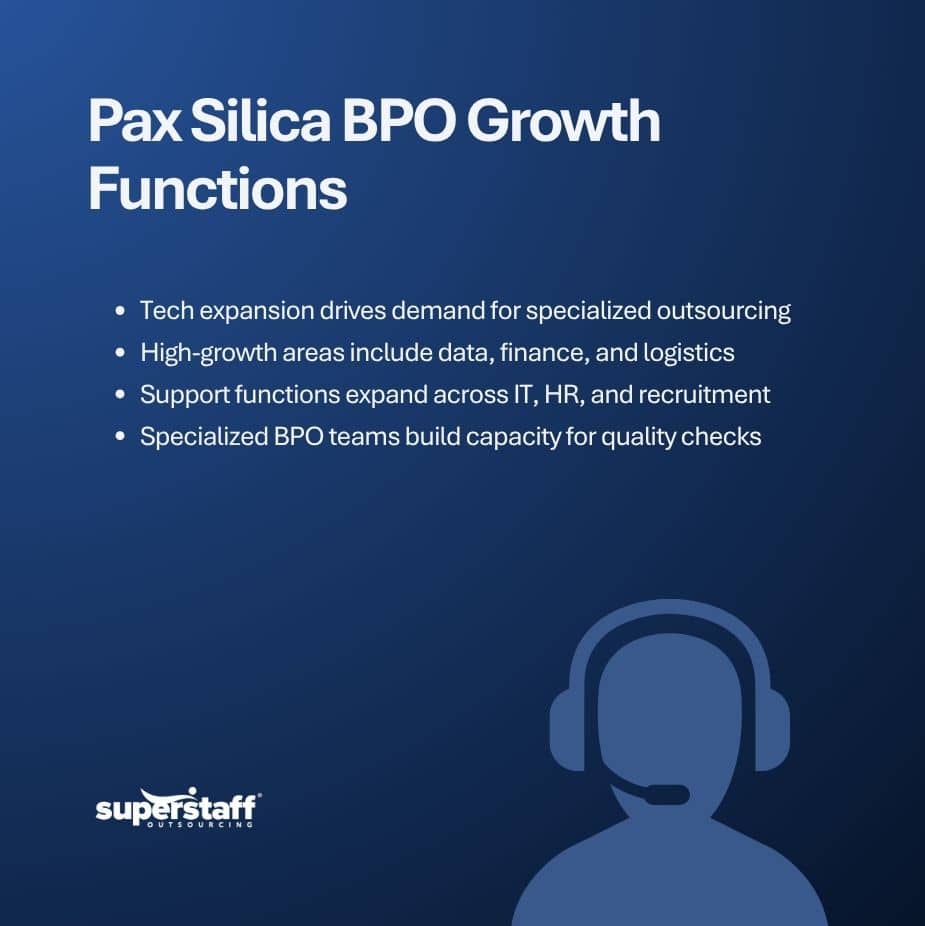
New Functions Could Require Different Skills
Expanding BPO demand means companies may need workers with skills beyond traditional customer service. The Philippine outsourcing industry can prepare by developing teams for specialized business functions.
1. Technical Support
Technology companies need support for software, devices, systems, and other tools. Employees and business customers may need help when they encounter technical problems.
As a result, technical support can provide an outsourcing option for companies that need trained specialists without building a large internal support department.
2. Quality Assurance
AI and automation can process information quickly, but companies still need to check results. Quality teams can review records, customer interactions, documents, and other outputs.
Moreover, these teams can identify repeated problems and report them to internal managers. This gives businesses information they can use to improve their processes.
3. Compliance Support
Technology and manufacturing businesses may need to maintain detailed records and follow internal and external requirements. Employees can support compliance teams by organizing documents, checking required information, and maintaining records.
However, companies should keep final legal and regulatory decisions with qualified internal professionals. Outsourced teams can support the process without taking responsibility for those decisions.
4. Human Resources Operations
HR departments manage many routine tasks. These can include employee records, attendance data, onboarding documents, scheduling, and payroll coordination.
Therefore, businesses could outsource selected HR operations while keeping sensitive decisions and workforce strategy within their internal teams.
5. Content and Documentation
Technology companies need product documents, internal materials, training resources, reports, and other written information. AI can help create some of these materials, but people still need to review them.
BPO teams can support documentation, editing, formatting, and quality checks based on company standards.
What Could Drive Pax Silica Philippines BPO Demand?
The possible demand for new BPO functions depends on how the wider Pax Silica ecosystem develops. The proposed project in New Clark City includes plans related to advanced manufacturing and technology, which could create different types of business activity.
1. More Companies Could Mean More Support
BCDA has discussed a proposed 1,620-hectare site, with the first 500 hectares expected to accommodate around 10 to 20 companies as development progresses.
Each company will have its own operational needs. Therefore, even a small number of firms could create demand for several types of business support. The Philippine News Agency’s report on the planned Pax Silica hub provides more context on the proposed development timeline.
2. Foreign Companies May Need Local Teams
International companies entering the Philippines may understand their core industry well, but they may still need local support for administration, recruitment, logistics, and other functions.
Outsourcing can help these companies access local talent without immediately establishing every support department internally.
3. Specialized BPO Can Add Value
Companies may not need a general customer service team. Instead, they may need employees who understand finance processes, logistics systems, data management, technical support, or other specialized tasks.
This could encourage BPO providers to develop industry-specific teams. Consequently, outsourcing could become more closely connected to the operational needs of technology companies.
4. Workloads May Change Over Time
A new company may begin with a small support team and expand as operations grow. However, workload levels can change depending on production, customer demand, and business activity.
BPO arrangements can provide additional capacity when needed. This flexibility may appeal to companies that want to control staffing costs while maintaining operational support.
5. The Philippines Already Has BPO Experience
The Philippines has an established IT-BPM sector with experience across multiple services. This provides a foundation for companies looking beyond traditional call center work.
However, future opportunities will depend on workforce skills, training, infrastructure, and actual investment activity. The potential exists, but companies still need to develop the right services.
How BPO Providers Can Prepare
BPO companies can start preparing for broader demand by focusing on skills and processes that technology businesses may need.
1. Build Specialized Teams
Providers can create teams for finance, logistics, technical support, recruitment, data operations, and quality assurance.
This gives clients more options when they need support beyond customer service. Providers can also explore manufacturing outsourcing to understand how external teams can support manufacturers with operational tasks.
2. Train Employees for Technology Work
Workers may need training in business software, data tools, technical systems, and industry-specific processes. Regular training can help employees handle more specialized assignments.
Additionally, companies can develop clear certification or assessment programs to measure employee readiness.
3. Improve Data Handling
Technology-focused clients may manage sensitive business information. Therefore, BPO providers need strong procedures for access, documentation, quality checks, and data handling.
Clear processes can help build client confidence when outsourcing operational work.
4. Create Flexible Staffing Models
Companies may need different levels of support as their operations develop. BPO providers can offer dedicated teams, shared support, or specialized project teams depending on the workload.
This flexibility can make outsourcing more practical for companies at different stages of growth.
5. Focus on Measurable Results
BPO providers should measure quality, response times, accuracy, productivity, and other relevant outcomes. These metrics help clients understand whether outsourcing delivers the expected value.
Clear performance data also helps providers identify areas that need improvement.
The BPO Opportunity Could Expand
Pax Silica Philippines BPO demand could extend beyond customer support if companies connected to the project require broader operational services. Data processing, finance, recruitment, logistics, technical support, quality assurance, HR operations, and documentation could all become potential areas for outsourcing.
However, businesses should base decisions on actual operational needs rather than assumptions. The development of the Pax Silica ecosystem will take time, and demand will depend on investment, company activity, workforce readiness, and infrastructure.
For BPO providers, this creates a reason to prepare for specialized services. For businesses entering the ecosystem, it creates an opportunity to use local teams for functions that do not need to remain entirely in-house.
SuperStaff provides customer support, technical support, recruitment, finance, logistics, and other outsourcing services that can help companies manage daily operations. As the Pax Silica Philippines BPO market develops, businesses can use specialized teams to support their growth while keeping internal resources focused on core priorities.
Reach out to SuperStaff to discuss how an outsourced team can support your business operations.