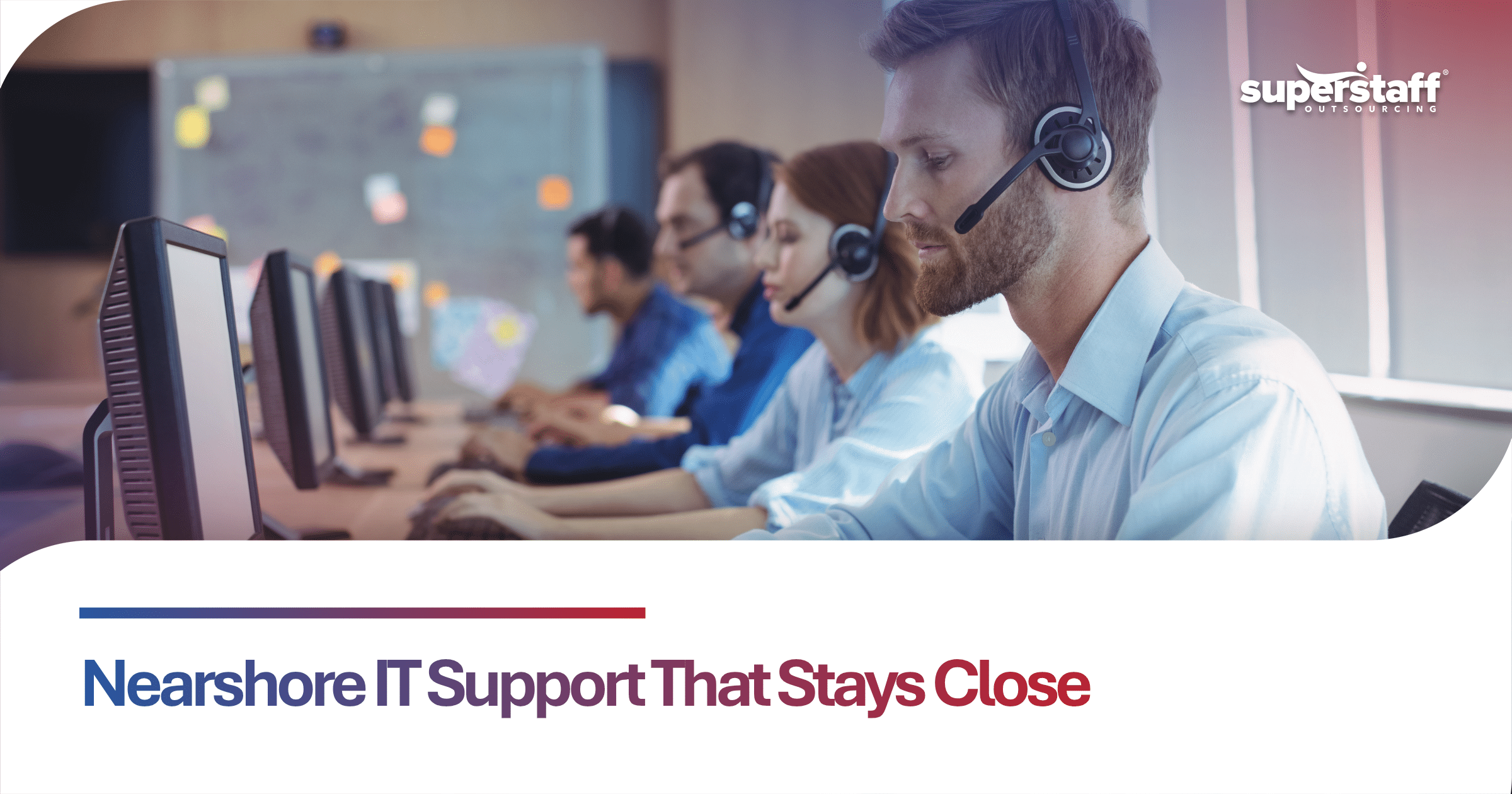
For U.S. SMEs and midmarket companies, growth often creates a familiar pressure point. Technology needs expand faster than internal hiring can support. Customer platforms need maintenance. Help desks need longer coverage. Security workflows need tighter oversight. Digital tools need people who can manage them every day. This is where remote IT teams can help companies build stronger, more flexible operations without adding unnecessary complexity.
Colombia is becoming a practical option for businesses that need dependable technology support close to U.S. working hours. With nearshore alignment, bilingual talent, and a service culture built around responsiveness, Colombia gives companies a smarter way to strengthen IT capacity while keeping collaboration simple.
Why U.S. Companies Are Looking At Colombia
Many U.S. companies want global talent, but they do not want the friction that comes with faraway time zones. Delayed responses can slow issue resolution. Misaligned schedules can stretch simple tasks across multiple days. For technology operations, that can affect internal teams, customers, and revenue.
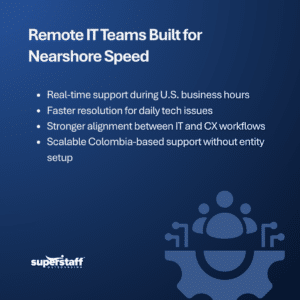
Colombia offers a different advantage. Its time zone alignment with the United States allows remote IT teams to collaborate during regular business hours. Managers can hold live check-ins, resolve issues faster, and keep projects moving without waiting overnight for answers.
This matters for SMEs and midmarket companies because they often do not have large internal IT departments. A lean in-house team may handle strategy, vendor management, and core infrastructure, while a nearshore partner supports daily workflows.
The Real Business Case For Remote IT Teams
The value of remote IT teams is not only about filling seats. It is about giving companies the operational depth to support growth.
A business may need help with:
- IT help desk support
- Software troubleshooting
- User access management
- Customer support platform maintenance
- CRM and ticketing tool administration
- Basic cybersecurity monitoring
- Cloud support coordination
- Technical documentation
These functions may seem routine, but they shape the employee and customer experience. When systems work well, agents perform better. Customers get faster answers. Managers have clearer visibility.
For a growing company, remote IT teams help reduce internal bottlenecks. Instead of pulling senior staff into repetitive support work, leaders can keep them focused on higher-value priorities.
Why Colombia Fits The Nearshore IT Model
Colombia gives U.S. companies a practical balance of accessibility, talent, and cultural alignment. For companies that want to expand support without building a full entity abroad, nearshore outsourcing can reduce hiring and management friction.
Remote IT teams in Colombia can support U.S. businesses during the same workday. This makes handoffs cleaner and collaboration easier. It also helps managers stay close to performance without micromanaging across extreme time differences.
A Colombia-based team can work alongside U.S. managers, Philippine operations, and other global support teams. This creates a blended model where each location serves a clear purpose.
For SMEs and midmarket companies, that flexibility is valuable. They can build a support structure that matches workload, budget, and service expectations without committing to an oversized internal team.
How Remote IT Teams Strengthen Customer Support
Customer support is now deeply connected to technology. Agents use CRMs, live chat tools, call center platforms, e-commerce systems, knowledge bases, and reporting dashboards. When these tools fail, the customer experience is affected immediately.
Remote IT teams help prevent small technical problems from becoming service disruptions. They can troubleshoot access issues, support platform updates, manage tickets, and assist with internal escalations.
For example, an e-commerce company may have agents handling order questions, returns, and delivery updates. If the order management system has access problems, response times slow down. A remote IT support team can help resolve the issue before it affects too many customers.
This creates a better working environment for support teams and a smoother experience for customers. It also gives managers a clearer view of recurring issues that need long-term fixes.
What SMEs Should Outsource First
SMEs often ask which IT roles should stay internal and which can be outsourced. The answer depends on business maturity, security needs, and existing team capacity.
A practical starting point includes:
- Tier 1 IT help desk
- Internal software support
- User onboarding and offboarding
- System access requests
- Ticket triage
- Documentation support
- Customer support tool administration
These tasks require consistency and attention to detail. They do not always require senior internal resources. Remote IT teams can manage them efficiently while internal leaders keep ownership of architecture, strategy, and governance.
The keyword here is alignment. Outsourcing works best when the external team understands the company’s tools, standards, escalation rules, and customer expectations.
What Makes A Strong Remote IT Partner
The right outsourcing partner should offer more than staffing. Companies need a partner that understands operations, accountability, and service quality.
A strong partner should provide:
- Clear role definition
- Structured onboarding
- Performance tracking
- Security awareness
- Process documentation
- Team leads or supervisors
- Communication routines
- Scalable staffing options
Remote IT teams need discipline. They must know which issues to resolve, which ones to escalate, and how to document recurring problems. This creates visibility for managers and reduces repeat incidents over time.
Businesses should not only ask whether a provider can supply talent. They should ask how the provider trains teams, manages quality, protects data, and aligns with business goals.
Why SuperStaff Connects IT Support With CX
SuperStaff understands that modern outsourcing is no longer separated into isolated functions. Customer service, IT support, back office, and digital operations often work together.
For Colombia market support, this matters. A U.S. company may need customer-facing agents, bilingual support, and technical assistance within the same operating structure. A partner that understands both CX and operational support can help create cleaner workflows.
SuperStaff helps companies build remote IT teams that support real business needs. These teams can help stabilize daily operations, improve response times, and support internal and customer-facing platforms.
Because SuperStaff also has operations in the Philippines and the United States, clients can explore a global delivery model that fits their coverage needs. Colombia can serve as the nearshore layer, while the Philippines can support broader offshore operations.
How To Build A Smarter Nearshore IT Team
Building a successful nearshore team starts with clarity. Companies should know what they want the team to own, how success will be measured, and which issues require escalation.
Before launching remote IT teams, leaders should define:
- Core responsibilities
- Required tools and access levels
- Service hours
- Escalation paths
- Quality standards
- Reporting cadence
- Security requirements
- Training materials
A clear launch plan reduces confusion and helps outsourced teams perform faster. It also protects internal employees from unclear handoffs and duplicate work.
This is where an experienced outsourcing partner adds value. SuperStaff can help companies map the right roles, design the workflow, and support team management from onboarding to ongoing performance.
Why Remote IT Teams Are A Strategic Move
Remote IT teams give growing companies a way to improve technical capacity without slowing down hiring plans or overloading internal staff. For U.S. SMEs and midmarket companies, Colombia offers a nearshore advantage that supports faster communication, stronger collaboration, and better service continuity.
The most successful outsourcing models are built around fit. The right team should match the company’s systems, service expectations, and growth plans. It should also make daily operations easier for managers, employees, and customers.
SuperStaff helps companies build dependable, well-managed support teams across the globe. Explore SuperStaff’s services today and see how the right outsourcing partner can help your business strengthen operations, improve support, and scale with confidence.