
Customers remember how a business treats them, especially when they need help. A clear answer, a respectful response, or a quick solution can influence whether they choose to return or take their business elsewhere. While products and prices affect buying decisions, the quality of customer interactions also plays a role in building long-term relationships.
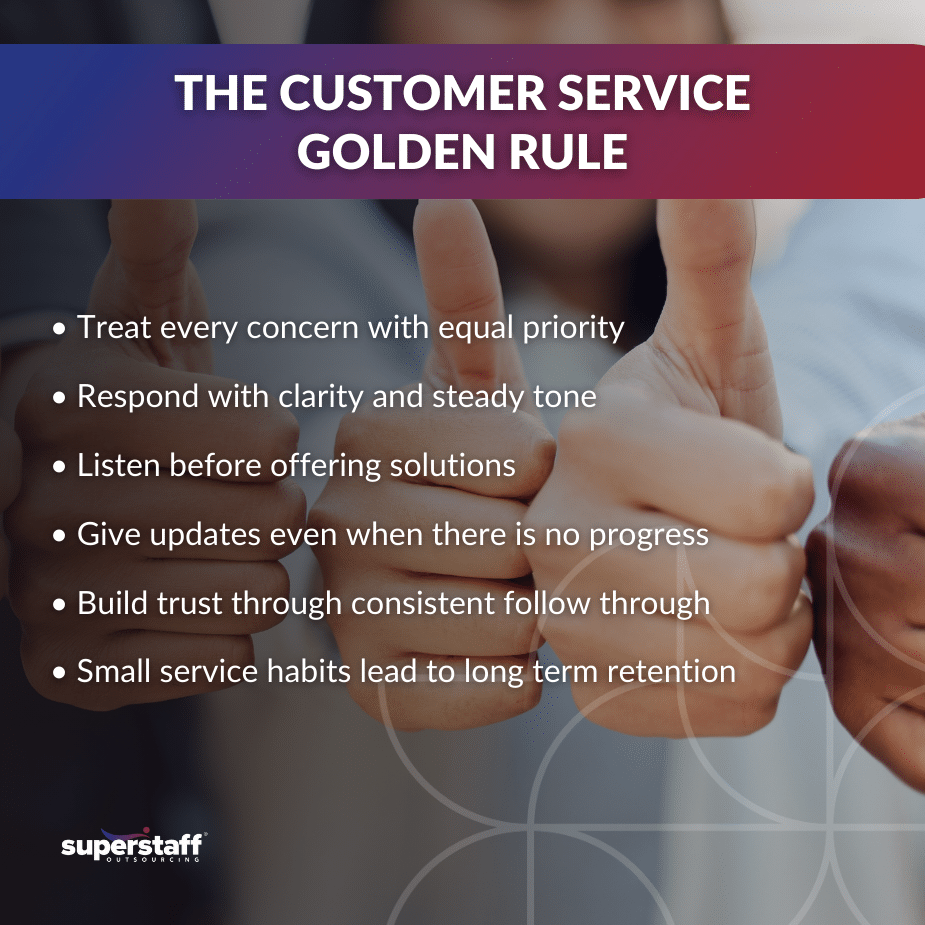
One simple principle can guide these interactions: treat customers with the same respect, patience, and attention you would expect when asking for assistance. This customer service golden rule may sound basic, but applying it consistently requires proper training, clear processes, and reliable support. Businesses that make it part of their daily operations have a better chance of earning customer trust and encouraging repeat business.
What Is the Customer Service Golden Rule?
The customer service golden rule is based on treating customers the way you would want to be treated. It means listening to their concerns, communicating respectfully, and making a genuine effort to resolve their problems. It also requires teams to consider the customer’s situation instead of relying on scripted responses for every interaction.
1. Clear and Respectful Communication
Customers should not have to struggle to understand an answer. Representatives need to use simple language, explain policies clearly, and maintain a polite tone, even when handling complaints.
2. Quick and Accurate Responses
Customers value their time. Responding promptly and providing correct information helps prevent unnecessary follow-ups and reduces frustration.
3. Consistency Across Interactions
The quality of support should not depend on which representative answers a call or message. Consistent service standards help customers know what to expect whenever they contact a business.
4. Solution-Focused Assistance
A good customer service interaction should move toward a solution. Representatives need to understand the concern, identify the appropriate next step, and explain how the issue will be handled.
5. Reliable Follow-Through
If an agent promises an update or a callback, that commitment should be fulfilled. Keeping promises shows customers that the business takes their concerns seriously.
Why the Customer Service Golden Rule Matters for Retention
Customers are more likely to continue doing business with companies that make support simple and dependable. Applying the customer service golden rule helps reduce the frustration that can lead people to switch brands.
1. Reduces Customer Effort
Customers appreciate straightforward answers and processes. They should not have to contact several departments or explain the same problem repeatedly to get assistance. Harvard Business Review’s research on reducing customer effort explains why making problems easier to resolve can have a strong effect on customer loyalty.
2. Builds Customer Trust
Trust develops when businesses communicate honestly and handle concerns consistently. Customers become more comfortable returning when they know the company will provide dependable assistance.
3. Protects Brand Reputation
Customer experiences can influence what people say about a business. Helpful interactions can encourage positive reviews and recommendations, while poor service may discourage potential buyers.
4. Improves Customer Satisfaction
When representatives listen carefully and provide relevant solutions, customers are more likely to feel that their concerns have been addressed. This can improve their overall impression of the business.
5. Encourages Long-Term Relationships
Customers who receive dependable support have more reasons to continue choosing the same brand. This makes service quality an important part of customer retention planning.
How Outsourcing Helps Businesses Maintain Service Quality
As a business grows, its customer support requirements can become harder to manage with a small internal team. Outsourcing provides additional personnel who can handle customer inquiries and maintain service coverage during busy periods.
1. Access to Trained Customer Support Representatives
Outsourcing partners can provide representatives trained in communication, active listening, empathy, issue resolution, and customer handling. With proper account-specific training, agents can follow the company’s policies and service expectations.
2. Better Management of High Inquiry Volumes
During product launches, seasonal sales, or unexpected service issues, customer inquiries can increase quickly. Additional support helps businesses manage incoming calls, emails, and chats without allowing response times to rise unnecessarily.
3. Extended Customer Support Coverage
Customers may need assistance outside regular office hours. Outsourced teams can provide additional coverage based on business requirements, helping companies respond to inquiries across different schedules.
4. More Consistent Service Delivery
Established workflows, quality checks, and performance reviews help representatives follow the same service standards. Businesses can also review customer feedback and agent performance to identify areas that need improvement. These processes are part of effective customer retention services, where consistent support helps maintain customer relationships.
5. More Time for Internal Teams
When routine customer inquiries are handled by a dedicated support team, internal employees can focus on other responsibilities. This helps distribute workloads while keeping customer assistance available.
How the Customer Service Golden Rule Builds Customer Loyalty
Retention is not achieved through a single positive interaction. It develops through repeated experiences that show customers they can depend on a business.
1. Creates Positive First Impressions
The first support interaction can shape how customers view a brand. A representative who listens, responds clearly, and provides useful information gives customers a reason to feel confident about their decision.
2. Prevents Communication Problems
Clear explanations reduce misunderstandings about product details, payments, policies, and other concerns. Customers are less likely to become frustrated when they understand what is happening and what they need to do next.
3. Improves Problem Resolution
Customers do not expect every transaction to go perfectly. However, they want businesses to take responsibility when something goes wrong. Timely assistance and appropriate solutions can help preserve the relationship.
4. Maintains a Consistent Brand Voice
Customers may interact with different representatives across phone, email, chat, and social media. Consistent communication helps create a familiar experience regardless of the channel. Effective customer service calls also depend on clear conversations that address customer needs and provide useful next steps.
5. Strengthens Customer Relationships
Remembering customer preferences, reviewing previous concerns, and providing relevant assistance can make interactions more personal. These small actions help customers feel recognized rather than treated as another support ticket.
Industries That Benefit From the Customer Service Golden Rule
Any business that communicates directly with customers can benefit from consistent service standards. However, some industries rely heavily on timely assistance and accurate information.
1. E-Commerce
Online retailers handle questions about orders, payments, product details, returns, and delivery updates. Helpful customer support can reduce confusion and encourage repeat purchases.
2. Healthcare
Healthcare providers need to communicate clearly when handling appointment requests, patient inquiries, and administrative concerns. Respectful interactions help patients understand the information they receive.
3. Travel and Hospitality
Hotels, airlines, and travel companies often deal with booking changes, cancellations, and unexpected travel concerns. Quick and patient assistance can improve the guest experience.
4. Finance
Banks and financial service providers handle sensitive account questions and payment concerns. Representatives must provide accurate information while following security and privacy procedures.
5. Technology
Technology companies regularly assist customers with product questions, technical problems, and troubleshooting. Clear explanations help users understand the steps needed to resolve an issue.
Businesses across these industries can use customer service outsourcing to support customer inquiries, maintain service coverage, and manage changing support requirements.
Best Practices for Maintaining the Customer Service Golden Rule
Businesses need more than a general reminder to treat customers well. They must establish clear standards and provide employees with the tools and training needed to follow them.
1. Provide Regular Staff Training
Training should cover communication skills, active listening, empathy, product knowledge, and problem-solving. Representatives should also practice handling difficult conversations so they can respond appropriately under pressure.
2. Monitor Service Quality
Managers should review customer interactions to check whether representatives follow company standards. Regular evaluations can identify communication gaps, repeated mistakes, and training needs.
3. Set Clear Response Expectations
Businesses should establish reasonable response and resolution targets for each support channel. These guidelines help teams manage inquiries and give customers a better idea of when to expect assistance.
4. Use Scripts as Guides, Not Restrictions
Standard responses can help representatives maintain accuracy, but they should not prevent natural conversations. Agents need enough flexibility to address the actual concern instead of simply reading prepared answers.
5. Use Customer Feedback to Improve Processes
Surveys, reviews, complaints, and support records can reveal recurring problems. Businesses should use this information to improve policies, training, and service procedures.
How Better Customer Service Supports Business Growth
Consistent customer support affects more than daily interactions. It can also influence purchasing behavior, customer retention, and the amount of time a business spends handling complaints.
1. Increases Customer Lifetime Value
Customers who continue buying from a business contribute to revenue over a longer period. Positive service experiences can support repeat purchases and ongoing relationships.
2. Helps Reduce Customer Churn
Unresolved concerns and poor communication can push customers toward competitors. Reliable support helps address these problems before they damage the relationship.
3. Encourages Recommendations
Customers who receive helpful assistance may recommend the business to friends, family, or colleagues. Positive word of mouth can help attract new customers without relying entirely on paid advertising.
4. Provides Useful Business Insights
Customer conversations often reveal product issues, service gaps, and common complaints. Reviewing these patterns helps companies identify changes that may improve their operations.
5. Supports More Stable Operations
Clear procedures and consistent service standards help reduce repeated inquiries and unnecessary escalations. This allows support teams to manage their workloads more effectively.
Make Every Customer Interaction Count
The customer service golden rule is simple: treat people with respect, listen to their concerns, and provide the help you would expect in the same situation. When businesses apply this principle consistently, they create better customer experiences, strengthen trust, and give people more reasons to stay.
Maintaining this standard requires the right people, training, and support processes. SuperStaff helps businesses manage customer inquiries and maintain dependable service across different channels. Contact SuperStaff to discuss how our customer support solutions can support your retention goals.