
Telecommunications companies handle millions of customer interactions every day. From billing inquiries to network troubleshooting, every call matters. Managing such a high volume of communication internally can strain resources, especially when service quality and customer satisfaction are on the line. That is why many companies turn to telecom call centers that specialize in handling customer support efficiently and professionally.
Outsourcing these services allows telecom providers to focus on improving connectivity, expanding coverage, and enhancing technology while ensuring customers get fast, consistent, and quality care. Through the right outsourcing partner, companies can balance cost, quality, and customer experience seamlessly.
What Telecom Call Centers Do and How They Work
Telecom call centers act as an extension of telecom providers by managing customer support functions across various channels such as phone, chat, and email. They help address issues quickly and maintain smooth communication between companies and customers.
1. Definition and Main Concept
Telecom call centers are third-party service providers that handle customer interactions on behalf of telecommunications companies. They manage large volumes of calls for billing concerns, technical assistance, and service upgrades.
2. The Partnership Process
When companies decide to outsource telecom operations, they collaborate with an experienced call center partner. The outsourcing team is trained to handle the provider’s systems, policies, and customer protocols to ensure a consistent experience.
3. Types of Services Handled
Typical support functions include:
- Technical troubleshooting and installation support
- Billing and payment inquiries
- Account activation and service modifications
- Customer retention and complaint resolution
- Product and service information assistance
4. The Role of the Provider
The outsourcing provider manages recruitment, training, quality monitoring, and technology systems. This ensures service consistency across time zones and customer segments.
5. The Role of the Telecom Company
The telecom company provides brand guidelines, system access, and performance expectations to maintain alignment with internal objectives.
Comparing In-House vs. Outsourced Telecom Call Centers
Operating a customer service department internally gives companies full control but often increases costs and limits flexibility. Outsourcing offers a more efficient and scalable option for telecom providers.
1. Cost Efficiency and Resource Allocation
Running in-house telecom call centers requires continuous investment in staff, office space, and equipment. Outsourcing transfers these costs to a specialized partner, reducing overhead and improving budget management.
2. Scalability and Flexibility
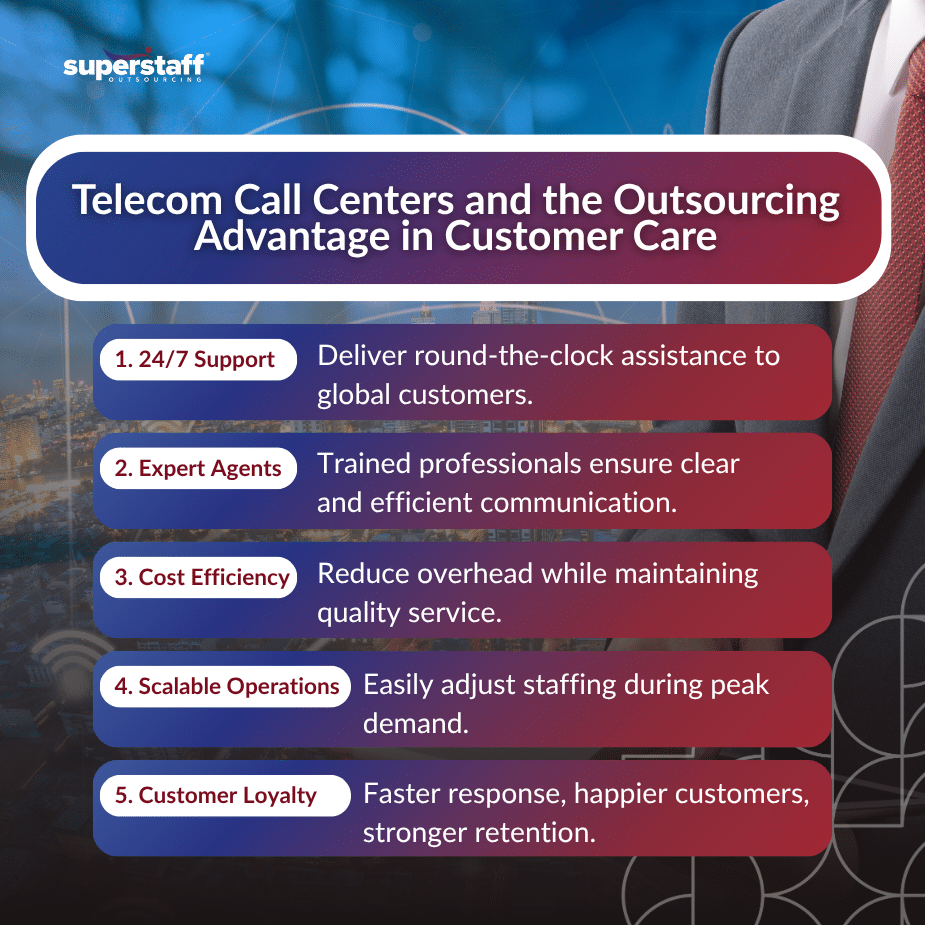
Telecom companies experience fluctuating call volumes due to promotions, service outages, or seasonal demand. Outsourced teams can scale quickly, adding or reducing staff based on demand without affecting quality.
3. Service Quality and Customer Satisfaction
Professional call centers are designed to deliver consistent performance. Their agents undergo ongoing training to manage different customer scenarios effectively, improving customer care in telecom.
4. Access to Advanced Tools and Systems
Outsourced telecom partners often invest in the latest customer management systems, analytics, and automation tools, giving telecom providers better insights into call performance and customer satisfaction.
5. Focus on Core Operations
By outsourcing, telecom companies can dedicate more time to improving infrastructure, innovating services, and developing customer-focused solutions instead of handling repetitive support tasks.
Key Benefits of Outsourcing Telecom Customer Care
The advantages of outsourcing telecom customer care services extend far beyond cost savings. It creates a foundation for better customer relationships and smoother operations.
1. 24/7 Service Availability
Telecom services are expected to run continuously. Outsourced telecom call centers ensure that customers receive help at any time, regardless of location or time zone.
2. Trained and Experienced Agents
BPO providers specialize in recruiting and training skilled agents who understand telecom processes, ensuring every customer interaction is handled professionally.
3. Lower Operational Costs
Outsourcing eliminates the need for constant recruitment, infrastructure upgrades, and training expenses, providing measurable savings.
4. Faster Response Times
A dedicated support team allows telecom companies to respond to calls and tickets quickly, reducing wait times and improving the overall customer experience.
5. Consistent Performance Monitoring
Outsourced call centers track metrics like resolution time and satisfaction scores, ensuring that performance remains high and issues are promptly resolved.
Industries and Use Cases for Telecom Call Centers
Outsourced telecom call centers cater to a wide range of businesses and industries that rely on communication and customer engagement.
1. Mobile Network Providers
They manage plan changes, billing issues, and technical inquiries for millions of subscribers.
2. Broadband and Internet Service Providers
Outsourced agents handle installation scheduling, troubleshooting, and connectivity concerns.
3. Cable and Satellite Companies
Support teams manage channel packages, device troubleshooting, and subscription renewals.
4. Enterprise Telecom Providers
B2B service providers rely on outsourcing to handle account management, service support, and corporate billing.
5. Telecom Startups
New telecom companies often outsource telecom customer care to gain immediate access to trained support teams without heavy setup costs.
Challenges and Best Practices in Telecom Call Center Outsourcing
While outsourcing offers many advantages, successful partnerships depend on clear communication, mutual understanding, and quality control.
1. Maintaining Brand Voice
Telecom companies should provide detailed guidelines to ensure that outsourced agents represent their brand accurately during every customer interaction.
2. Ensuring Data Privacy and Security
Call centers must follow strict data security protocols to protect customer information and comply with telecom regulations.
3. Transparent Communication
Regular meetings and performance reviews help both parties stay aligned with goals, updates, and improvements.
4. Evaluating Provider Experience
Choosing an outsourcing partner with proven telecom expertise ensures that the team can handle both technical and service-related tasks effectively.
5. Investing in Training and Monitoring
Continuous training helps agents stay informed about new products and services. Monitoring ensures consistent service quality across all channels.
Customer Care that Connects and Delivers
Outsourced telecom call centers are not just about handling calls. They serve as strategic partners that help telecom providers maintain strong customer relationships, scale operations, and control costs. By working with experienced providers, companies can ensure seamless service delivery and satisfied customers.
SuperStaff helps telecom companies achieve these goals through reliable, multilingual, and cost-effective outsourcing solutions. With expertise in customer care in telecom, SuperStaff empowers businesses to deliver better support while focusing on growth and innovation.
Explore how partnering with SuperStaff can help your company experience the full advantages of outsourcing telecom customer care services. Strengthen your customer connections, reduce operational challenges, and build a more efficient service model through our comprehensive telecom call center solutions.