Managing customer inquiries and keeping business records accurate can take up a significant amount of time. As workloads increase, companies often need additional employees, better processes, and more resources to maintain service quality. Outsourcing to the Philippines offers a practical way to handle these responsibilities without expanding every department internally. It also gives businesses greater flexibility when managing seasonal demand, growing customer bases, and increasing volumes of administrative work.
With experienced professionals in data management and customer service, Philippine outsourcing teams can support daily operations while businesses focus on their customers, products, and long-term goals. By assigning routine tasks to a dedicated team, companies can improve workflow consistency, manage resources more effectively, and maintain reliable service as their needs change.
Why Outsourcing to the Philippines Works
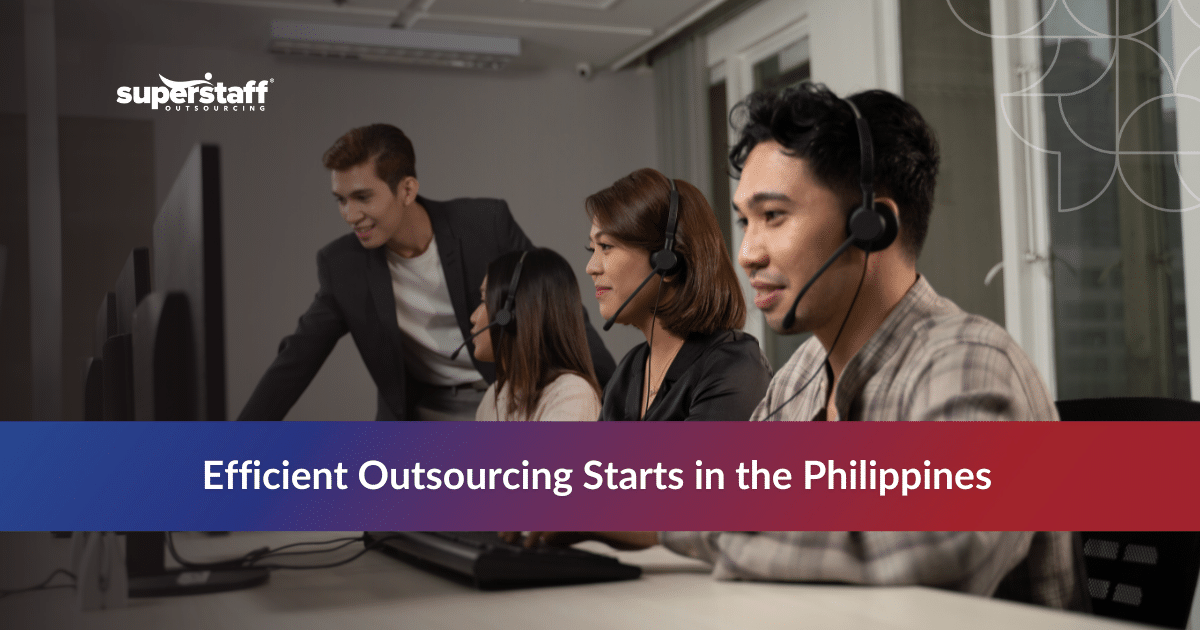
The Philippines has become an established destination for business process outsourcing (BPO). Companies across different industries work with Philippine-based teams to manage administrative tasks, customer communications, and other business processes.
Several factors make the country an attractive option for international businesses.
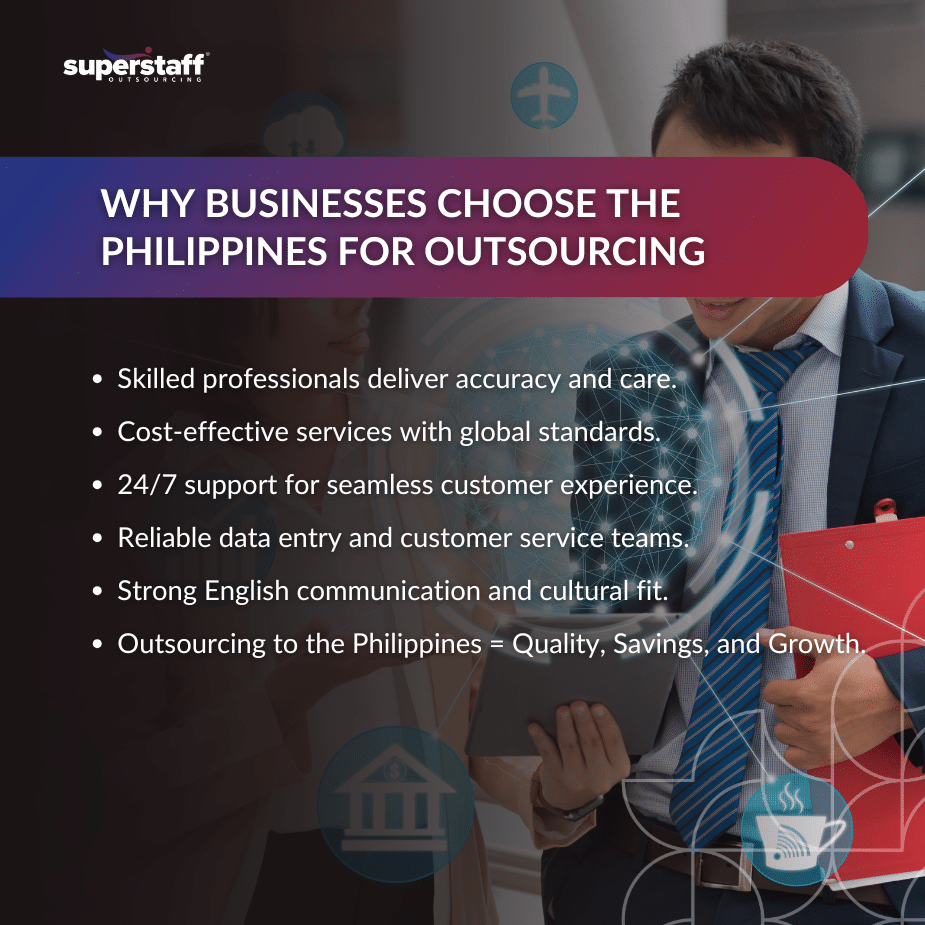
1. Access to Skilled Professionals
The Philippines has a large workforce with experience in administrative support, customer service, and technology-related tasks. Many professionals are familiar with international business processes and software platforms.
Data entry specialists can manage records, update databases, and organize information. Customer support agents can handle inquiries, resolve routine concerns, and assist customers across different communication channels.
2. Strong English Communication Skills
English is widely used in Philippine schools, workplaces, and business communications. This makes it easier for outsourcing teams to communicate with customers from the United States and other English-speaking markets.
Clear communication is particularly important in customer service, where agents must understand concerns, explain solutions, and document interactions accurately.
3. Familiarity With International Business Practices
Many Philippine BPO professionals have experience supporting overseas companies. They can be trained to follow specific communication guidelines, service standards, and company procedures.
This familiarity can make onboarding and collaboration easier, especially when businesses establish clear expectations from the beginning.
4. Competitive Operating Costs
Hiring and maintaining an internal team involves salaries, benefits, equipment, recruitment, and office expenses. Outsourcing can reduce some of these costs while giving businesses access to dedicated employees.
However, companies should evaluate total expenses, including training, management, technology, and service fees, before choosing an outsourcing arrangement.
5. Continued Workforce Development
The Philippines continues to invest in digital skills and employment opportunities. The Department of Information and Communications Technology offers a Digital Workforce Hub with career pathways, skills development resources, and training opportunities for Filipino professionals.
These initiatives support workforce development in fields relevant to administrative services, technology, and customer support.
Benefits of Outsourcing Data Entry to the Philippines
Accurate information is necessary for business decisions, customer records, financial transactions, and daily operations. However, processing large amounts of data can be repetitive and time-consuming.
Outsourcing data entry to the Philippines allows companies to assign these tasks to dedicated professionals while maintaining oversight of their information.
1. Better Data Accuracy and Organization
Data entry specialists can process customer information, update spreadsheets, organize digital files, and maintain business databases.
With documented procedures and quality checks, outsourced teams can reduce common mistakes such as duplicate entries, missing details, and inconsistent formatting.
2. Flexible Staffing for Changing Workloads
Businesses do not always have the same volume of data to process. Retailers may experience higher demand during the holidays, while healthcare organizations may need additional support during busy reporting periods.
Philippine data entry outsourcing allows companies to discuss staffing adjustments with their provider as workloads change. This can be more practical than hiring permanent employees for short-term projects.
3. Improved Data Processing Workflows
Data entry often involves collecting information from different sources, checking records, and transferring details into business systems.
Companies can improve these processes by combining trained employees with suitable software and standardized procedures. Businesses handling high volumes of information can also review how data processing outsourcing in the Philippines supports document management, database updates, and administrative operations.
4. Support Outside Regular Office Hours
The time difference between the Philippines and other markets can create opportunities for extended business operations.
For example, a U.S. company may arrange for its Philippine team to process records after its local office closes. Completed tasks can then be reviewed when the internal team returns, provided that work schedules and handoff procedures are properly coordinated.
5. More Time for Important Business Activities
Employees who spend several hours updating records may have less time for customer relationships, reporting, or strategic projects.
Delegating routine data tasks allows internal teams to concentrate on responsibilities that require specialized knowledge and direct business involvement.
Why Outsource Customer Support to the Philippines?
Customer service has a direct effect on customer satisfaction and business reputation. People expect timely answers, accurate information, and respectful communication when contacting a company.
Outsourcing customer support to the Philippines gives businesses access to agents who can manage these interactions according to established service standards.
1. Dedicated Customer Support Teams
Outsourced agents can respond to questions about products, orders, accounts, payments, and company policies.
They can also document customer concerns and escalate complex cases to the appropriate department. This allows businesses to organize customer inquiries without placing the entire workload on internal employees.
2. Extended Customer Service Availability
Customers may need assistance during evenings, weekends, or outside regular office hours.
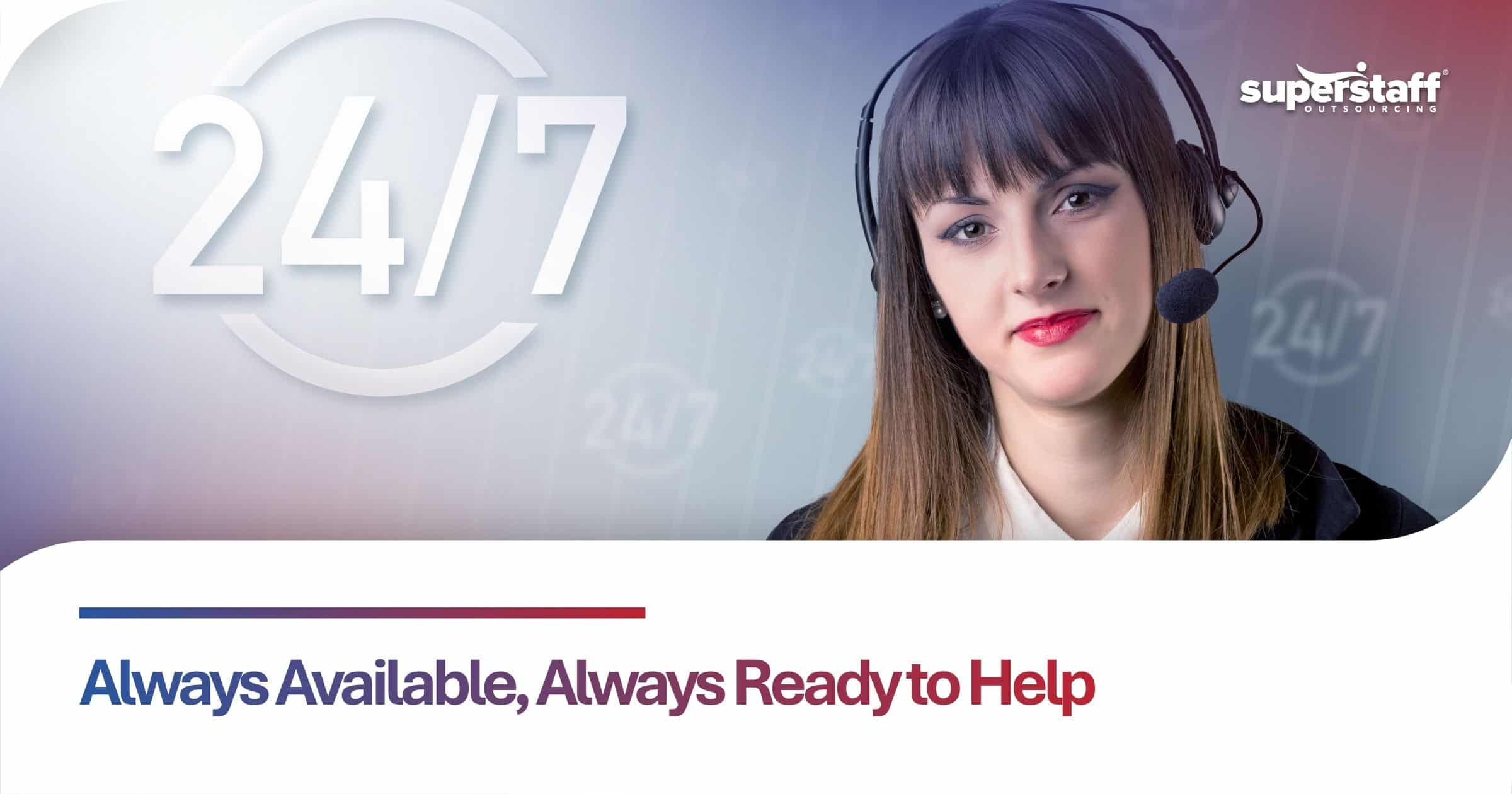
With the right staffing arrangement, Philippine customer support teams can provide extended coverage or 24/7 service. Businesses should determine the hours and channels that customers actually need before selecting a support schedule.
3. Consistent Customer Experiences
Customer service quality depends on training, product knowledge, communication, and problem resolution.
Companies can establish clear performance standards and provide regular coaching to maintain consistency. For businesses considering an offshore support model, understanding how customer service outsourcing in the Philippines is evolving can provide useful context on changing customer expectations and service delivery.
4. Support Across Different Communication Channels
Customers use different channels depending on their needs. Some prefer phone calls, while others choose email, live chat, or social media.
An outsourcing provider can assign agents to selected channels and use shared procedures to manage inquiries. This can improve coordination and reduce the risk of customer concerns being overlooked.
5. Stronger Customer Relationships
Consistent support can improve how customers experience a brand. Agents who understand company policies and customer needs are better prepared to answer questions and resolve common issues.
Regular training and performance reviews can also improve service quality as products, policies, and customer expectations change.
How Outsourcing to the Philippines Supports Business Growth
The benefits of outsourcing go beyond reducing operating expenses. When managed properly, an outsourced team can increase business capacity, improve workflow consistency, and allow internal employees to focus on other priorities.
1. More Efficient Resource Allocation
Businesses have limited budgets and staffing resources. Spending too much time on routine administrative work can delay other projects.
Outsourcing selected tasks can free up internal resources for product development, marketing, customer relationships, and business planning.
2. Improved Productivity
Data entry and customer support involve recurring responsibilities that require consistent attention.
By assigning these tasks to dedicated teams, companies can reduce interruptions and organize responsibilities more effectively. Internal employees can then concentrate on work that requires their direct involvement.
3. Faster Task Completion
Outsourcing providers can assign employees to specific workloads and establish completion targets.
However, faster turnaround depends on staffing, training, system access, and the complexity of the work. Businesses should set realistic deadlines and monitor performance against agreed expectations.
4. Greater Operational Flexibility
Business needs change throughout the year. Companies may require more customer support agents during promotional campaigns or additional data entry specialists during large projects.
Working with an outsourcing provider gives businesses options for adjusting team capacity without managing every recruitment and administrative task internally.
5. Better Coordination Between Departments
Customer service and data entry are closely connected. Support agents often collect customer information, update account details, and document service requests.
Accurate records allow employees in other departments to access relevant information when needed.
Businesses can improve this coordination by using structured data entry outsourcing services that support organized records, quality monitoring, and consistent data management.
What to Consider Before Choosing an Outsourcing Provider
Selecting an outsourcing partner requires more than comparing prices. Businesses should evaluate whether a provider can meet their operational requirements and maintain consistent service quality.
1. Industry Experience
Look for a provider with experience handling tasks similar to your business requirements. Ask about the types of projects it manages and how its employees are trained.
2. Data Security Measures
Outsourced teams may access confidential customer details, financial information, or internal business records.
Before sharing sensitive data, review the provider’s security policies, access controls, confidentiality agreements, and compliance procedures. Confirm how information is stored, processed, and protected.
3. Clear Performance Standards
Define expectations before starting the partnership. For data entry, useful measures include accuracy, processing time, and error rates.
For customer support, companies can monitor response times, resolution rates, customer satisfaction, and quality assurance results.
4. Communication and Reporting
Regular communication allows businesses to review performance, identify concerns, and make improvements.
Ask how the provider handles progress reports, team meetings, urgent issues, and changes in business requirements.
5. Ability to Support Future Growth
Choose a provider that can discuss staffing options as your business changes. A suitable partner should be able to explain recruitment timelines, training requirements, and the process for expanding or adjusting services.
Improve Data Entry and Customer Support With SuperStaff
Outsourcing to the Philippines offers businesses a practical way to manage data entry and customer support while controlling operating costs. With trained professionals, organized processes, and clear performance standards, companies can improve daily operations without overloading internal employees.
SuperStaff provides outsourcing solutions designed around different business requirements. From maintaining accurate records to handling customer inquiries, our teams can support the administrative and customer-facing tasks that keep businesses operating efficiently.
Whether you need a dedicated data entry team, additional customer service agents, or a combination of both, SuperStaff can work with you to identify the right support arrangement.
Contact SuperStaff to discuss your outsourcing requirements and find out how our Philippine-based teams can support your business.