Travelers rarely book just once. They return when they feel remembered, valued, and understood. That is where travel CRM management makes a clear difference. It helps travel companies organize customer data, track preferences, and send the right message at the right time. As a result, agencies build stronger relationships and increase repeat bookings.
Many travel brands struggle to keep past clients engaged. However, with travel CRM management, they can stay connected even after a trip ends. This approach supports long-term growth while also improving service quality. When done right, it turns one-time customers into loyal clients who book again and again.
How Travel CRM Management Builds Customer Loyalty
Travel CRM management helps agencies create consistent and personal experiences. It connects data, communication, and service into one system.
1. Personalized communication improves engagement
Travel CRM management stores customer preferences, booking history, and travel habits. Because of this, agencies can send offers that match each traveler’s interests. As a result, customers feel understood and are more likely to return.
2. Timely follow-ups keep your brand visible
After a trip, follow-up messages remind clients about your services. Travel CRM management automates these touchpoints, so no customer gets overlooked. Therefore, your agency stays top of mind when travelers plan their next trip.
3. Centralized data improves service quality
Travel customer relationship management tools collect all customer details in one place. This makes it easier for teams to respond quickly and accurately. In turn, better service leads to stronger trust and repeat bookings.
4. Segmentation helps target the right audience
Travel client management systems allow agencies to group customers based on behavior or preferences. For example, you can target frequent travelers or seasonal bookers. As a result, your campaigns become more relevant and effective.
5. Consistent communication builds trust
Customers value clear and steady communication. Travel CRM management ensures that every message follows a consistent tone and timing. Because of this, clients feel more confident booking again with the same agency.
Key Features of Travel CRM Software for Agencies
Travel CRM software for agencies includes tools that support daily operations and long-term growth. These features help improve customer experience while increasing repeat bookings.
1. Automated email campaigns
Automation allows agencies to send reminders, promotions, and updates without manual work. Travel CRM management ensures messages reach customers at the right time. As a result, engagement stays high with minimal effort.
2. Booking history tracking
Tracking past bookings helps agencies understand customer preferences. Travel client management systems use this data to suggest similar trips or upgrades. Therefore, customers feel encouraged to book again.
3. Customer profiles and insights
Detailed profiles provide valuable insights into customer behavior. Travel customer relationship management tools analyze this data to guide marketing strategies. In turn, agencies can improve their offers and messaging.
4. Integration with booking systems
Travel CRM management connects with booking platforms to streamline operations. This reduces errors and speeds up the booking process. As a result, customers enjoy a smoother experience.
5. Reporting and analytics tools
Reports help agencies measure performance and identify trends. Travel CRM management provides clear data on customer retention and booking patterns. Therefore, teams can adjust strategies to improve results.
Customer Retention Strategies for Travel Agencies that Work
Customer retention strategies for travel agencies focus on building long-term relationships. Travel CRM management supports these strategies through data and automation.
1. Reward loyal customers
Loyalty programs encourage repeat bookings by offering discounts or perks. Travel CRM management tracks customer activity and rewards frequent travelers. As a result, customers feel appreciated and stay engaged.
2. Offer personalized deals
Generic offers often fail to attract attention. However, CRM for travel companies helps create tailored promotions based on customer preferences. Therefore, customers are more likely to respond and book again.
3. Maintain regular communication
Regular updates keep customers connected to your brand. Travel CRM management schedules messages such as newsletters or travel tips. In turn, this keeps your agency relevant in the customer’s mind.
4. Gather and use customer feedback
Feedback helps improve services and address issues. Travel CRM management collects and organizes this information for easy review. Because of this, agencies can make changes that lead to better experiences.
5. Provide fast and reliable support
Quick responses build trust and satisfaction. CRM for travel companies ensures that customer inquiries are tracked and resolved efficiently. As a result, clients feel confident returning for future bookings.
Improving Repeat Bookings in the Travel Industry Through Data
Improving repeat bookings in the travel industry requires clear insights and smart decisions. Travel CRM management provides the data needed to guide these efforts.
1. Identify booking patterns
Travel CRM management tracks when and how often customers book. This helps agencies predict future behavior and plan campaigns. As a result, they can reach customers at the right time.
2. Monitor customer preferences
Understanding what customers like helps create better offers. Travel CRM management records destinations, budgets, and travel styles. Therefore, agencies can match their services to customer needs.
3. Track campaign performance
Campaign data shows what works and what does not. Travel CRM management measures open rates, clicks, and conversions. In turn, agencies can improve their marketing strategies.
4. Reduce customer churn
Churn happens when customers stop booking. Travel CRM management identifies inactive clients and triggers re-engagement campaigns. As a result, agencies can win back lost customers.
5. Improve decision-making
Data supports better planning and execution. Travel CRM management provides clear insights that guide business decisions. Therefore, agencies can focus on strategies that drive repeat bookings.
Practical ways to apply travel CRM management daily
Travel CRM management works best when used consistently. Agencies can apply it across different tasks to improve results.
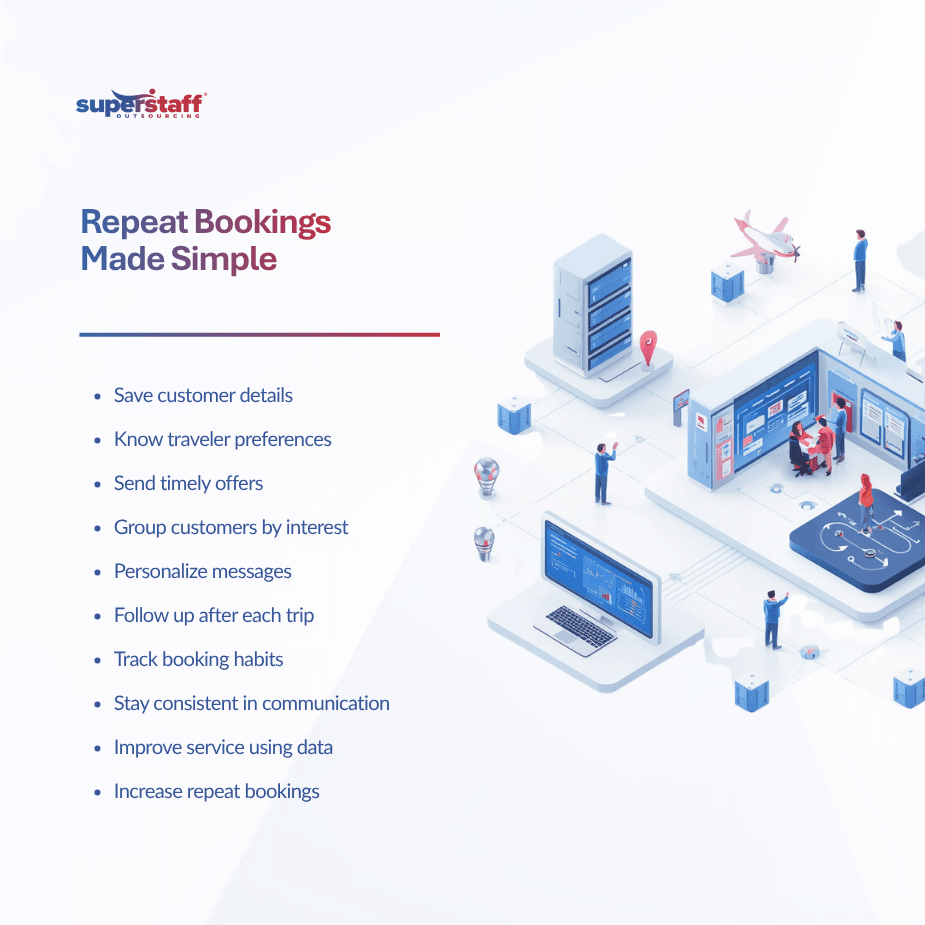
- Use CRM for traveling to schedule follow-ups after each trip
- Track customer interactions to ensure consistent communication
- Analyze booking data weekly to adjust marketing efforts
- Segment customers before launching promotions
- Review reports monthly to measure progress
These simple steps help agencies stay organized and focused. As a result, they create better experiences that lead to repeat bookings.
Simple Systems Drive Repeat Bookings Growth
Travel CRM management gives travel agencies a clear path to improving repeat bookings. It connects customer data, communication, and service into one system. As a result, agencies can deliver better experiences and build lasting relationships.
SuperStaff supports travel companies with skilled teams who understand customer engagement and data management. With the right support, your travel CRM management strategy becomes easier to handle and more effective.
Call us now to strengthen your customer retention efforts and improve repeat bookings.