A semiconductor plant does not operate on its own. It needs minerals, equipment, electricity, software, transportation, skilled workers, and business support. The same applies to artificial intelligence, advanced manufacturing, and other technology-driven industries. This is where the Pax Silica ecosystem becomes interesting for businesses.
The initiative connects several industries that support the development of secure technology supply chains. For the Philippines, the proposed industrial development in New Clark City could create opportunities across manufacturing, logistics, technology, infrastructure, and workforce services.
However, the opportunity does not belong only to companies that build chips or develop advanced technology. Businesses that provide the people, processes, transportation, systems, and services behind these industries can also have a role. Understanding these connections can help companies identify where they fit and what capabilities they may need as the ecosystem develops.
What Makes the Pax Silica Ecosystem Connected?
Pax Silica brings together industries that depend on shared resources and services. Each sector has a different role, yet their operations often overlap.
1. Semiconductors Support Technology Production
Semiconductors form an important part of modern electronics. Computers, telecommunications equipment, vehicles, industrial machines, and other products depend on semiconductor components.
Therefore, semiconductor growth can create demand beyond chip production. Companies may also need testing, equipment maintenance, quality control, inventory management, technical support, and other services.
2. Critical Minerals Provide Raw Materials
Technology manufacturing requires access to various minerals and raw materials. These resources support the production of electronic components, batteries, industrial equipment, and other technology products.
However, extracting minerals represents only one part of the process. Processing, transportation, storage, quality checks, and supply chain management can also create business opportunities. These activities are part of the wider secure technology supply chains that Pax Silica aims to strengthen.
3. Advanced Manufacturing Turns Materials Into Products
Advanced manufacturing connects raw materials with finished components and products. It can involve electronics, specialized equipment, industrial systems, and other products used across technology industries.
As a result, manufacturing growth can increase demand for workers and services across several business functions. Procurement, accounting, recruitment, technical support, and operations can all support manufacturing companies.
4. AI Creates New Business Requirements
Artificial intelligence forms another part of the broader Pax Silica discussion. Companies developing and using AI need computing infrastructure, software, data, technical workers, and operational support.
At the same time, AI companies still need traditional business functions. They need finance teams, recruiters, customer support professionals, developers, and administrative staff to run their operations.
5. Skilled Talent Connects the Industries
People provide another connection between these sectors. Engineers, developers, technicians, researchers, accountants, logistics specialists, and other professionals can support companies operating across the ecosystem.
This creates a need for workforce development and recruitment. Furthermore, companies may need flexible staffing models as they expand into new operations or markets.
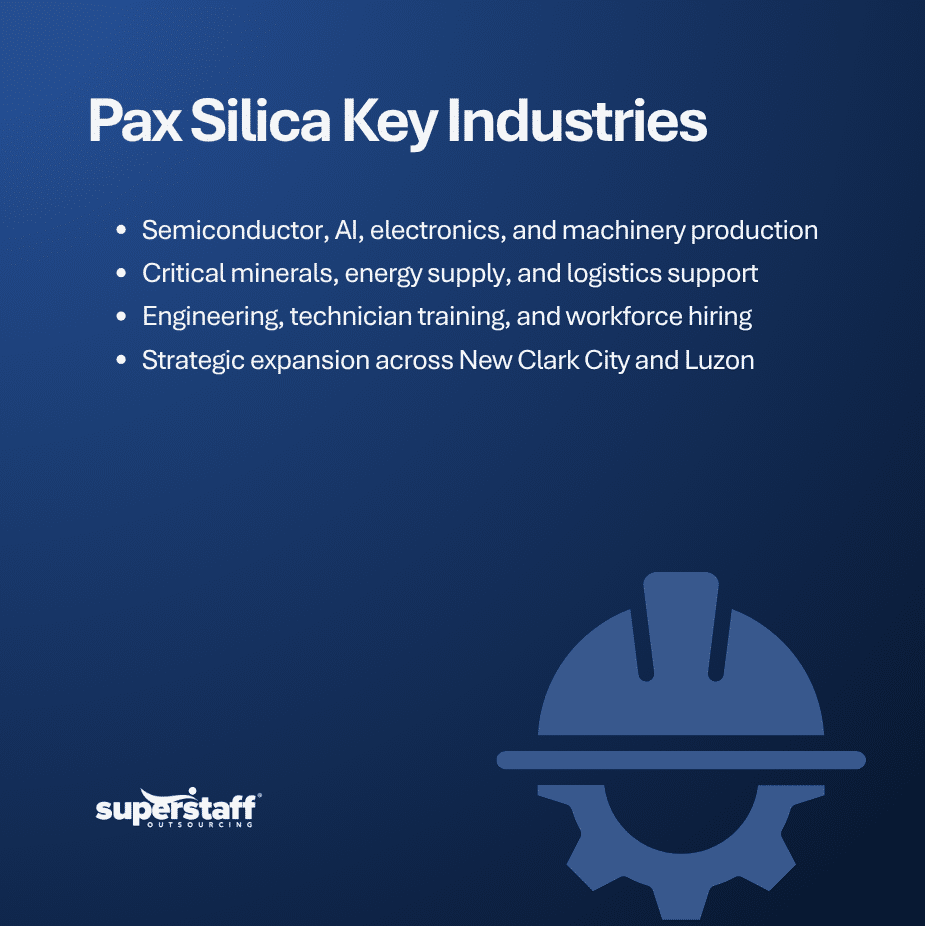
Industries That Support the Wider Network
The Pax Silica ecosystem also includes industries that may not directly manufacture technology. These sectors provide the services needed to keep companies operating.
1. Logistics Moves the Supply Chain
Technology manufacturing depends on the movement of materials, components, equipment, and finished products. Logistics companies can therefore support manufacturers from the point of sourcing to final delivery.
For example, businesses may need transportation coordination, inventory tracking, dispatch support, proof-of-delivery processing, and other logistics functions. These activities can also be supported through supply chain outsourcing in the Philippines.
2. Digital Infrastructure Keeps Operations Connected
Technology companies require reliable digital infrastructure to manage data and communicate across locations. Data centers, telecommunications networks, cloud systems, and connectivity services can support these operations.
Moreover, digital infrastructure affects more than technology companies. Manufacturers and logistics providers also depend on reliable systems to monitor operations, manage inventory, communicate with suppliers, and track shipments.
3. Energy Supports Industrial Growth
Factories and digital facilities require dependable power. Semiconductor production, manufacturing equipment, data centers, and other industrial operations can place significant demands on energy infrastructure.
Consequently, energy-related services can become part of the wider business network. Equipment maintenance, engineering, monitoring, and facility management may all support industrial operations.
4. Business Services Handle Daily Operations
A growing industrial company needs more than production workers. It also needs people to handle finance, recruitment, customer communication, data, administration, and other business functions.
This creates an opening for outsourcing. Companies can keep their core technical teams focused on production and development while external teams handle selected support functions.
5. Education Builds Industry-Ready Workers
New industries require new skills. Universities, technical schools, training providers, and private companies can help prepare workers for technology, manufacturing, logistics, and business roles.
As a result, workforce development becomes part of industrial development. Companies can also work with training providers to build skills that match specific operational requirements.
What the Connections Mean for Businesses
The growth of Pax Silica does not automatically mean every business will gain a new opportunity. However, understanding the industries involved can help companies identify where their services may fit.
1. Look Beyond Technology Companies
Businesses do not need to manufacture semiconductors or develop AI systems to participate in a growing technology supply chain. Support providers can serve companies that need help with everyday operations.
For instance, recruitment firms can help find skilled workers, while logistics providers can coordinate shipments and inventory. Similarly, outsourcing companies can support accounting, technical assistance, and administrative functions.
2. Prepare for Specialized Workforce Needs
Industrial expansion can increase demand for specialized workers. Companies may need engineers and technicians, but they can also need professionals in finance, recruitment, customer service, and supply chain operations.
Therefore, businesses should review their hiring strategies early. Building access to skilled talent can help companies respond when new opportunities emerge.
3. Strengthen Supply Chain Processes
As more companies participate in technology-related manufacturing, supply chain coordination becomes increasingly important. Delays in one area can affect other parts of the operation.
Businesses can prepare by improving inventory systems, shipment tracking, vendor coordination, and documentation. These improvements can also make outsourcing selected supply chain tasks easier.
4. Use Outsourcing Where It Makes Sense
Companies entering a new market may not want to build every support function internally. Instead, they can outsource selected tasks and maintain internal control over their core operations.
For example, a manufacturing company may outsource recruitment, accounting, technical support, or logistics administration. This approach can provide additional workforce capacity without requiring the company to create every department from the ground up.
5. Watch New Clark City
New Clark City is expected to play an important role in the Philippines’ participation in Pax Silica. The proposed development could bring together technology, manufacturing, infrastructure, logistics, and workforce opportunities in one location.
New Clark City’s potential role is connected to the Luzon Economic Corridor, which links Subic Bay, Clark, Manila, and Batangas to support infrastructure and economic development.
For businesses, this makes the area worth monitoring. Companies can assess their services, workforce capabilities, and operational processes before demand increases.
Where Businesses Can Find Opportunities
The Pax Silica ecosystem connects industries that might seem separate at first. Semiconductors need raw materials. Manufacturing needs logistics. Technology companies need digital infrastructure. Industrial facilities need energy. Meanwhile, every company needs people and business support.
This creates several possible areas for business growth:
- Recruitment and workforce support
- Technical support and software services
- Logistics coordination
- Inventory and supply chain management
- Accounting and back-office operations
- Customer service
- Administrative support
- Data and operational support
The key is to understand where a company’s capabilities fit within the larger network. Businesses can then develop services that address actual operational needs instead of focusing only on the industries at the center of the initiative.
Building Support for the Next Stage of Growth
The Pax Silica ecosystem brings together technology, manufacturing, resources, infrastructure, logistics, and talent. Each sector supports another, creating demand for both specialized and everyday business services.
For companies looking at opportunities connected to this development, preparation should start with their operations and workforce. The right support model can help businesses scale while allowing internal teams to stay focused on their core responsibilities.
SuperStaff provides recruitment, technical support, accounting, logistics support, and other outsourcing services for businesses that need additional operational capacity. Companies assessing their workforce and operational requirements can contact SuperStaff to discuss their needs.