Hiring needs can change quickly. One month, a company may need more employees to handle new customers or larger projects. A few months later, demand may slow down, leaving the business with more staff than it needs. This creates a challenge for companies that depend only on traditional hiring methods. Too many employees can increase costs, while too few can affect productivity and customer service.
To manage these changes, more organizations are looking at flexible staffing options. One approach is the elastic workforce model. It allows businesses to adjust their workforce based on current needs by combining permanent employees with outsourced teams, contractors, freelancers, and project-based professionals.
An elastic workforce gives companies more options when managing workloads, finding specialized skills, and planning for growth. Instead of making every staffing decision permanent, businesses can build teams that match their current goals and adjust as those goals change.
What Is an Elastic Workforce?
An elastic workforce is a staffing model that allows businesses to increase or reduce their workforce capacity based on operational demands. It combines different types of workers and staffing arrangements so companies can access the support they need without relying entirely on permanent hiring.
The concept is closely related to the broader extended workforce, which can include temporary workers, contractors, consultants, and external service providers. The UK government’s guide to extended workforce services explains several of these arrangements and how they differ.
Here are some common features of an elastic workforce.
1. A Flexible Staffing Structure
A flexible staffing structure allows companies to add employees or external support when workloads increase. They can also adjust staffing arrangements when projects end or business activity slows down.
This helps organizations avoid making long-term hiring decisions for every short-term need. It also gives managers more control over how they assign people and resources.
2. Different Sources of Talent
An elastic workforce can include permanent employees, outsourced professionals, freelancers, contractors, consultants, and temporary workers. Each group can support different business functions.
For example, a company may keep its management and core operations in-house while outsourcing customer service or hiring contractors for a specific technical project. This gives the business access to different skills without building every role internally.
3. Faster Access to Additional Support
Business opportunities do not always follow a predictable schedule. A company may suddenly need more customer service representatives, administrative staff, or technical professionals.
Flexible staffing arrangements can help businesses access additional support without handling every recruitment step on their own. The time required still depends on the role, qualifications, and hiring process, but working with an established partner can make staffing changes easier to manage.
4. Staffing Based on Actual Demand
Some industries experience seasonal peaks, while others deal with changing project requirements or customer volumes. A fixed workforce may not always match these changing needs.
An elastic workforce helps businesses adjust staffing based on workload, expected demand, and available resources. This makes it easier to assign people where they are needed most.
5. Support for Business Growth
Companies that want to expand may need additional employees before they are ready to establish permanent departments. A flexible workforce gives them more options as they test new markets, launch services, or take on additional clients.
Businesses can start with the support they need and review their staffing requirements as operations develop.
Why Businesses Are Moving Toward Flexible Workforce Models
Traditional employees remain important to business operations. However, relying only on permanent hiring may not be practical when demand, budgets, and project requirements change.
Several factors are encouraging companies to consider more flexible staffing arrangements.
1. Access to Specialized Skills
Some projects require knowledge that an internal team may not have. Hiring a full-time specialist for a short-term requirement may not be the best option.
Flexible staffing allows businesses to work with professionals who have the right experience for a specific task. This can include IT support, accounting, data analysis, recruitment, customer service, and other specialized functions.
2. Better Control Over Staffing Costs
Permanent hiring involves more than salaries. Businesses also need to consider recruitment, onboarding, training, equipment, benefits, and other employment expenses.
An elastic workforce gives companies additional ways to manage staffing needs. They can use external support for selected functions instead of immediately expanding every internal department.
However, flexible staffing should not be treated as a way to avoid proper employment responsibilities. Companies must understand the applicable labor laws and classify working arrangements correctly.
3. Faster Expansion
Entering a new market or taking on a large project often requires additional people. Building an internal team from the beginning can delay business plans.
Working with an outsourcing or recruitment partner can help companies find qualified professionals and establish support teams. This gives managers more time to focus on customers, operations, and business development.
4. More Options During Uncertain Periods
Changes in customer demand, economic conditions, and business priorities can affect staffing requirements. Companies need a plan that allows them to respond without making rushed decisions.
Flexible workforce arrangements give organizations more choices when adjusting capacity. They can review which tasks need permanent employees and which can be supported through external teams or project-based arrangements.
5. Access to a Wider Talent Pool
Businesses may struggle to find qualified professionals in their immediate location. Limiting recruitment to one city or region can also make it harder to fill specialized positions.
An elastic workforce allows companies to consider talent from other locations. Remote professionals and outsourcing partners can help businesses access skills that may not be readily available in their local hiring market.
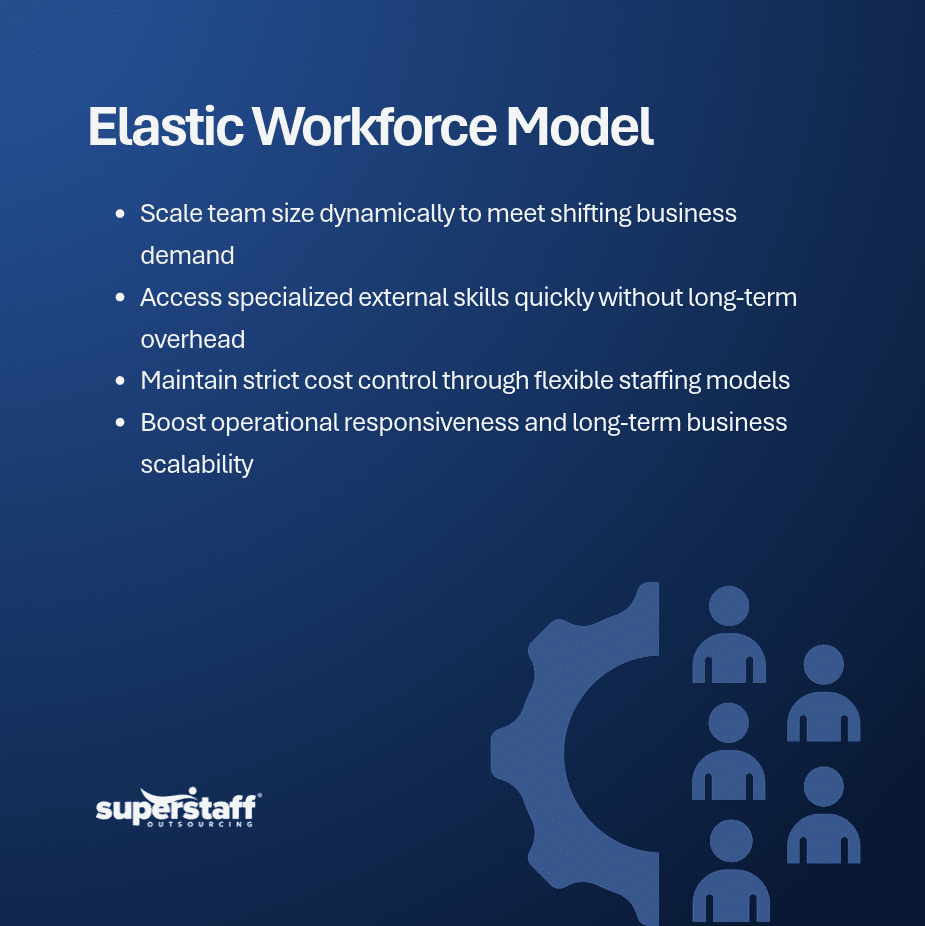
Key Benefits of an Elastic Workforce
A flexible workforce can support more than hiring needs. When managed properly, it can also improve how businesses distribute work, plan resources, and respond to operational changes.
1. Greater Operational Flexibility
Companies that can adjust staffing levels are better prepared to handle changes in workload. They can add support during busy periods and review staffing arrangements when demand decreases.
This helps businesses respond to customer needs without making major changes to their entire workforce.
2. Better Access to Qualified Professionals
Finding the right people can take time, especially for roles that require specific experience. Flexible staffing arrangements allow businesses to work with external providers that already have recruitment processes and access to potential candidates.
This can make it easier to fill staffing gaps and keep projects moving.
3. More Efficient Work Distribution
When internal employees handle too many responsibilities, important tasks may be delayed. Managers may also spend too much time addressing staffing problems instead of improving operations.
An elastic workforce gives companies the option to assign selected tasks to external teams. Internal employees can then focus on responsibilities that require company-specific knowledge and direct management attention.
4. Easier Business Scaling
Growing too quickly can put pressure on budgets, managers, and existing employees. Hiring a large permanent team before demand is established may also create unnecessary costs.
A flexible staffing model allows companies to increase workforce capacity gradually. They can review performance and adjust team size as business requirements change.
5. More Time for Core Business Activities
External professionals can support tasks such as customer service, data entry, administrative work, technical assistance, and recruitment coordination.
When these responsibilities are assigned properly, internal teams have more time to focus on planning, product development, customer relationships, and other business priorities.
How Companies Can Build an Elastic Workforce
Building a flexible workforce requires more than hiring temporary workers or signing an outsourcing agreement. Companies need a clear plan that connects staffing decisions to actual business requirements.
1. Review Current Workforce Needs
Start by looking at the current team, daily workloads, and upcoming projects. Identify areas where employees are overextended or where additional skills are needed.
This helps managers understand whether the company needs permanent employees, temporary support, or an external team.
2. Decide Which Roles Can Be Flexible
Not every position should be handled through an external arrangement. Some roles require ongoing company knowledge, direct supervision, or long-term involvement in business decisions.
Identify tasks that can be outsourced or assigned to project-based professionals. Customer support, data entry, recruitment assistance, and selected administrative functions may be suitable options.
3. Choose the Right Staffing Arrangement
Different workforce needs call for different solutions. A company that needs help hiring permanent employees may benefit from recruitment process outsourcing. Another business that needs an external team to manage daily tasks may need business process outsourcing.
For companies considering a more flexible approach to recruitment, SuperStaff’s article on fractional workforce strategy for smarter RPO growth explains how recruitment support can help businesses respond to changing hiring needs.
4. Set Clear Roles and Responsibilities
Internal and external employees should understand their duties, reporting lines, and expected results. Without clear instructions, work may be duplicated or important tasks may be missed.
Create documented procedures and establish who handles approvals, communication, and performance reviews.
5. Build Strong Communication Processes
Flexible teams may work from different locations and time zones. Businesses should use reliable communication tools and schedule regular updates to keep everyone aligned.
Managers should also make sure external team members understand company policies, customer expectations, and service standards.
6. Review Staffing Requirements Regularly
Workforce needs can change as a business grows. Review workloads, performance, costs, and upcoming projects to determine whether the current arrangement still works.
Regular reviews help companies make adjustments before staffing problems affect service quality or productivity.
How Outsourcing Helps Companies Scale Their Workforce
Outsourcing is one way to build an elastic workforce. Instead of recruiting every employee internally, businesses can work with an established provider that helps source, train, and manage professionals for selected business functions.
For example, a company experiencing higher customer inquiry volumes may need additional support representatives. Another may need more back-office employees to manage data entry, reporting, or administrative tasks.
Working with an outsourcing provider can help businesses add capacity without handling every part of recruitment and team setup themselves. Companies exploring this option can read about scaling operations quickly with an outsourced staffing team to understand how external staffing support can help manage growing workloads.
The right arrangement depends on the tasks involved, the level of management required, and the company’s long-term plans. Businesses should also review service agreements, data security, labor requirements, and performance expectations before choosing a provider.
Choosing the Right Partner for a Flexible Workforce
A workforce partner should understand the company’s operations, staffing requirements, and business goals. Choosing a provider based only on cost may lead to problems with talent quality, communication, or service delivery.
Before entering an agreement, consider these factors:
- Relevant experience: Look for a provider with experience supporting the roles and functions your business needs.
- Recruitment and training: Ask how candidates are screened, selected, and prepared for their responsibilities.
- Scalability: Check whether the provider can support changes in team size as workloads increase or decrease.
- Communication: Make sure there are clear reporting procedures and regular updates.
- Performance standards: Agree on measurable goals, service expectations, and quality checks.
- Data protection: Review how the provider handles confidential business and customer information.
For companies that need help sourcing and onboarding employees, SuperStaff’s Recruitment Process Outsourcing services can support hiring needs across different roles and business requirements.
Build a Workforce That Can Adapt to Change
Business demands rarely stay the same. Companies may need additional support during busy periods, access to specialized skills for new projects, or a more efficient way to manage daily operations. An elastic workforce gives organizations more options when responding to these changes.
The key is to build a staffing plan that balances permanent employees with the right external support. Businesses should understand which roles need long-term internal ownership and which tasks can be handled through outsourcing or other flexible arrangements.
SuperStaff helps companies build teams for customer service, back-office operations, technical support, recruitment, and other business functions. If you’re looking for a flexible way to manage staffing needs and support business growth, contact SuperStaff to discuss an arrangement that fits your goals.