
Many executives hear the term nearshore in meetings, vendor presentations, and strategy discussions. Yet when asked to explain it clearly, many struggle to define nearshore in practical business terms.
The concept often sounds theoretical and interchangeable with offshore or remote work. That confusion makes decision-making harder for leaders evaluating global talent strategies.
The idea only becomes clear when tied to a real operating environment. Colombia provides that clarity. Its geography, time zone alignment, culture, and workforce conditions make nearshore easy to understand in day-to-day operations.
By looking at how Colombian teams work with U.S. companies, leaders can see exactly how nearshore functions in practice rather than in theory.

Why Nearshore Often Feels Abstract
Leaders confuse offshore, remote work, and nearshore into one idea. The differences blur when the conversation stays at a conceptual level. Geography, time zones, and operational visibility rarely get discussed together.
Colombia removes this confusion. It gives a concrete reference point to define nearshore through real business conditions. Instead of debating terminology, leaders can look at how Colombian teams operate alongside U.S. teams and immediately understand the structure.
Geography Makes It Simple
The easiest way to define nearshore starts with geography. Colombia sits in the same hemisphere as the United States. Direct flights connect major cities within hours.
Executives can visit teams without long travel plans. This proximity changes how leaders view outsourced operations. Travel becomes a routine leadership activity instead of a logistical project that requires weeks of planning.
Time Zone Alignment Makes It Practical
Geography alone does not complete the nearshore outsourcing definition. Time zone alignment turns proximity into daily collaboration. Colombia operates in U.S. time zones for most of the year.
Teams work simultaneously with U.S. counterparts. Decisions happen in real time without delays. Managers can conduct live coaching sessions, daily huddles, and performance reviews without scheduling across opposite time zones.
Cultural Familiarity Simplifies Management
Many leaders ask “what is the nearshore outsourcing model beyond location?” Culture answers that question. Colombian professionals operate within Western business norms.
Communication feels familiar to U.S. customers. Management interactions require less adjustment. Training programs transfer easily because expectations around professionalism, tone, and service standards already align.
Language Capability Supports Customer Experience
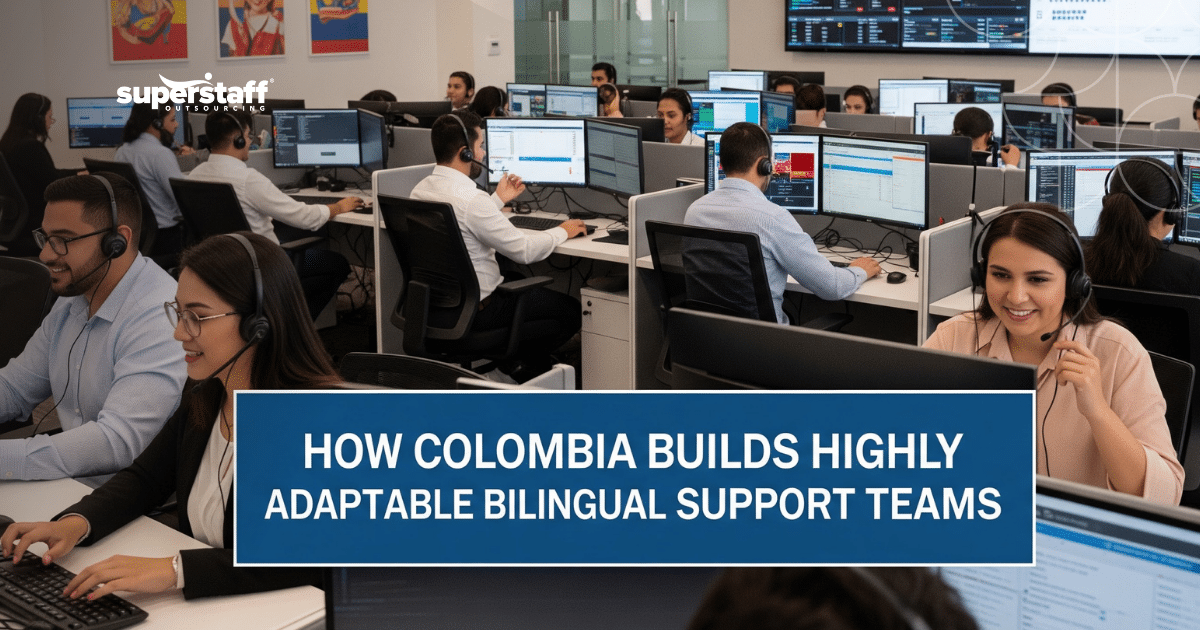
English proficiency strengthens the nearshore outsourcing definition. Colombia has a large bilingual workforce trained for customer-facing roles.
This makes customer service, back office, and support functions easier to integrate with U.S. operations. Customers often do not realize they are speaking with an international team because communication feels natural.
Infrastructure Supports Scalability
A business cannot define nearshore without discussing infrastructure. Colombia’s BPO hubs have reliable telecom, modern offices, and redundancy systems.
Operations scale without sacrificing service quality or connectivity. Urban centers such as Medellín and Bogotá have become known for technology parks and business districts designed for outsourcing operations.
Cost Explains Nearshore vs Offshore Outsourcing
Cost plays a role in understanding nearshore vs offshore outsourcing. Offshore locations often offer lower wages but require heavier management oversight.
Nearshore locations like Colombia balance cost savings with operational control. Companies spend less time managing communication gaps and more time improving performance.
Visibility Improves Governance
Leaders who define nearshore often mention visibility. Site visits are easier. Leadership teams can meet face to face when needed.
This accessibility improves governance and quality assurance. Leaders feel more confident when they can step into the operation and observe performance firsthand.
What Is Nearshore Outsourcing Model in Practice
Blended teams show what is nearshore outsourcing model in action. U.S. teams and Colombian teams work on shared systems daily.
Communication flows naturally. Collaboration becomes routine instead of scheduled. The nearshore setup allows companies to maintain strong oversight while benefiting from cost efficiency.
Operational Responsiveness Improves Performance
Real-time alignment creates operational responsiveness that many offshore models struggle to achieve. Issues are escalated and resolved within the same business day.
Supervisors can coordinate directly with U.S. managers during live shifts. This ability to act quickly helps companies maintain service level agreements and customer satisfaction targets.
Leadership Accessibility Changes Outsourcing Perception
When leaders can visit teams easily, outsourcing feels less distant. Colombia allows executives to see operations without long-haul travel or significant time zone adjustments.
This access changes internal perception. Outsourced teams feel like an extension of the company rather than a separate entity.
Training and Quality Programs Transfer Smoothly
Training frameworks designed in the U.S. transfer smoothly to Colombian teams. Time overlap allows trainers to conduct live sessions and monitor performance closely.
Quality assurance processes mirror those used in-house. This consistency reinforces why many companies use Colombia to define nearshore in practical terms.
Risk Management and Business Continuity Advantages
Business continuity planning becomes easier when operations are nearshore. Weather patterns, infrastructure stability, and regional accessibility reduce operational risks.
Colombian cities used for outsourcing have established contingency systems. Power redundancy, multiple internet providers, and secure office facilities protect ongoing operations.
Leaders gain peace of mind knowing support teams can maintain service during unexpected events. This operational resilience is another reason companies point to Colombia when they define nearshore for stakeholders.
Technology Integration Feels Seamless
Shared platforms and cloud systems allow Colombian teams to integrate directly into U.S. workflows. There is no need for complex scheduling to manage system access or collaboration.
IT teams can provide live support during the same business hours. Software rollouts, updates, and training sessions happen without delay.
This alignment helps technical leaders understand how to define nearshore in the context of modern digital operations.
Workforce Stability Supports Long Term Partnerships
Colombia has invested heavily in education, language training, and professional development for outsourcing careers. This creates a stable talent pool for long-term partnerships.
Companies benefit from lower turnover and consistent skill development. Teams grow with the client instead of constantly restarting training cycles.
This workforce maturity adds another layer of clarity when leaders define nearshore as a sustainable model rather than a short-term cost decision.
Colombia Makes Nearshore Easy to Understand
Colombia offers the simplest way to define nearshore through real operational conditions. Geography, time zone alignment, cultural compatibility, infrastructure, and workforce readiness work together to create clarity.
Leaders no longer have to explain nearshore in abstract terms when they can point to how Colombian teams operate daily alongside U.S. teams. This clarity makes decision-making easier for organizations exploring outsourcing options.
SuperStaff’s Colombia teams help U.S. companies apply this nearshore model in practical, measurable ways. Explore how SuperStaff can help you build a nearshore team that aligns with your operations and delivers consistent performance.