

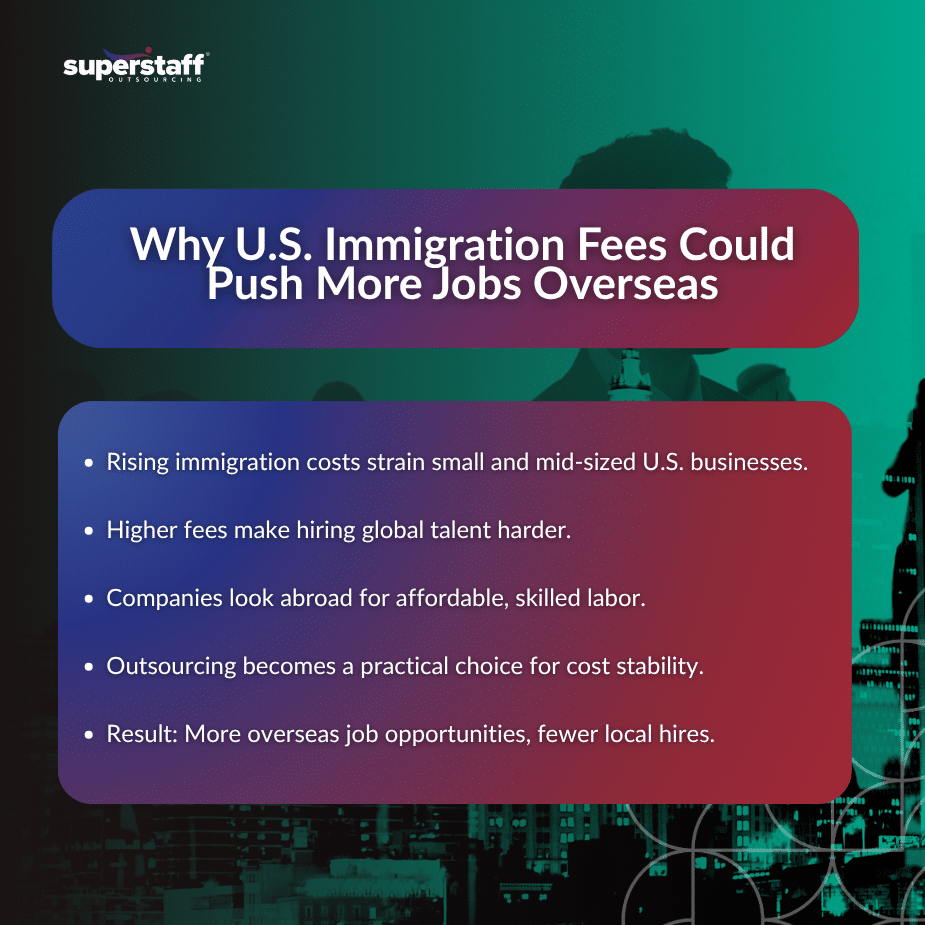
Rising U.S. immigration fees are changing how companies manage their workforce. Many businesses depend on skilled foreign workers to fill essential roles, but higher visa costs are making this option less practical. As a result, more employers are turning to outsourcing jobs overseas to access the talent they need while controlling expenses.
This change reflects a growing need for flexible, cost-efficient labor strategies. Rather than struggling with expensive and uncertain visa processes, companies are choosing to work with global teams. The question now is how this shift will affect long-term business strategies and what it means for American companies competing in a global market.
The Growing Costs of Immigration for U.S. Employers
In recent years, the U.S. has raised visa processing fees across several categories, including the H-1B and L-1 visas that many businesses rely on to hire skilled workers.
-
Rising Visa Fees
Higher skilled worker visa fees can cost thousands of dollars per employee. For small and medium-sized businesses, this creates financial pressure that limits hiring flexibility.
-
Administrative Burden
Employers also face longer processing times and more complex documentation. These delays disrupt recruitment schedules and slow down project timelines.
-
Industries Most Impacted
Sectors such as technology, healthcare, and finance depend heavily on international talent. The new costs make it difficult for them to maintain the same workforce quality without adjusting their strategies.
-
Shift in Hiring Priorities
Instead of absorbing the new costs, companies are reallocating their budgets toward outsourcing jobs overseas. This option allows them to access skilled professionals without managing visa-related challenges.
-
Broader Impact on Global Hiring
The impact of increased U.S. immigration costs on global talent sourcing is significant. Companies are expanding operations abroad, creating a shift in where skilled jobs are located and how they are managed.
Why Companies Choose to Outsource Jobs Overseas
The rising expenses tied to U.S. immigration have encouraged many organizations to rethink their workforce strategies. Outsourcing jobs overseas is becoming a practical and sustainable solution for maintaining productivity while lowering operational costs.
- Cost Efficiency – Outsourcing helps reduce labor expenses and removes the need for visa sponsorship and relocation. Businesses can allocate savings toward growth or technology improvements instead of administrative fees.
- Access to Global Talent – Through global talent sourcing, companies can connect with highly skilled professionals across multiple countries. This ensures that important projects continue without interruption.
- Faster Hiring Process – Outsourcing providers already have established teams ready to start work. This shortens the time it takes to fill roles compared to waiting for visa approvals.
- Scalable Operations – Businesses can increase or reduce team sizes easily depending on seasonal demand or workload changes. This flexibility is especially valuable for industries with fluctuating customer needs.
- Consistent Productivity – Outsourcing jobs overseas helps maintain stability in operations even when domestic recruitment faces challenges.
Balancing Cost Savings and Quality Through Outsourcing
Many businesses associate outsourcing with cost reduction, but it also offers consistent performance and quality when managed properly.
-
Access to Skilled Workers
Outsourcing providers often employ professionals trained in international standards and familiar with industry-specific tools. This ensures that work quality remains high.
-
Technology and Process Integration
Companies benefit from updated technology systems managed by outsourcing partners, improving workflow visibility and accuracy.
-
24/7 Operations
Working across time zones allows companies to provide continuous service and meet deadlines faster. This arrangement is especially effective in customer service and technical support.
-
Focus on Core Operations
By assigning repetitive or specialized tasks to offshore teams, companies can direct their energy toward strategy, innovation, and market growth.
-
Simplified Compliance
Outsourcing jobs overseas helps reduce the administrative work related to visas, taxes, and employment regulations. The outsourcing partner manages these aspects locally.
Industries Turning to Offshore Strategies
The rise in immigration fees has led several industries to adopt offshore workforce models to sustain growth and competitiveness.
-
Technology and Software Development
Many U.S. tech companies now rely on offshore programmers and IT specialists to handle ongoing development work without visa restrictions.
-
Healthcare and Support Services
Hospitals and clinics use outsourcing for telehealth support, billing, and patient coordination. These roles require precision and speed, which global teams can deliver efficiently.
-
Financial Services and Accounting
Outsourced accounting and finance professionals help maintain compliance while reducing administrative overhead costs.
-
Customer Service
Telecom companies, retailers, and logistics providers work with overseas contact centers to ensure uninterrupted service and faster response times.
-
E-commerce and Retail Operations
Tasks such as order management, digital marketing, and logistics coordination are often handled through offshore teams to meet growing online demands.
Key Factors for Successful Outsourcing
While outsourcing jobs overseas offers many advantages, companies need to plan carefully to ensure strong results.
-
Choosing Reliable Partners
Businesses should work with outsourcing providers that have proven experience in their industry and clear performance standards.
-
Strong Communication
Regular updates, structured meetings, and transparent processes help both teams stay aligned and efficient.
-
Protecting Data
Data privacy is a top priority. Companies must confirm that their outsourcing partners follow international compliance and data protection rules.
-
Training and Onboarding
Continuous training helps offshore teams stay consistent with company values and performance expectations.
-
Performance Monitoring
Tracking progress through measurable results such as project completion times and customer satisfaction ensures accountability.
The Future of Global Workforce Planning
The rise in visa fees and related immigration costs is reshaping workforce management across the U.S. Many businesses now see outsourcing jobs overseas as more than a temporary fix. It is becoming a core strategy for maintaining access to global talent while minimizing cost risks.
Companies that adapt early will likely gain an advantage. By using global talent sourcing and efficient outsourcing models, they can continue meeting customer demands without facing hiring delays or financial strain.
This approach creates a more balanced, scalable, and sustainable workforce that can adjust to policy changes and market shifts.
Expanding Workforce Horizons Through SuperStaff
As U.S. companies adjust to higher immigration costs, outsourcing becomes a strong alternative for sustainable growth. Through outsourcing jobs overseas, businesses can maintain productivity, control costs, and access a skilled international workforce.
SuperStaff supports this transition by helping companies establish reliable offshore teams tailored to their goals. With a focus on efficiency, performance, and global collaboration, SuperStaff connects businesses with the right professionals in key industries.
Partnering with SuperStaff ensures that companies remain competitive, flexible, and ready to meet future challenges—without being limited by visa costs or hiring barriers.