
Inventory visibility sits at the center of modern supply chain performance. Companies today rely on accurate data, efficient stock movement, and coordinated logistics systems to meet customer expectations. Yet managing these tasks internally often stretches operations teams thin.
This is where inventory management support becomes a strategic advantage. By outsourcing inventory monitoring, reporting, and coordination tasks, businesses can improve operational control while freeing internal teams to focus on growth, planning, and customer delivery.
Why Inventory Complexity Is Increasing for Modern Businesses
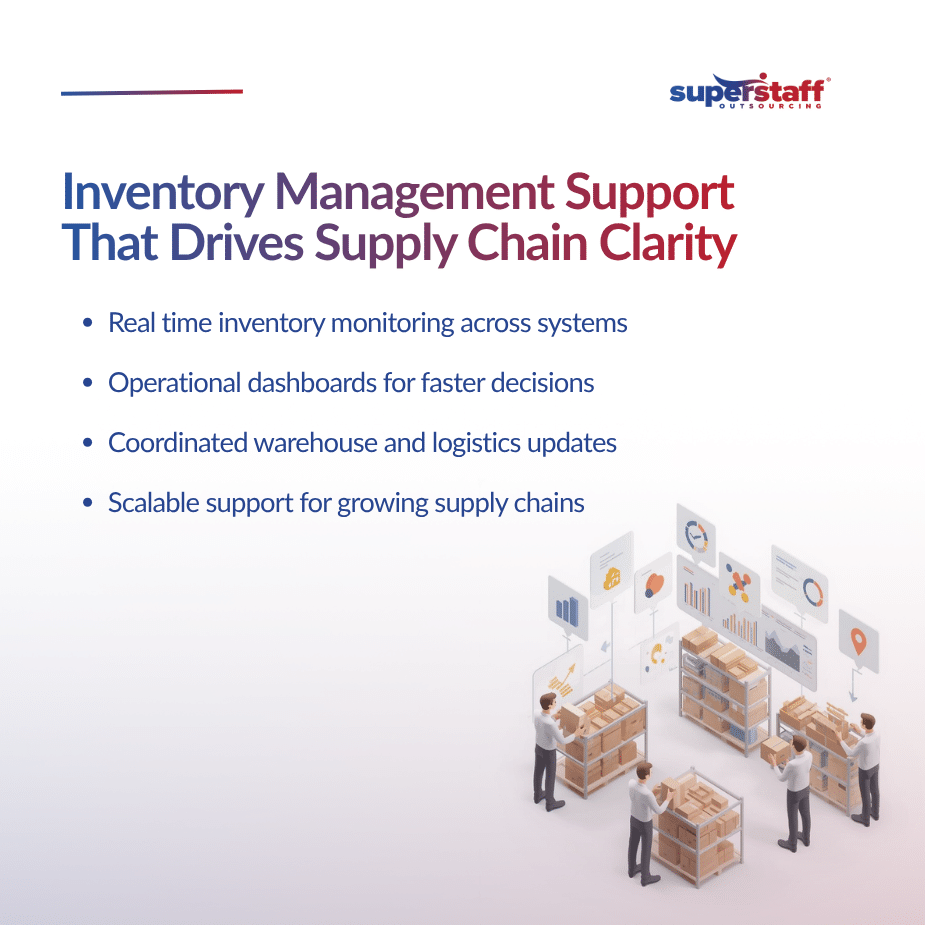
Inventory operations have grown more complex as companies expand their sales channels and fulfillment networks. Businesses now manage warehouse stock, online orders, retail inventory, and supplier shipments simultaneously.
Operational teams must track stock levels across multiple systems while responding to demand fluctuations and supplier delays. Without proper oversight, inventory inaccuracies quickly create operational bottlenecks.
Common operational challenges include:
- Limited real-time inventory visibility
- Disconnected warehouse and digital systems
- Delayed reporting that affects purchasing decisions
- Increased coordination between logistics partners
Many companies address these challenges through inventory management support, which provides operational monitoring, data coordination, and reporting oversight across inventory systems.
This approach allows leadership teams to maintain operational visibility without expanding internal staffing.
The Operational Risks of Poor Inventory Oversight
Inventory errors rarely stay isolated. They ripple across procurement, fulfillment, finance, and customer experience.
When inventory data is inaccurate, organizations may experience:
- Overstock that ties up capital
- Stockouts that delay orders
- Incorrect purchasing forecasts
- Inefficient warehouse workflows
These issues often occur when internal teams manage inventory alongside multiple responsibilities. As operational workloads increase, data accuracy declines.
Adding dedicated inventory management support allows organizations to monitor stock activity continuously while maintaining reliable inventory records.
Operational leaders benefit from consistent reporting and stronger oversight across the supply chain.
What Outsourced Inventory Management Support Actually Includes
Many executives assume inventory outsourcing means handing over warehouse operations. In reality, outsourced teams typically handle the administrative and analytical functions that support physical inventory movement.
These services may include:
- Monitoring stock levels across platforms
- Maintaining accurate inventory records
- Coordinating purchase order updates
- Reconciling warehouse and system data
- Preparing inventory reports for leadership teams
This type of inventory management support focuses on visibility and coordination rather than warehouse labor.
Companies gain operational clarity while warehouse staff focus on fulfillment, shipping, and receiving activities.
Turning Raw Inventory Data Into Business Intelligence
Inventory systems produce large volumes of operational data. Yet many organizations struggle to convert this information into meaningful decisions.
Leadership teams need clear dashboards that show:
- Current stock levels
- Reorder thresholds
- Product movement trends
- Supplier lead times
- Fulfillment performance
Outsourced inventory specialists help organize and interpret this information. Through structured inventory management support, businesses receive clean reporting that improves decision making.
Executives can then shift from reactive inventory management to proactive planning.
This transformation moves inventory oversight from warehouse spreadsheets to executive dashboards.
Improving Coordination Between Warehouses and Logistics
Inventory management rarely operates in isolation. It connects closely with transportation, procurement, and distribution.
Without strong coordination, supply chain teams face delays in product movement and fulfillment scheduling.
Outsourced teams strengthen these operational links by supporting:
- Shipment tracking updates
- Warehouse receiving records
- Order allocation monitoring
- Inventory reconciliation between systems
These responsibilities complement broader logistics support services, ensuring that inventory records reflect real movement across the supply chain.
Accurate coordination allows supply chain managers to make timely operational decisions.
How Outsourcing Strengthens Supply Chain Efficiency
Operational efficiency improves when inventory tasks receive consistent attention. Many companies underestimate the time required to maintain accurate inventory systems.
Inventory reconciliation, supplier updates, and reporting demand daily oversight.
Outsourced inventory management support ensures these responsibilities remain consistent without increasing internal staffing pressure.
Organizations benefit from:
- Structured inventory monitoring
- Improved stock accuracy
- Faster reporting cycles
- Better purchasing coordination
This contributes directly to improving supply chain efficiency with inventory outsourcing, especially for businesses managing multiple fulfillment channels.
Supply chain leaders gain operational confidence when inventory data remains reliable.
Supporting Procurement and Demand Planning
Inventory visibility directly influences procurement strategy. If stock data is inaccurate, purchasing decisions become reactive rather than strategic.
Procurement teams rely on accurate information to determine:
- Reorder timing
- Supplier order quantities
- Seasonal demand adjustments
- Safety stock thresholds
Dedicated inventory management support helps maintain these data points through consistent monitoring and reporting.
Procurement leaders can then plan purchases based on reliable information instead of guesswork.
This alignment strengthens overall supply chain support across departments.
Reducing Operational Pressure on Internal Teams
Many companies assign inventory monitoring responsibilities to operations managers, warehouse supervisors, or finance teams.
These employees already manage large workloads. Inventory reporting becomes one more task competing for attention.
As businesses grow, the administrative side of inventory management expands significantly.
Outsourced inventory management support helps relieve this operational pressure by handling routine oversight tasks.
Internal teams remain focused on operational execution while outsourced specialists maintain inventory accuracy behind the scenes.
This structure improves workflow efficiency without increasing internal headcount.
Supporting Multi Channel and E Commerce Growth
Retail and e-commerce businesses face unique inventory challenges. Products move across online platforms, distribution centers, and retail locations simultaneously.
Inventory visibility must remain synchronized across these channels.
Outsourced teams provide structured inventory management support by maintaining consistent stock updates across platforms such as:
- E-commerce storefronts
- Warehouse management systems
- Enterprise resource planning platforms
- Supplier ordering systems
This coordination prevents inventory discrepancies that disrupt online sales and fulfillment operations.
Companies expanding their digital sales channels often rely on outsourced teams to maintain operational accuracy.
Building a Data Driven Supply Chain Strategy
Supply chain leaders increasingly rely on data to guide operational planning. Inventory performance indicators play a central role in this strategy.
Executives monitor metrics such as:
- Inventory turnover
- Order fulfillment speed
- Stockout frequency
- Carrying costs
Reliable reporting depends on strong operational oversight. This is where inventory management support becomes essential.
Outsourced specialists ensure that inventory data remains clean, organized, and consistently updated.
Leadership teams can then build long term strategies based on accurate operational insights.
This shift allows companies to move from manual inventory monitoring toward data driven supply chain management.
Why Many U.S. Businesses Choose the Philippines for Inventory Support
Companies seeking operational support often look to the Philippines for outsourcing services.
The country has built a strong reputation for business process outsourcing across multiple operational functions.
Organizations benefit from:
- A highly educated workforce
- Strong English proficiency
- Experience supporting global operations
- Familiarity with supply chain tools and reporting systems
Philippine outsourcing providers offer scalable inventory management support that integrates with existing business processes.
U.S. companies can maintain operational oversight while benefiting from dedicated administrative support teams.
This structure allows organizations to expand operational capacity without increasing internal costs.
A Smarter Path From Warehouse to Dashboard
Inventory operations should support strategic decision making rather than overwhelm internal teams. Businesses that rely solely on internal oversight often struggle to maintain accurate inventory data while managing growing operational demands.
Outsourcing inventory management support allows organizations to strengthen supply chain visibility, improve reporting accuracy, and maintain operational consistency. When inventory data flows smoothly from warehouse systems to leadership dashboards, executives gain the clarity needed to guide procurement, logistics, and fulfillment strategies.
SuperStaff helps companies build dedicated operational teams that support inventory monitoring, reporting, and coordination across supply chains. If your organization is exploring ways to improve supply chain visibility while reducing internal workload, consider how outsourced inventory management support can help strengthen your operations.
Explore SuperStaff’s outsourcing solutions to learn how dedicated support teams can improve inventory oversight and supply chain performance.