

Costs often look simple at first glance. Yet many leaders later realize the bill has layers. Confusion usually starts when services are bundled without clear scope. That is why understanding managed services pricing early can prevent surprises and help teams plan smarter.
Budget clarity matters when outsourcing operations. Decision-makers want to know exactly what they are paying for. Transparency builds trust and improves vendor relationships. A detailed view of managed services pricing helps companies avoid hidden charges and align expectations from day one.
Below is a clear breakdown of what is typically included and what often comes as an extra.
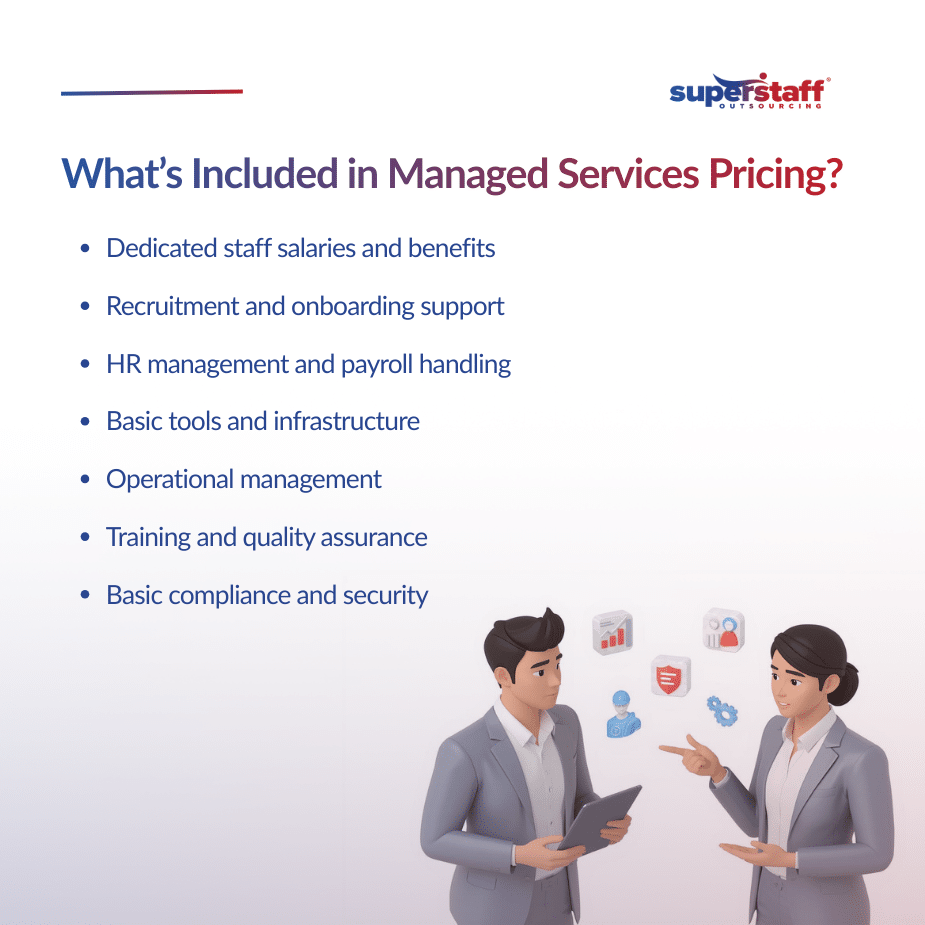
Core Inclusions in Managed Services Pricing
Most providers bundle essential services into their managed services pricing structure. These are the baseline deliverables that support daily operations.
1. Talent and Staffing Costs
Human resources usually form the largest portion of managed services pricing.
Included items:
- Salaries and benefits of dedicated staff
- Recruitment and onboarding
- Background checks and compliance documentation
- HR administration and payroll management
Providers manage hiring and retention. That reduces the burden on internal teams and improves continuity.
2. Basic Infrastructure and Tools
Many managed services pricing packages already include foundational tools.
Common inclusions:
- Workstations or virtual desktops
- Core software licenses
- Productivity tools and communication platforms
- Internet and office utilities
Some providers also include secure cloud environments. However, advanced tools may fall under premium tiers.
3. Operational Management
Oversight ensures performance stays consistent. That is why operational supervision is a standard part of managed services pricing.
Typical coverage:
- Team leaders or supervisors
- Performance monitoring
- Workflow optimization
- Daily reporting
These layers help maintain service quality without adding internal management overhead.
4. Quality Assurance and Training
Strong delivery relies on continuous improvement. For that reason, most managed services pricing models include quality and training support.
Standard inclusions:
- Initial onboarding training
- Quality audits and evaluations
- Refresher training sessions
- Knowledge base updates
This ensures service consistency across long-term engagements.
5. Basic Compliance and Security
Security is non-negotiable in outsourced operations. As a result, basic protections are usually embedded in managed services pricing.
Examples include:
- Standard data protection policies
- Access controls
- Secure network protocols
- Compliance with local labor laws
Industries with strict regulations may require additional layers.
What Often Costs Extra in Managed Services Pricing
While base packages cover essentials, add-ons can increase total investment. Knowing these early helps avoid cost overruns.
1. Advanced Technology Integrations
Some businesses need complex systems. These upgrades usually sit outside base managed services pricing.
Extra costs may include:
- CRM or ERP integrations
- Custom dashboards
- API development
- Automation tools
Integration work often involves technical specialists. That raises project costs but delivers higher efficiency.
2. Specialized Talent Roles
Not every role fits standard pricing tiers. Specialized expertise may increase managed services pricing depending on skill demand.
Examples:
- Data analysts
- AI trainers or annotators
- Compliance specialists
- Multilingual agents
Higher skills often mean higher pay rates. Still, these roles can unlock new business capabilities.
3. Extended Support Coverage
Round-the-clock operations require additional staffing layers. Therefore, 24/7 support can raise managed services pricing.
Possible add-ons:
- Night shift differentials
- Weekend staffing
- Holiday coverage
- Overflow teams during peak seasons
Businesses that scale fast often invest in these options.
4. Custom Reporting and Analytics
Basic reports are usually included. Advanced insights often come as premium services within managed services pricing.
Paid upgrades may involve:
- Predictive analytics
- Deep performance dashboards
- Industry benchmarking
- Executive-level reporting
These insights support strategic decision-making but require specialized tools.
5. Enhanced Compliance and Certifications
Regulated industries demand stronger safeguards. Extra compliance layers can increase managed services pricing significantly.
Add-on compliance examples:
- HIPAA-ready environments
- PCI-DSS standards
- ISO-certified processes
- Legal and audit documentation
Healthcare, finance, and legal sectors commonly request these upgrades.
Factors That Influence Managed Services Pricing
Several variables shape final costs. Understanding them helps businesses compare providers fairly.
Scope of Work
Larger scopes increase managed services pricing. Multi-function teams naturally cost more than single-role setups.
Team Size and Structure
More agents mean higher monthly rates. However, economies of scale sometimes reduce per-seat costs.
Geographic Delivery Model
Location affects managed services pricing. Offshore teams often cost less than nearshore or onshore alternatives.
Service Level Agreements
Stricter SLAs raise pricing. Faster response times require stronger staffing and monitoring.
Customization Needs
Tailored workflows require additional planning. That can influence managed services pricing during setup and scaling phases.
Tips for Evaluating Managed Services Pricing
Clarity starts with the right questions. Smart buyers review pricing models carefully before signing agreements.
Use this checklist:
- Ask for a detailed pricing breakdown
- Identify what is bundled and what is optional
- Confirm onboarding and transition costs
- Review escalation and support fees
- Understand renewal and scaling terms
These steps prevent misunderstandings later.
Why Transparency Matters in Managed Services Pricing
Hidden fees weaken partnerships. On the other hand, transparent managed services pricing builds long-term collaboration.
Clear pricing helps with:
- Budget planning
- ROI measurement
- Stakeholder confidence
- Vendor accountability
Companies that understand cost structures make faster decisions and scale more smoothly.
Choosing the Right Managed Services Partner
Pricing alone should not drive decisions. Value matters just as much as cost. The best providers explain managed services pricing clearly and align services with business goals.
Look for partners that:
- Offer transparent breakdowns
- Provide flexible scaling models
- Maintain strong quality standards
- Support long-term growth
Balanced pricing ensures sustainability for both sides.
Final Thoughts: Make Managed Services Pricing Work for You
Smart outsourcing starts with clarity. A detailed understanding of managed services pricing helps businesses avoid surprises and control costs. Knowing what is included and what comes as an extra creates stronger partnerships and better outcomes.
If you are exploring outsourcing options, SuperStaff can help you navigate managed services pricing with full transparency. Our team provides clear cost structures, scalable solutions, and tailored support designed for growing businesses. Reach out to SuperStaff today and discover how the right managed services pricing model can support your next stage of growth.