
Expansion decisions now require speed, flexibility, and cost control. Many U.S. companies are revisiting how they build global teams while staying aligned with their customers.
A nearshore strategy offers a practical path forward by placing operations closer to home without losing cost advantages.
Colombia continues to stand out as a strong location for this model, offering a mix of talent, accessibility, and operational stability that supports long-term growth.
Understanding Nearshore Strategy in Today’s Business Environment
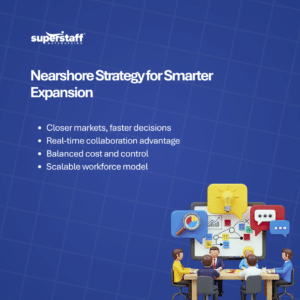
A nearshore strategy focuses on relocating or expanding operations to nearby countries with similar time zones and cultural alignment. It addresses common offshore challenges such as delayed communication and misalignment in workflows.
Leaders are now prioritizing proximity. This approach allows teams to collaborate in real time while maintaining cost efficiency. Colombia fits this requirement well due to its geographic position and strong service infrastructure.
This shift sets the stage for evaluating why Colombia has become a preferred option.
Why Colombia Is Gaining Attention from U.S. Companies
Colombia has positioned itself as a reliable partner for U.S. businesses exploring a nearshore strategy. Its economic policies and investment in workforce development support foreign companies entering the market.
Companies benefit from:
- A growing pool of skilled professionals
- Government support for outsourcing industries
- Increasing foreign investment in business services
These factors create a stable environment that reduces risk for expansion.
This leads to a closer look at workforce capabilities.
Talent Availability and Workforce Readiness
A nearshore strategy depends heavily on access to qualified talent. Colombia offers a young, educated workforce with strong English proficiency, especially in major cities.
Universities and training programs continue to align with global business needs. This ensures a steady pipeline of talent for roles in customer support, back office, and technical services.
Key strengths include:
- High adaptability to global business processes
- Strong communication skills for customer-facing roles
- Experience working with U.S.-based companies
This workforce advantage supports scalability and service consistency.
Time Zone Alignment Improves Collaboration
One of the main drivers of a nearshore strategy is time zone compatibility. Colombia operates within or close to U.S. time zones, allowing teams to work simultaneously.
This alignment improves:
- Faster decision-making
- Real-time issue resolution
- Stronger collaboration between teams
Executives often find that productivity increases when teams can communicate without delays. This is especially important for customer service operations that require immediate responses.
With this operational benefit, cost becomes the next factor to consider.
Cost Efficiency Without Operational Tradeoffs
A nearshore strategy offers a balance between cost savings and operational control. Colombia provides competitive labor costs while maintaining quality standards.
Unlike some offshore locations, companies do not need to compromise communication or service delivery. Instead, they gain:
- Lower operating costs compared to U.S. hiring
- Reduced training and onboarding friction
- Higher retention rates in structured outsourcing environments
This creates a sustainable cost model that supports long-term planning.
Cultural Compatibility Enhances Customer Experience
Customer experience depends on clear communication and cultural understanding. Colombia’s workforce has strong cultural alignment with U.S. customers, which supports a nearshore strategy focused on service quality.
Agents are familiar with U.S. communication styles and expectations. This reduces misunderstandings and improves customer satisfaction.
Businesses benefit from:
- More natural customer interactions
- Faster resolution times
- Stronger brand representation
This advantage directly impacts customer retention and loyalty.
Infrastructure and Business Environment Support Growth
Colombia has invested in infrastructure to support outsourcing and business services. Major cities such as Bogotá, Medellín, and Cali offer modern office spaces, reliable connectivity, and access to transportation.
A nearshore strategy requires dependable infrastructure to maintain service continuity. Colombia delivers:
- Stable internet and telecommunications systems
- Established business districts for outsourcing operations
- Access to international business networks
This foundation ensures that companies can scale without operational disruptions.
Government Incentives and Business Support
Government policies play a key role in enabling a successful nearshore strategy. Colombia has introduced incentives to attract foreign companies, including tax benefits and simplified business processes.
Support includes:
- Investment promotion programs
- Assistance with market entry
- Policies that encourage outsourcing growth
These initiatives reduce barriers for U.S. companies expanding into the region.
This creates a smoother entry point for businesses evaluating nearshore opportunities.
Risk Diversification Through Geographic Expansion
A nearshore strategy helps companies reduce reliance on a single location. Colombia offers an additional layer of geographic diversification, which strengthens business continuity.
Companies can:
- Spread operations across multiple regions
- Reduce exposure to global disruptions
- Maintain consistent service levels
This approach is especially relevant for organizations managing customer service at scale.
Diversification supports resilience while maintaining efficiency.
Real-World Use Cases for Nearshore Expansion
Many U.S. companies are already applying a nearshore strategy in Colombia for various functions. These include customer support, technical assistance, and back office operations.
Common use cases involve:
- Scaling customer service teams during peak demand
- Supporting bilingual service requirements
- Managing back office workflows with faster turnaround times
These practical applications show how nearshoring supports both growth and operational stability.
How Nearshore Strategy Fits into a Global Workforce Model
A nearshore strategy works best when integrated into a broader global workforce approach. Companies often combine nearshore and offshore teams to maximize efficiency and coverage.
This hybrid model allows businesses to:
- Balance cost and proximity
- Extend service hours across regions
- Optimize workforce allocation
Colombia plays a key role in this structure by bridging the gap between local and offshore operations.
Final Thoughts on Building a Smarter Expansion Strategy
A nearshore strategy gives U.S. companies a practical way to expand while maintaining control, efficiency, and service quality. Colombia continues to prove its value through strong talent, time zone alignment, and a supportive business environment.
SuperStaff helps organizations design and manage global workforce strategies that align with business goals. The team integrates AI into workflows to improve efficiency while maintaining strong human oversight to ensure quality and consistency.
If your business is exploring expansion options, a nearshore strategy can provide the flexibility and control you need. Connect with SuperStaff to learn how nearshore and offshore teams can work together to support your growth.